In a remote Alaskan village, working with a community to address environmental hazards
For several days in October, Parham Azimi set out to collect environmental samples in the southwestern Alaska village of Tuntutuliak. He was armed with an array of testing equipment, including an infrared camera to identify water damage and moisture behind walls, a water-testing kit to check for things like lead and microbes, and a portable air pump and sampling cassette that traps airborne particles. He even carried transparent tape to lift debris off surfaces—a way to check for mold.
Azimi, a research associate with the Healthy Buildings Program at Harvard T.H. Chan School of Public Health, had also been in Tuntutuliak a year earlier, both times working with colleagues from the University of Virginia and the University of Alaska Anchorage’s Alaska Native Science and Engineering Program, supported by funding from the National Science Foundation. The researchers’ goal is to better understand environmental health conditions in Tuntutuliak, with the hope of preventing health issues there and using what they learn to inform work in other rural locations.
Long trip, important work
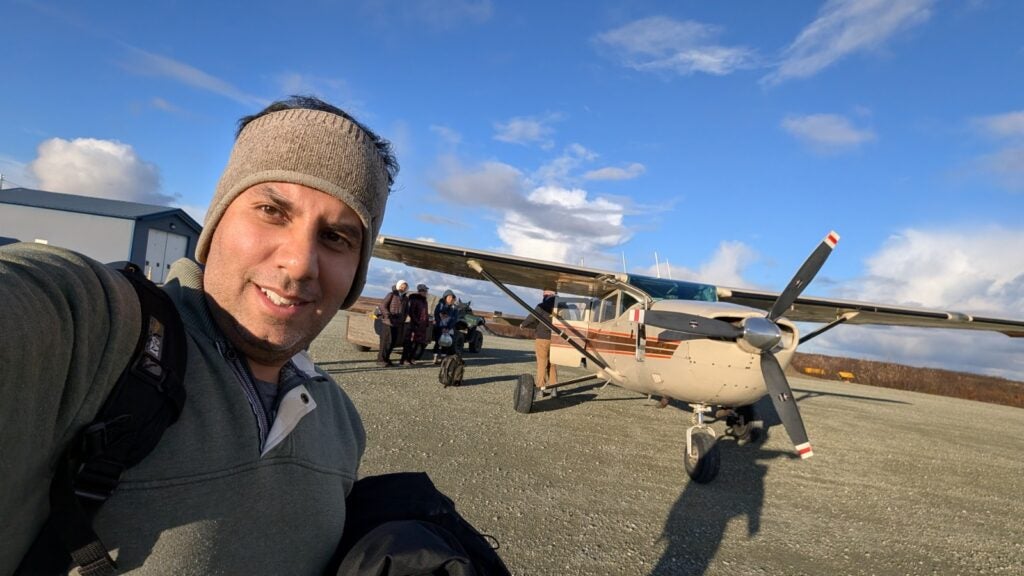
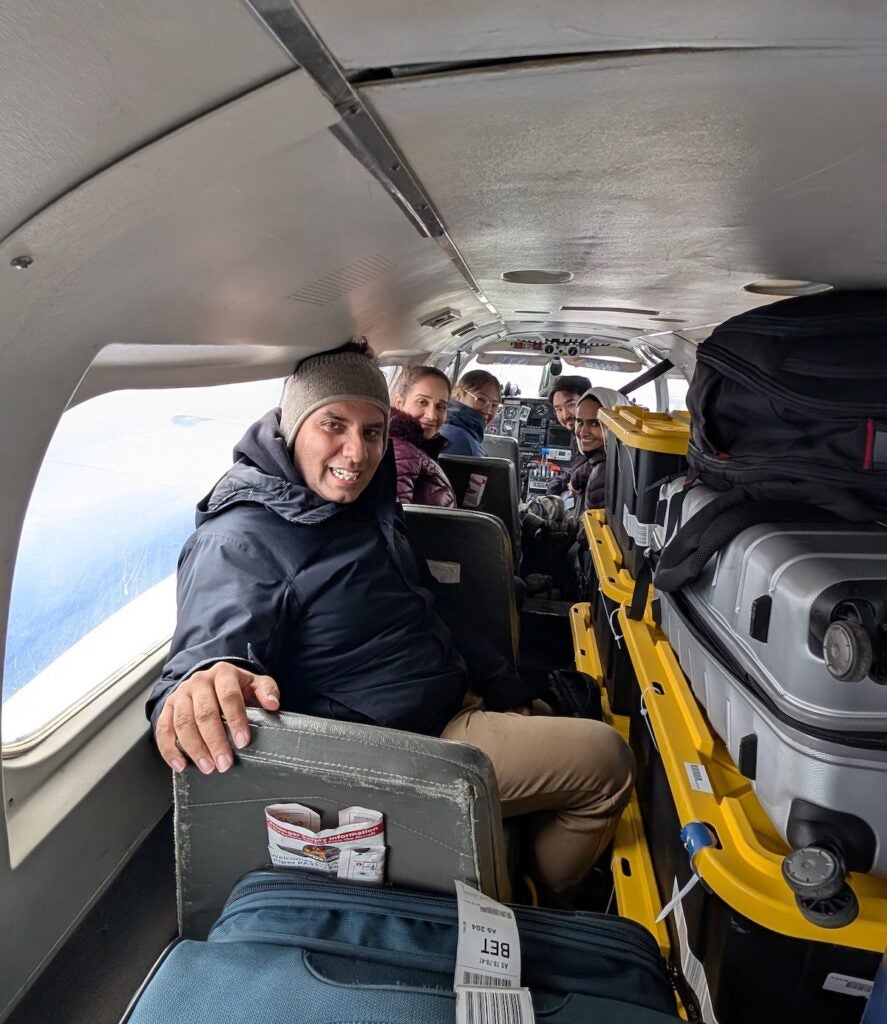
It’s not easy to get to Tuntutuliak, a Yup’ik community located in Alaska’s Yukon-Kuskokwim Delta, a region roughly the size of the state of New York that runs from the western edge of Southcentral Alaska to the Bering Sea. There are no permanent roads connecting the village to the outside world, so the community relies primarily on bush planes and boats for transportation. To get there, Azimi first flew to Anchorage, then took a one-and-a-half-hour flight to Bethel, and, from there, took a small plane to the village. On the first trip, he was accompanied by Zahra Keshavarz, a fellow Healthy Buildings team member (and his wife).
Despite the long trip, it was important to go a second time, Azimi said. That’s because, 10 days after the group’s first visit, the remnants of Typhoon Halong swept across southwestern Alaska, leading to unprecedented flooding and widespread damage in Tuntutuliak and other small communities in region. The disaster “made a follow-up visit important for understanding post-flood conditions and the community’s recovery,” Azimi said. Support for the second trip came from the National Science Foundation’s Rapid Response Research (RAPID) program.
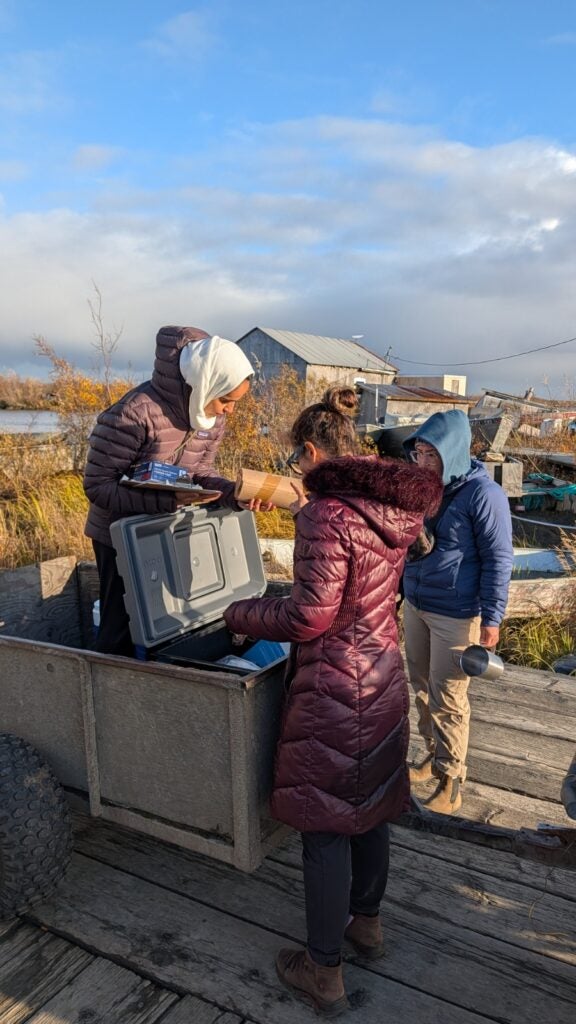
During their first trip, the researchers analyzed samples in and around eight participating homes, spoke with residents about their health and environmental concerns, and collected survey information about these topics. They wrote a paper about their findings that was recently published.
On last month’s trip, they revisited the homes to conduct further assessments. They also evaluated remediation measures that had been undertaken by the Army Corps of Engineers in the wake of the flooding.
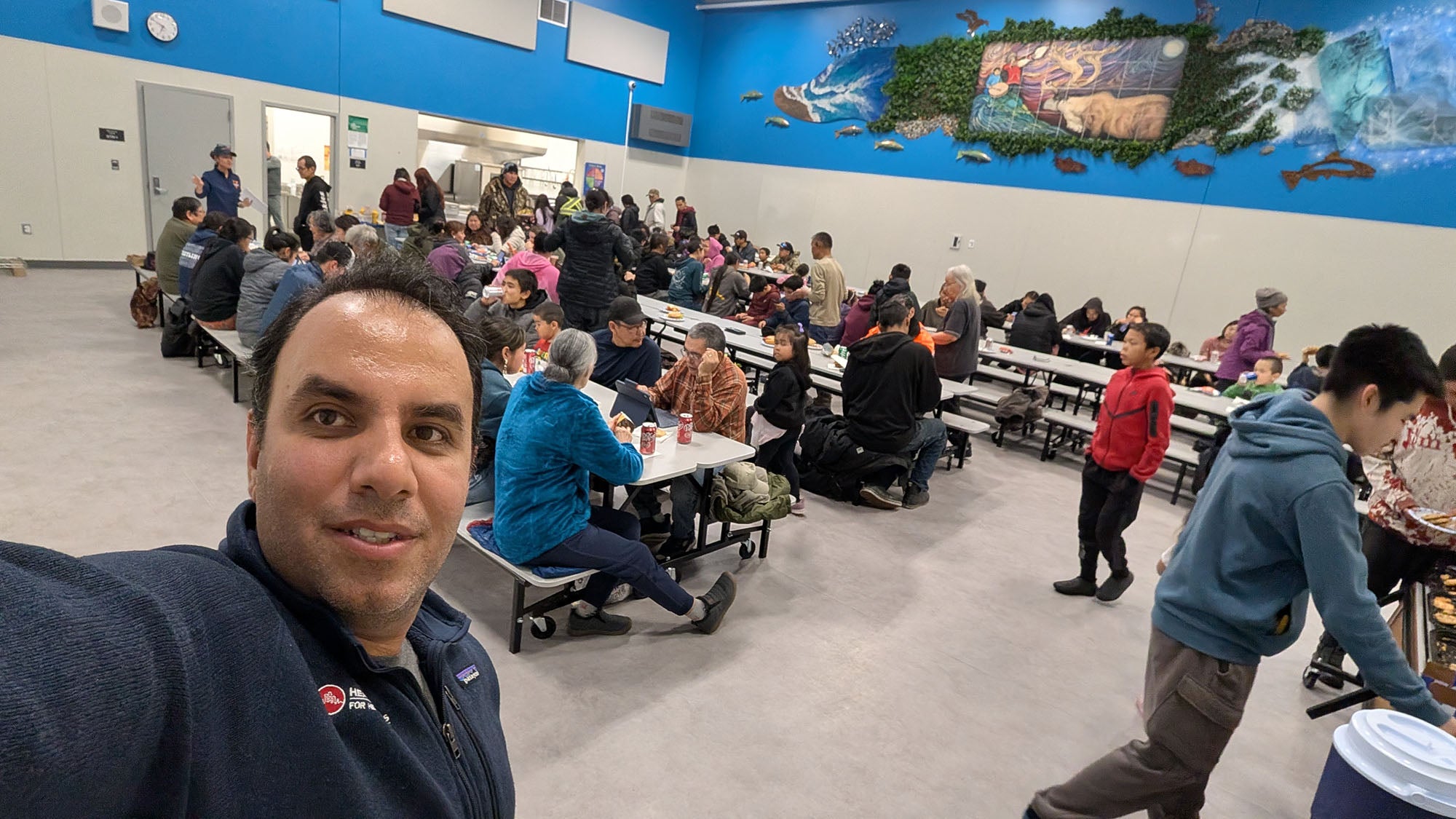
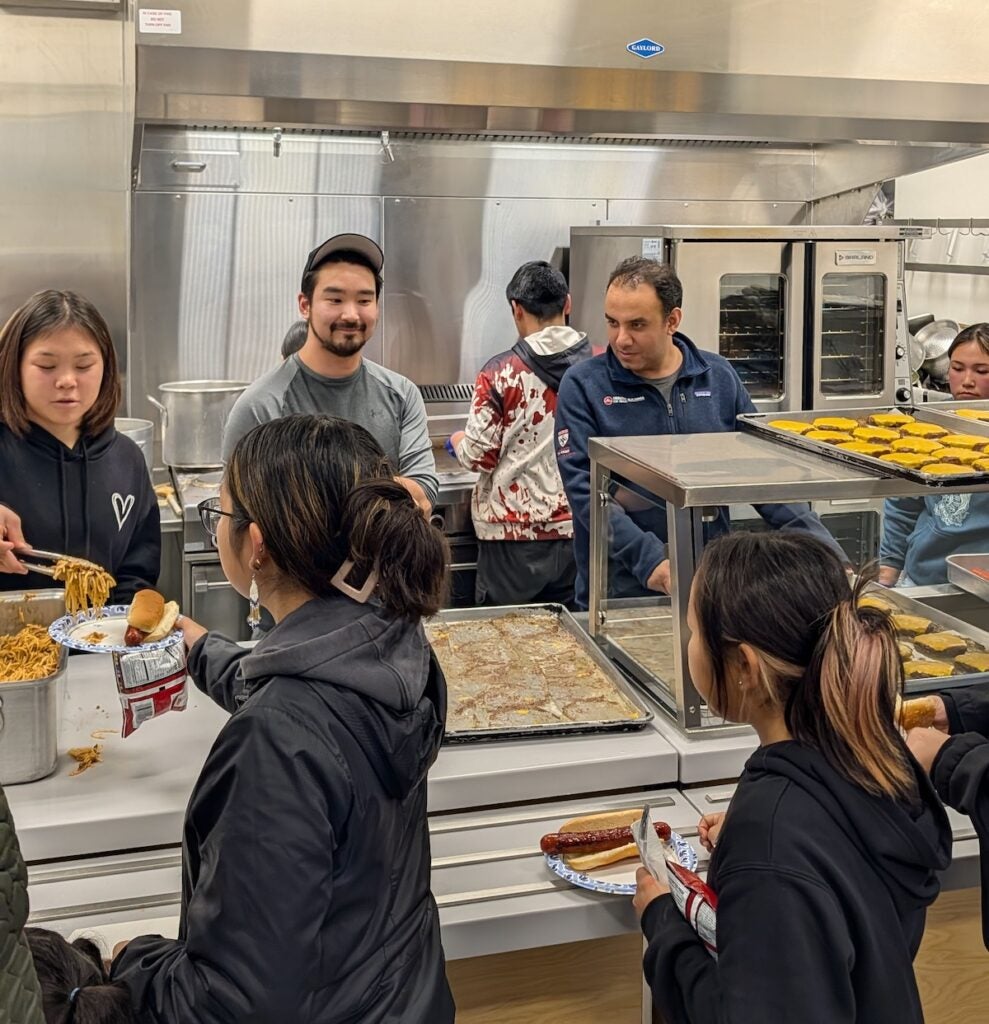
On both trips, the research team hosted community gatherings at the village school where they were staying, drawing roughly 100 attendees each time for servings of hot dogs, burgers, and spaghetti. The dinners gave the researchers a chance to meet with people, conduct surveys, and see how the residents were faring, particularly in the aftermath of the flood. In planning the gatherings, the team reached out to local high school students, some of whom aspire to become industrial cooks, to help prepare the meals. “Our goal was to connect with the families, to involve them in the project,” Azimi explained.
Vulnerable villages
Even before the devastation of the storm, it had been known that rural Alaskan communities were vulnerable when it came to water supply, sanitation, and environmental health. Many households in rural areas don’t have centralized water and sewer systems, instead relying on rainwater and meltwater for drinking water. In Tuntutuliak, for example, some residents place buckets underneath their rain gutters to capture runoff, Azimi said.
Mold and dampness in homes is a common problem in places like Tuntutuliak. During the winter, homes are kept tightly sealed against the cold, but lack of ventilation can lead to moisture accumulation from cooking, bathing, and laundry—and each of those routine activities can be exacerbated by overcrowding in homes.
Another issue affecting residents is that because the village is built on wetlands, the houses are elevated and connected by a system of wooden boardwalks. After the flooding, the Army Corps addressed the problem by lifting homes near the river about two feet higher. “That solves the flooding problem, hopefully, but the issue now is that these were old homes that were lifted,” said Azimi. “They had cracks and openings and water damage. Some of the homes were not lifted evenly, causing some water penetration issues. And they had more problems with mold from last year to this year. That problem is not solved.”
Beyond that, Tuntutuliak doesn’t have any formal waste management system. All the trash goes into a lagoon. Old vehicles like four-wheelers and snowmobiles are dumped there, and oil and gasoline can spill onto water and soil. That’s why the research team checked the air, water, and soil for toxins like heavy metals, Azimi said.
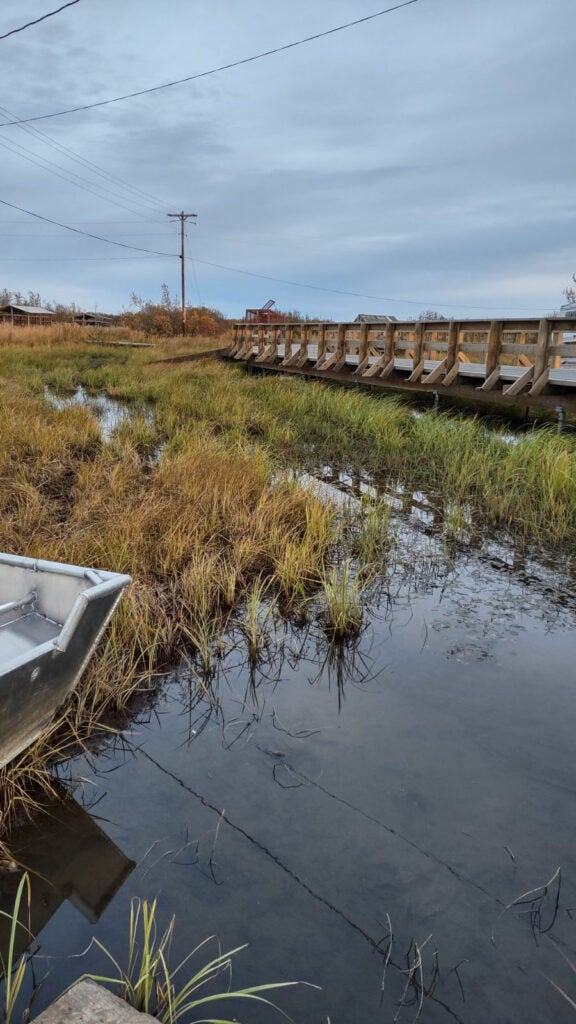
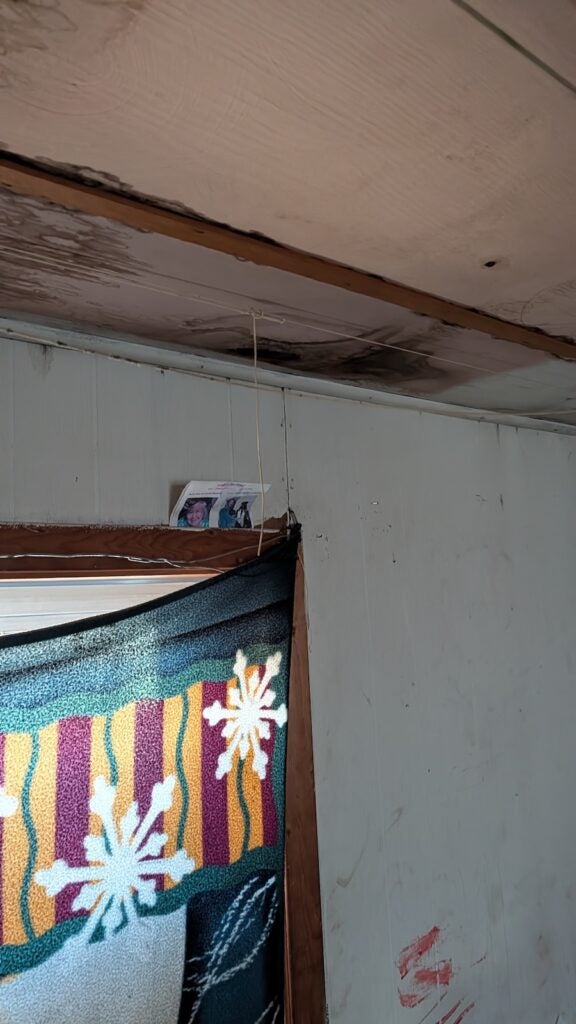
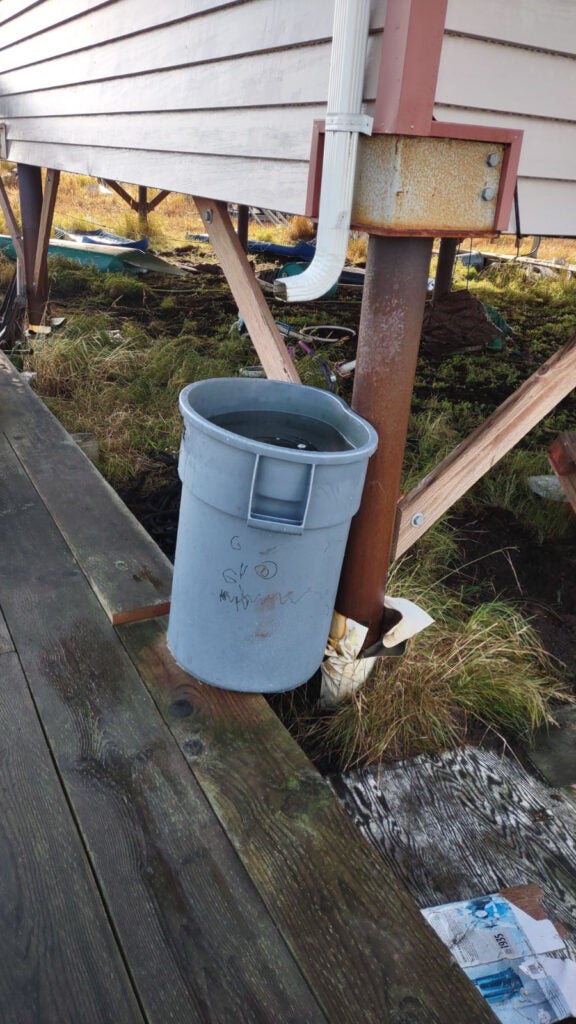
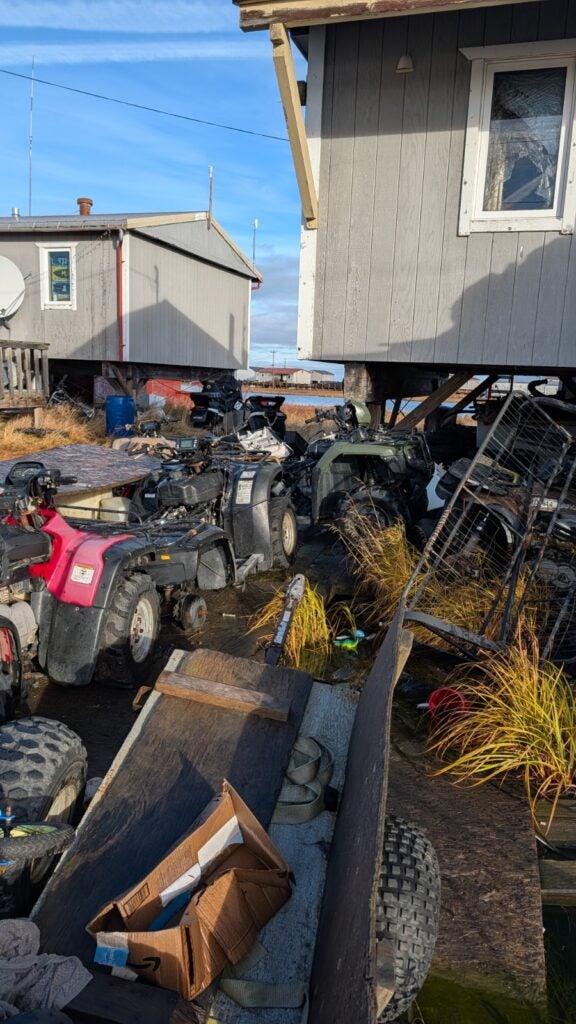
During their 2025 trip, the researchers found arsenic levels that met or exceeded limits set by the World Health Organization in more than half of water samples. They also found high levels of indoor mold. Since their findings came from only eight homes, it’s not enough data to make general characterizations about environmental conditions in the community. But it’s enough to suggest where to focus future efforts, according to Azimi and colleagues.
The team offered some suggestions to residents, such as using purification pills for drinking water and removing shoes before entering homes so as not to track in dirt that may contain contaminants. But to tackle the waste management problem, the community likely needs either state or federal resources, Azimi said.
The team plans to publish another paper combining data from both of their visits, he said.
‘They rush to it, every time’
Joseph Allen, director of the Healthy Buildings Program, praised Azimi and Keshavarz for their work. “This is demanding work,” he said. “The travel’s demanding and the time commitment is hard.” He added, “This team’s incredible. They have a heart of gold and they just want to help. And they rush to it, every time.”
Allen also noted that the Alaska project is just one example of the ongoing work of the Healthy Buildings Program to support communities facing environmental threats. Members of the Healthy Buildings team have worked on some very visible projects, including in the southeast U.S. after Hurricane Ida in September 2021; in East Palestine, Ohio after the February 2023 Norfolk Southern train derailment; and in Lahaina and Los Angeles after devastating fires in August 2023 and January 2025, respectively. “But the reality is, we’re doing this behind the scenes almost weekly, if not daily, as people reach out to us asking for help,” Allen said. The team tackles problems ranging from “sick” buildings to chemical explosions.
The primary goal is always to help communities facing environmental hazards by figuring out what exactly is in their air, water, soil and dust, Allen said. “From that position,” he said, “you can help give guidance to the community for what can be done.” After that, the broader mission is to share insights more widely. Tuntutuliak, Allen noted, “will not be the only community in the U.S. or around the world facing flooding. We hope to use lessons learned there to help protect others who will certainly face these same threats.”