Graduate Profile: Q&A with Quinton Hayre
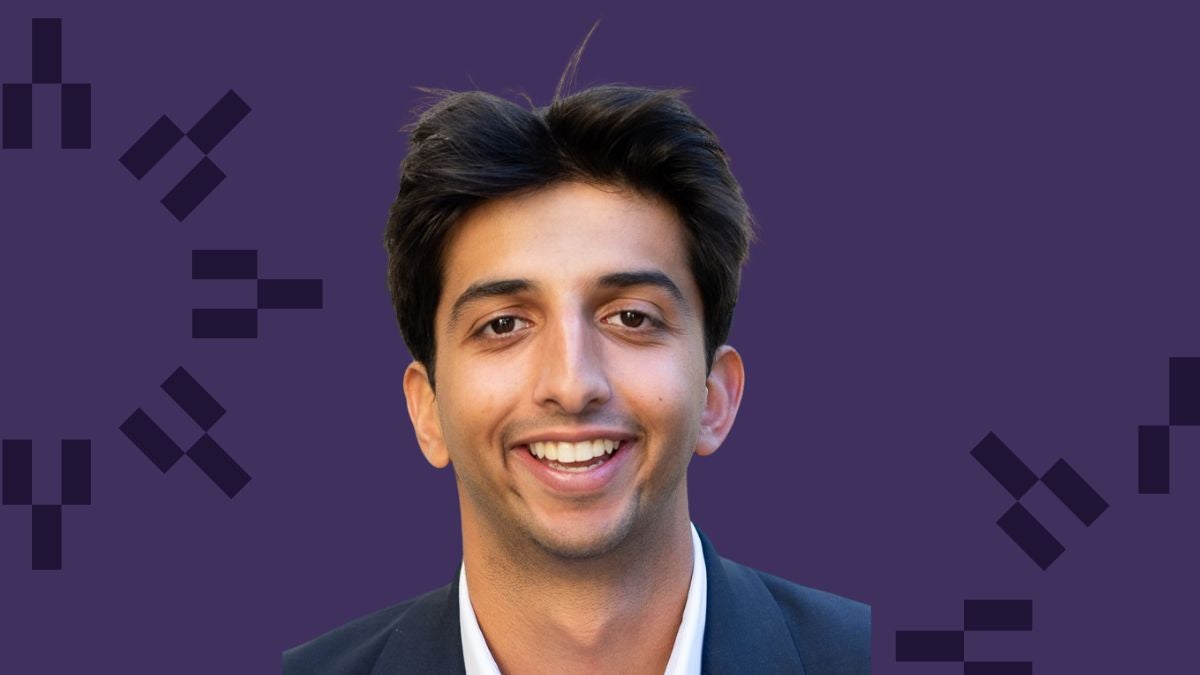
Name: Quinton Hayre
Area of Research: Infectious Disease Epidemiology
Degree: Masters of Science (SM2)
Year of Graduation: 2026
Current Role: Epidemiology of Microbial Diseases PhD Student, Yale School of Public
Health
- What did you do before pursuing your graduate degree?
As an undergraduate at the University of Notre Dame, I worked part-time in a global health entomology lab focused on mosquito behavior and vector-borne diseases. As I neared graduation, I completed an independent research project for my thesis focused on structural barriers to water security among remote communities in Fiji. My first job was as an infectious disease epidemiologist at the Thai Red Cross Emerging Infectious Disease Clinical Center in Bangkok, Thailand. This opportunity was made possible due to my role as a Luce Scholar and I was able to work on national wastewater surveillance strategies and analysis. - What attracted you to the program at Harvard?
Throughout my time in the global health field, it was hard to ignore the number of organizations, publications, textbooks, and graduates that I consistently referenced stemming from both the Harvard T.H Chan School of Public Health and Harvard Medical School. I knew that the number of opportunities and quality of theoretical training at the Harvard Chan School fostered the ideal environment for me to find my path in the field as I looked ahead towards a PhD. - What surprised you the most about being a graduate student in your chosen research program?
Prior to starting at the Harvard Chan School, I feared that the large size and global importance of the public health school would cause me to fall low on the school’s priority list. Fortunately, I found this to be far from the truth as I found a home in the tight-knit community of the Center for Communicable Disease Dynamics (CCDD). My academic and thesis advisor, Jeff Imai-Eaton, and his two post-docs, Salome Kuchukhidze and Domonique Reed, invested an immense amount of time into establishing me as an HIV/TB modeler where I was able to produce research at a quality beyond what I expected at the master’s level. - Why do you think your research area is important to public health?
At the Harvard Chan School, I took a strong interest in the intersection of HIV and tuberculosis (TB). TB is the number one cause of death among people living with HIV and the top killer among all infectious diseases globally. Existing gaps in diagnosis and treatment of these two diseases are consistently among society’s most vulnerable and marginalized populations. Therefore, any work in these disease fields puts a spotlight on existing structural inequities that no level of analysis or novel intervention can solve alone. I see this research area as a critical bridge between global infectious disease surveillance and local social determinants of health, work that demands globally-informed strategies be translated into locally-tailored action across nearly every sector of public health. - What suggestions would you have for someone interested in applying for this research area?
As infectious disease epidemiologists, we’re essentially disease detectives. It’s easy to get bogged down in the statistics and theory. However, when we shift our perspective and view the data as clues, which, when read correctly, help us track down an invisible enemy constantly evading detection and treatment, this becomes one of the most engaging and rewarding fields. - How has your time in the program influenced your career path?
Coming from the public health workforce, I thought I knew a lot more than I actually did when I entered the program. I am so happy for the formal education I received in the classrooms on statistics and causal inference that has allowed me to take advantage of the amazing network and applied experience I gained in the Imai-Eaton lab. I always knew I wanted a career as an infectious disease epidemiologist, but because of this program I am confident that I have the tools to become one. - Is there anything else that you would like to share about your experience at the Harvard Chan School?
There are so many paths to choose from, and it’s impossible to find time to pursue all of them. I recommend that incoming students take the time to explore early on, and then spend as much time as they can diving into a theoretical or applied project, so they can leave with a depth of expertise that will follow them for the rest of their career.