Invertebrate aquatic foods can help fill global gaps in nutrition
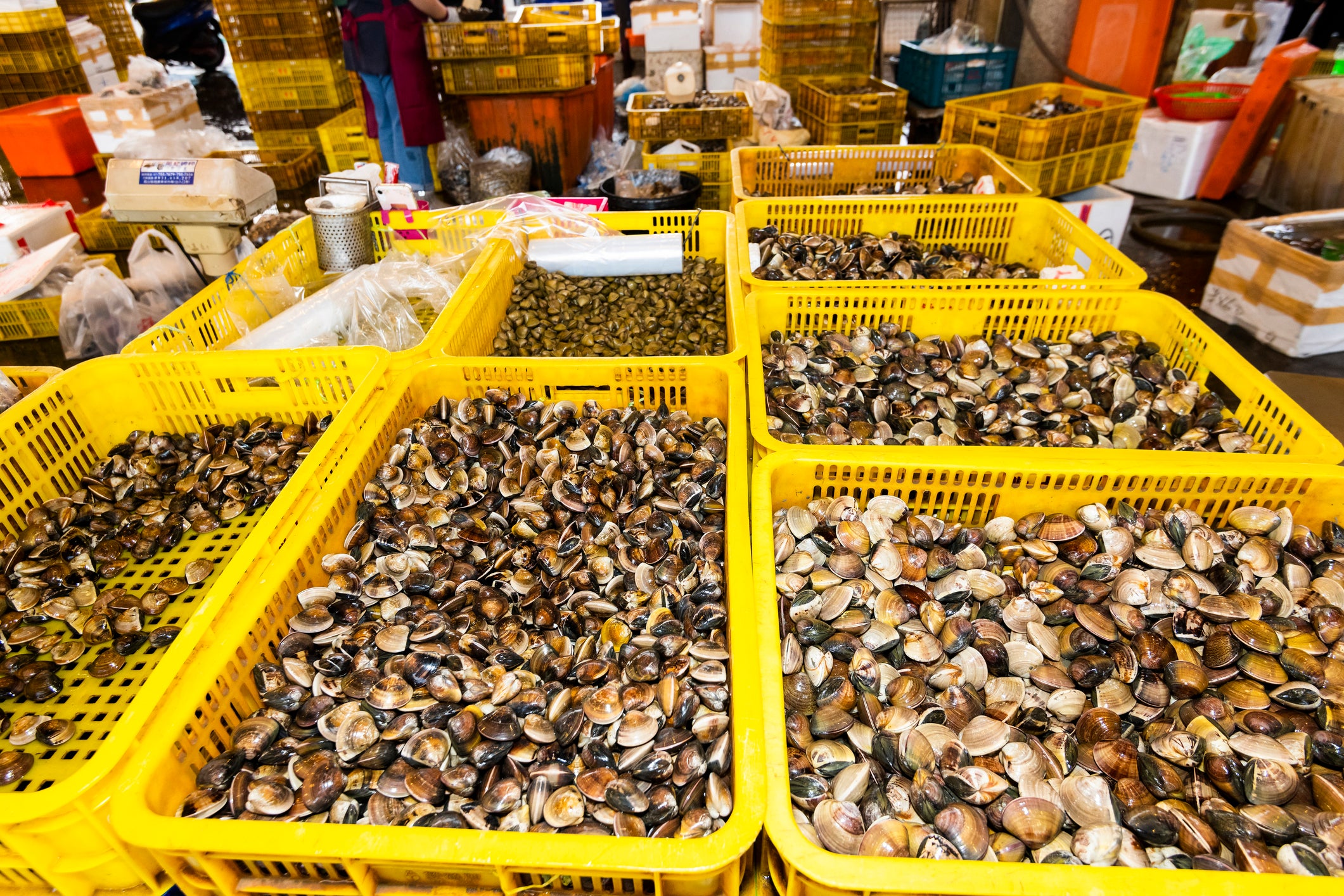
Invertebrate aquatic foods, such as mussels, crabs, and oysters, are exceptionally nutrient-dense and an important potential solution to micronutrient deficiencies around the world, according to a new study co-authored by researchers at Harvard T.H. Chan School of Public Health.
The study was published Sept. 2 in Nature. Christopher Golden, Bruce A. Beal, Robert L. Beal and Alexander S. Beal Associate Professor of Nutrition and Planetary Health, was the senior author. Other co-authors included the Department of Nutrition’s Nisha Marwaha and Laura Elsler.
Micronutrients are the essential vitamins and minerals a body needs to grow, develop, and function healthily. Most of the global population’s intake of micronutrients is too low—”leading to cascading adverse effects on economies and human health,” the researchers wrote. Aquatic invertebrates can help, they added, but “their contribution to human nutrition is frequently overlooked.”
To quantify the true nutritional value of aquatic invertebrates and assess how they can help fill gaps in micronutrient intake, the researchers examined a variety of data around the harvesting of aquatic invertebrates—through both farming and fishing in the wild—and the known nutrient compositions of thousands of species. They found that current global production of aquatic invertebrates supplies required annual levels of B12 and selenium for over five billion people; copper, omega 3 fatty acids, iodine, and zinc for over one billion people; and vitamins B2 and B3, iron, manganese, and magnesium for over 100 million people. Ultimately, the researchers wrote, these estimates indicate that aquatic invertebrates punch above their weight, contributing a disproportionate supply of essential nutrients relative to their production volume.
The researchers then used predictive modeling to assess the little-known nutrient composition of an additional 50,000 potentially edible invertebrate species found across the world. Their estimates showed that many regions acutely struggling with micronutrient deficiencies are home to aquatic invertebrates that could help fill those gaps. For example, invertebrates high in iron can easily be found in South Asia and Africa, where more than half the population consumes too little iron.
The researchers said the findings are not meant as a call to begin harvesting more marine species. Rather, they underscore the need to better protect, monitor, and sustainably manage these resources to safeguard current and future nutrition security. “Our study highlights the potential benefits of integrating aquatic invertebrates into dietary portfolios across global societies, mainstreaming their nutritional importance in development projects, sustainability assessments, and food policy,” they wrote.
Read the study:
The nutritional value of invertebrate aquatic foods