Barry Bloom’s global health odyssey, in his own words
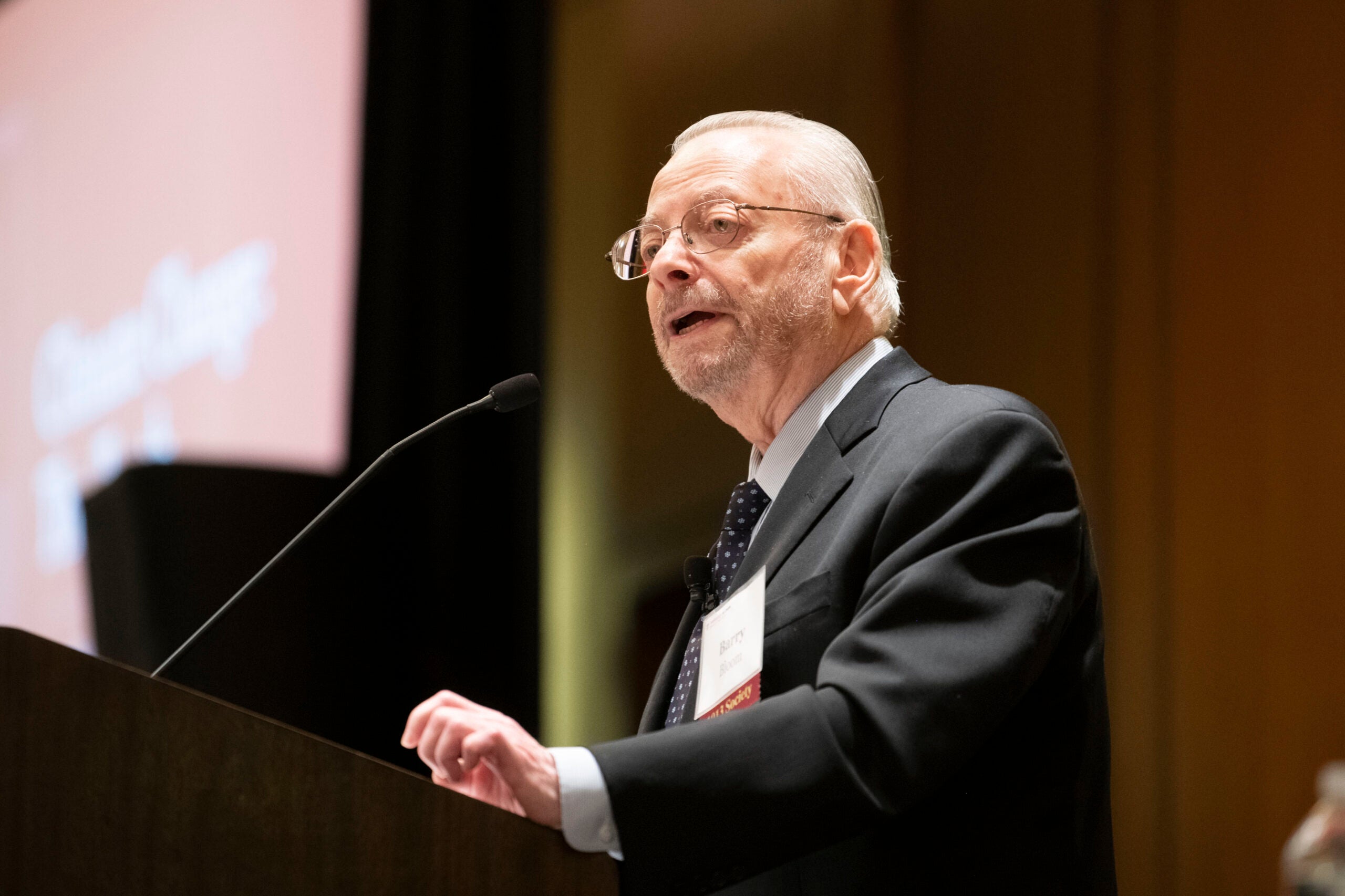
Late Harvard T.H. Chan School of Public Health dean’s memoir showcases a life of science, curiosity, and improving people’s lives.
Barry Bloom was often urged by colleagues, family, and friends to write a memoir. He’d had a more than six-decade career as a prominent immunologist, global health policy advisor, and former dean of Harvard T.H. Chan School of Public Health. And he was known for telling remarkable stories about his research, travels, and the connections he made with people around the world. But even following his retirement in 2019, his schedule remained full.
The idea came up again during discussions in 2022 about donating his papers to the Center for the History of Medicine at Countway Library with archivist Heather Mumford. This time the idea stayed with him, Mumford said. His grandson Mars had been born in 2020, and “Barry wanted to make sure that his grandson had an idea of who he was as a scientist,” said Bloom’s longtime assistant Alicair Peltonen.
Bloom started working on the project seriously last fall, even as his health declined from pancreatic cancer. Mumford said that she provided comments on his early drafts, encouraging him, for example, to write about what Harvard Chan School was like on a daily basis while he was dean, and his perspective on the federal grant cancellations that were impacting the School and other higher education institutions in 2025. Peltonen provided copyedits and suggestions such as noting where Bloom could make descriptions of his science more accessible to the average reader.
Peltonen was working as executive assistant to Harvard Vice Provost for Research John Shaw but had stayed in close touch with Bloom, whom she’d worked for from 2007-2019. “He was the type of person that you stay friends with after your professional obligations end because you just like hearing his stories,” she said.
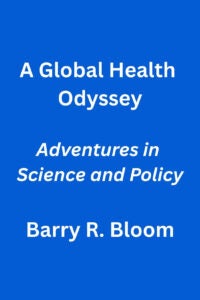
Bloom passed away on March 18 and his memoir A Global Health Odyssey: Adventures in Science and Policy was published on April 13, which would have been his 89th birthday. It is available as an eBook or print-on-demand hardcopy through Barnes & Noble. The hardcopy can also be requested from the Countway Library.
A laboratory scientist immersed in global health
In the book’s introduction, Bloom notes that its focus won’t be on his major research findings but rather on his background and scientific training and on his adventures “outside the laboratory in the world of global health.” In a conversational tone, he covers wide-ranging topics such as meeting survivors of the atomic bombings in Japan, in addition to Robert Frost and Pope John Paul II; accidentally smuggling jewelry out of Russia; and his joy in teaching and mentoring young scientists around the world. He shares plenty of lessons learned along the way, including the idea that discovery rarely comes easily.
Bloom began his career as a chemist before switching to immunology, and he notes that many of his early experiments were failures. But his work ultimately led to a breakthrough in understanding how immune cells communicate. He went on to apply his insights to leprosy (now called Hansen’s disease), tuberculosis, malaria, and COVID-19.
As he rose to prominence in his field, Bloom became interested in global health and served as an advisor to the Carter White House and the World Health Organization, and as a member of multiple scientific committees at the National Institutes of Health and the Centers for Disease Control and Prevention. During his tenure as Harvard Chan School dean (1999-2010), he strengthened the School’s global engagement, including playing an important role in helping establish the Public Health Foundation of India.
Mumford said that the book “preserves his voice, his memories, and the relationships and experiences that shaped his work and its impact. For students and researchers today and in the future, the memoir will enable a more complete understanding of Barry’s wide-ranging work and legacy and serve as an essential companion to his papers.”
In a remembrance about Bloom that appeared in STAT on March 30, faculty members Yonatan Grad and Marc Lipsitch wrote that they both had read an early draft of the book, noting that “it’s hard to fathom how he found the time, energy, and imagination to engage so widely in a range of activities to benefit science, global health, and those around him.”
In the book’s closing, Bloom writes that reflecting on his experiences “reinforced my conviction that science has an enormous capacity to improve people’s lives.” And he encourages students and physicians to pursue global health, where the needs are enormous and “the opportunities to make a difference remain exciting.”