The Need for Practical Hyper-Local Early Warning and Early Action Systems: DRC Case Study
The Last Days in Goma
The city of Goma, situated on the north shore of Lake Kivu, is a bustling capital of the Democratic Republic of the Congo’s North Kivu province. Its place as a regional capital is not surprising given the unique geography which make it a vital crossroad. To the north and west lay highly coveted mineral resources, to the immediate east is the Rwandan border, and to the south the vast Lake Kivu.
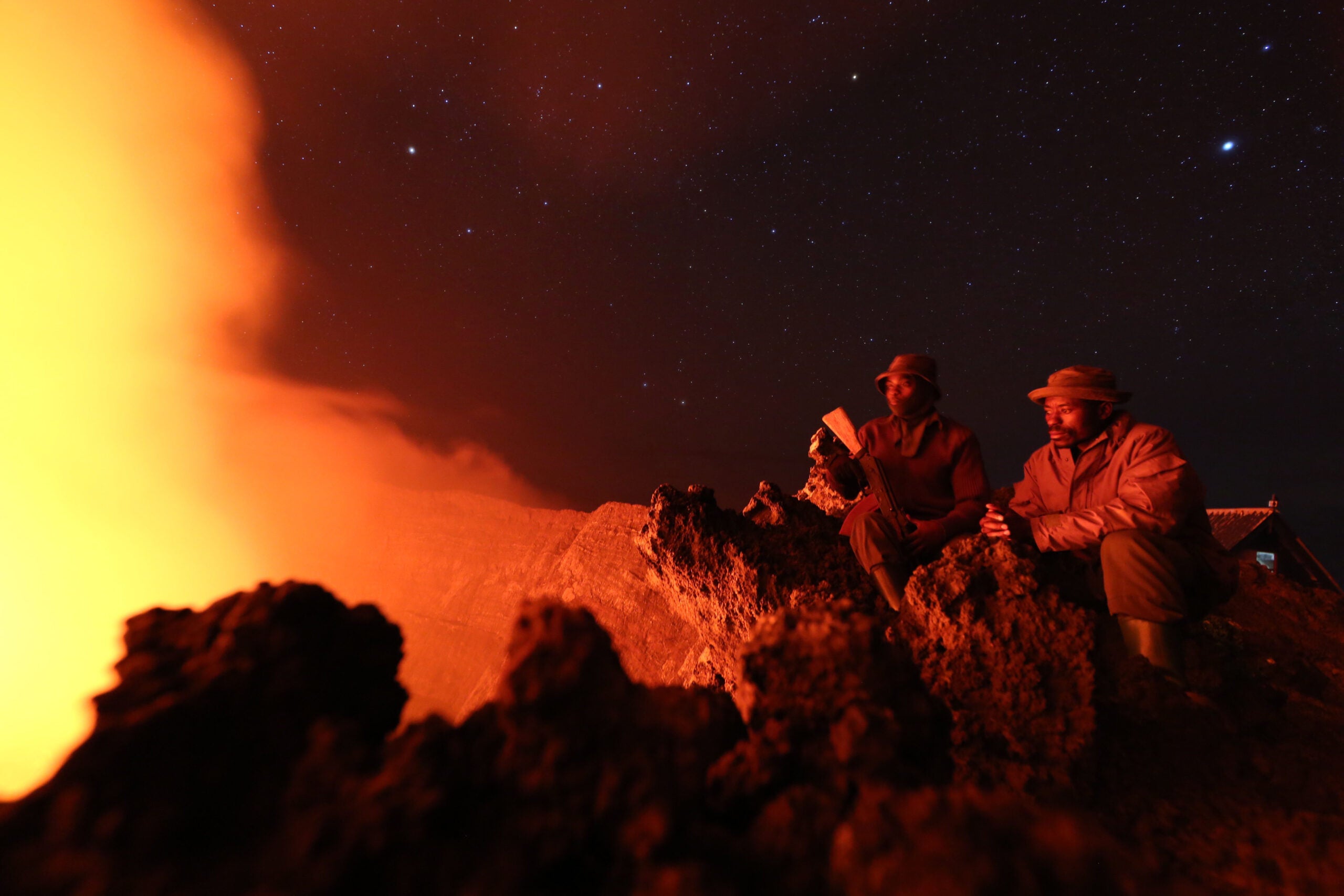
The landscape of this region seems inherently violent. Land pockmarked by dormant volcanoes and the jagged horizons shaped by very active volcanoes in various stages of eruption. Having been thrice inundated by lava flows from Mount Nyiragongo in 1977, 2002 and again in 2021, Goma and its environs have been rebuilt each time using the volcanic pumice and other ejecta which engulfed the area. An element of the Great Rift Valley, this volcanic activity is the result of two massive tectonic plates pulling themselves apart in what feels like a symbolic reflection of the current state of affairs.
By early 2025, the residents of Goma found themselves in a disturbingly familiar circumstance. A military offensive by the March 23 Movement (M23), a Congolese rebel group which had previously occupied Goma in 2012, had effectively severed transportation links between the city and the territory of Rutshuru to the north. Three Goma natives already well acquainted with the volatile developments in North Kivu are Mathieu, Felix, and Celestin, who agreed to provide testimony under pseudonyms to protect their own safety. Mathieu, runs a community based organization which assists those at risk of violence. Felix is a longtime resident of Goma who has since fled due to growing risks to their security. Celestin works with a youth organization and remains in hiding due to death threats. All three felt that it was important to share their experiences so that others may understand the events that led to the fall of Goma.
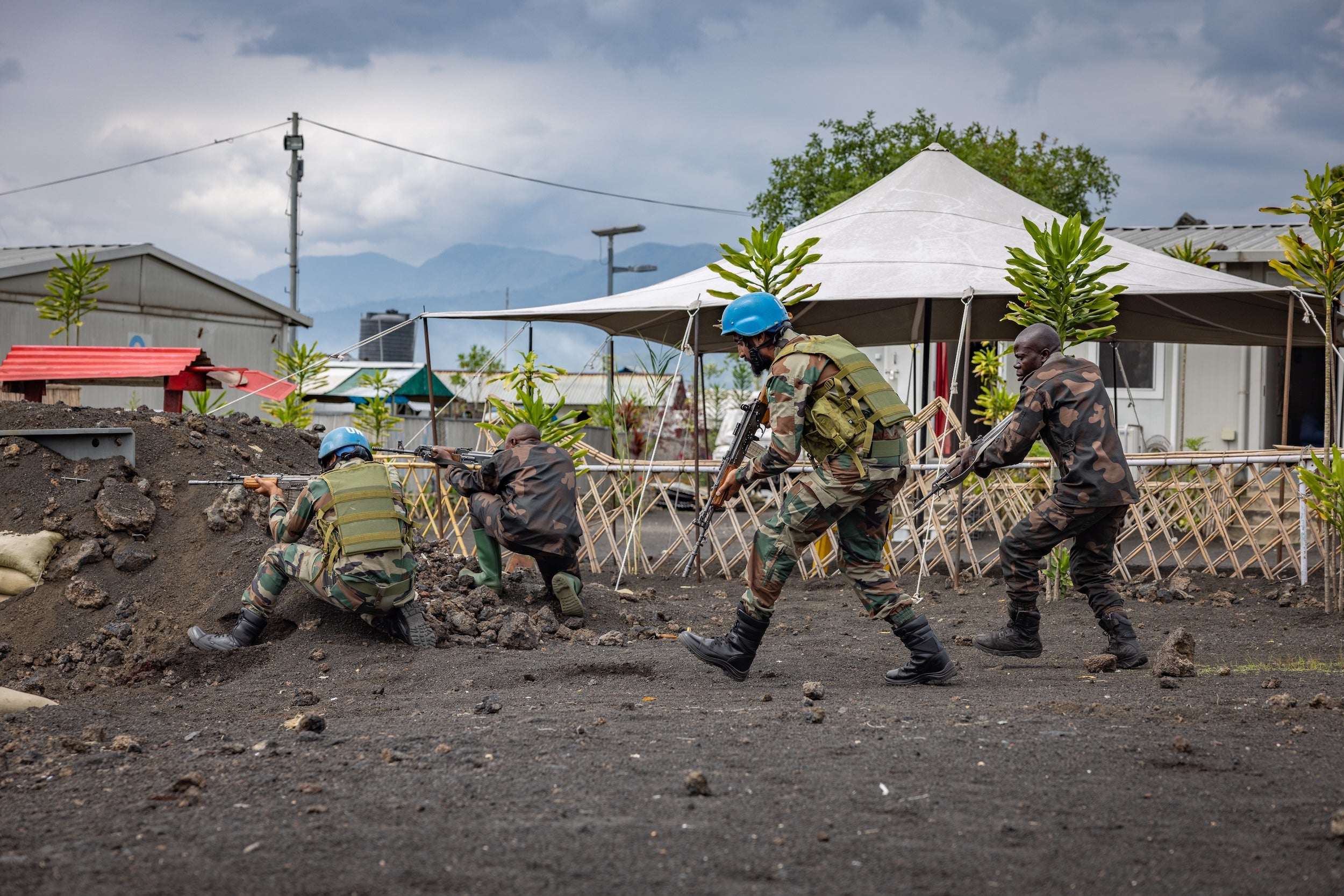
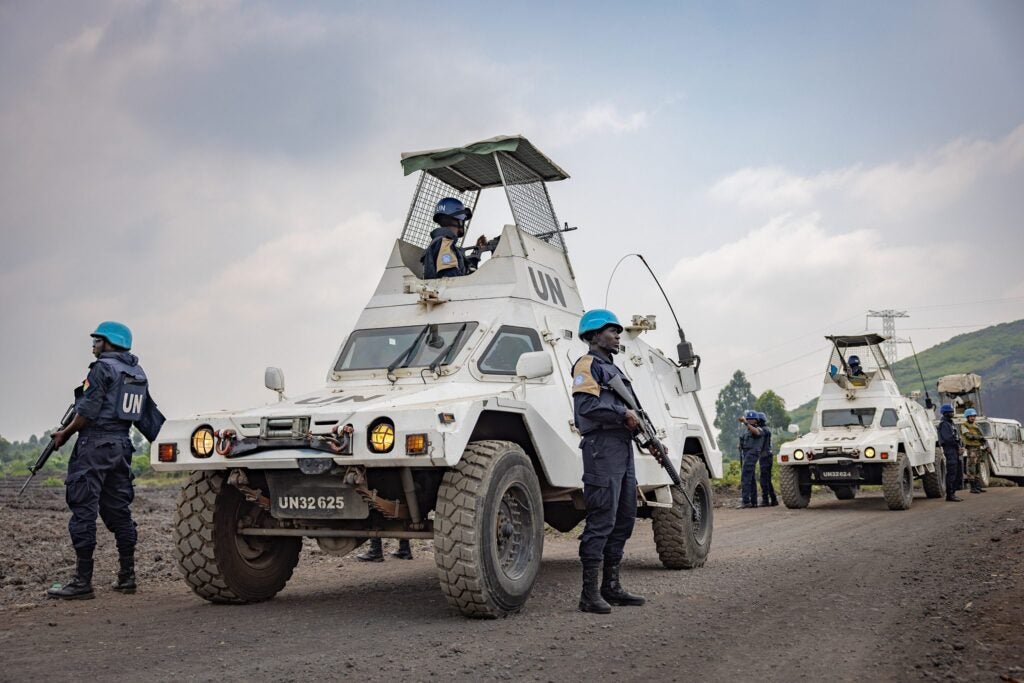
Arrayed along the northern and western edges of the city were camps containing over 800,000 internally displaced persons and in advance of these locations were military operations zones situated around Kibumba, Nyiragongo-Nyamulagira, and Sake. In opposition to the M23 advances were units from the armed forces of the Democratic Republic of the Congo (FARDC), soldiers from Burundi, South African and Tanzanian troops from the Southern African Development Community (SADC), United Nations peacekeepers from the MONUSCO mission, ‘Wazalendo’ militia groups, and a contingent of Romanian mercenaries led by Horațiu Potra.
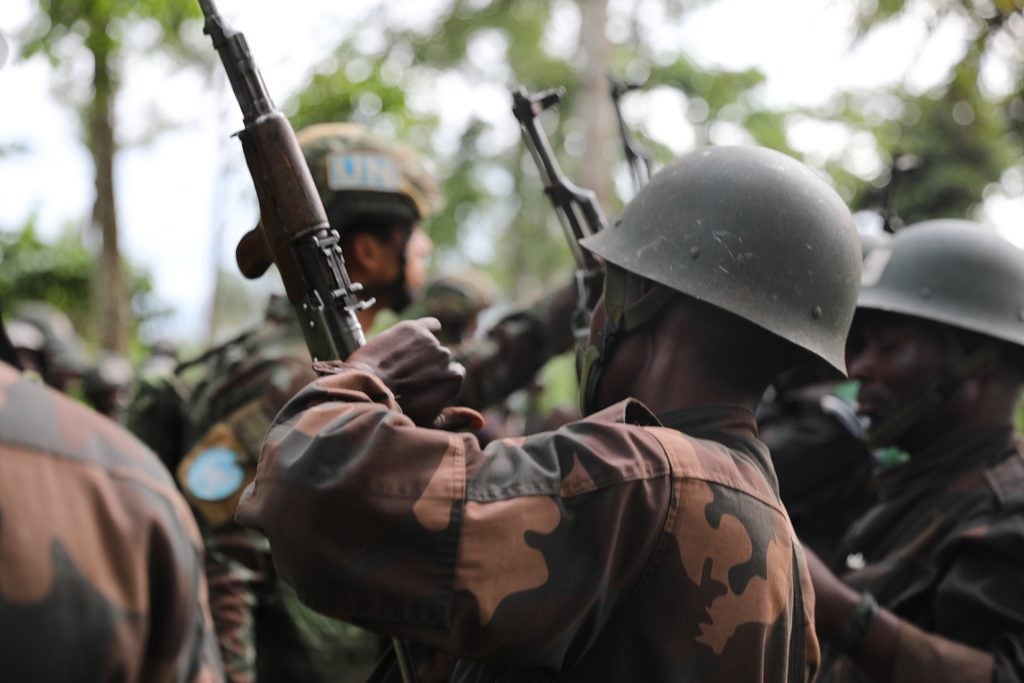
Residents in Goma and surrounding areas received reassuring updates from government and military outlets that M23 had been successfully checked, FARDC was holding and protecting vital positions, and perhaps even making advances against a faltering enemy. Within communities there was deep distrust in official statements but little to validate their concerns. As far as authorities alleged, M23 was being blunted by a strong military posture. Felix argues that this was an attempt by security forces to deceive the population about a rapidly and obviously disintegrating situation, stating that “the security forces had become incapable of controlling territory or protecting civilians, increasingly leaving the front line to the young Wazalendo volunteers.”
The city was suffocating, and people didn’t know where to go or which route was stable.
In a matter of only weeks, territories to the west had begun to fall. On 4 January, several more localities in the Masisi territory were captured by M23 forces as the entire western axis of the offensive turned towards Goma. By 21 January the lakeside town of Minova fell. After the loss of this strategic location, the defence of Sake, the FARDC base at Mubambiro, and Nyamulagira became untenable as these locations came within range of M23 artillery in the Buzi hills. Several UN peacekeepers were killed and the Romanian mercenaries decided to withdraw from their positions. On 23 January, Sake was captured during fighting which resulted in the death of the military governor of North Kivu, Peter Cirimwami Nkuba.
Mathieu observed the degree to which an information vacuum had begun to create a panic. “For the civilians living in the displacement camps, most were unaware of the positions of the rebels and government soldiers. The city was suffocating, and people didn’t know where to go or which route was stable”.
With a hostile Rwanda to the east, the only remaining routes to Goma were daunting paths by air out of Goma International Airport (which shared a runway with an active FARDC air base) or across the treacherous waters of Lake Kivu in small boats. Elements of M23 began moving into the outskirts of Goma by 25 January and pitched fighting took place. Celestin recalled, “we witnessed scenes of clashes in the heart of the city, which killed many civilians. In some neighborhoods, others were trapped in their homes, desperate to save their lives. On the roads, countless lifeless bodies remained visible. The entire population was traumatized and hospitals were overflowing with the wounded.”
Neither civilians nor soldiers had any idea what was happening.
In this environment, the lack of reliable information proved to be devastating. Felix stated that “many civilians, lacking information about the attacks and military movements, lost their lives in several incidents, including bombings in the streets. Other civilians died simply because they were mistaken for Wazalendo fighters.”
Senior officers and government officials, including the Vice-Governor, took boats that evening to reach Bukavu on January 26, 2025, leaving over 10,000 heavily armed soldiers and militiamen without a command structure. “No one was in control,” said Mathieu. “Lacking morale, the FARDC soldiers looted, robbed shops, and wandered aimlessly, believing they had rescue boats on the shores of the lake. Neither civilians nor soldiers had any idea what was happening.”
Sporadic fighting continued throughout Goma until the tempo slowed and eventually stopped on 30 January, 2025. Though several internal areas in Rutshuru, Masisi and South Kivu remain occupied by Wazalendo militias who launch disparate attacks against M23 positions from isolated villages and national parks, all other organized resistance in and around Goma ceased. In the wake of the fighting, nearly 3,000 civilians were killed, and at least an equal number were wounded. Thousands of trapped FARDC soldiers and local security elements surrendered. The UN and SADC missions withdrew after losing 20 peacekeepers.
Though many understood that Goma was in a vulnerable situation by the end of 2024, there was still a degree of shock that the government, military and international contingents had seemingly gone from a strong defensive position to capitulation in less than a month. The reality, as many had suspected but were unable to confirm, was that the authorities in Goma painted a hideously inaccurate picture of the storm that had begun to descend on them. Mathieu noted that “disinformation from the army kept giving civilians hope that it was in control of the situation, even though nothing was actually happening. The phrase ‘the situation is under control’ was a common refrain.” Felix had stronger feelings, alleging that Goma was effectively surrendered as part of a larger strategy, stating that “the civilian population of Goma was sacrificed by the security and defence forces, and suffered murders, rapes, looting, forced recruitment, and arbitrary detentions.”
M23 continued its offensive south, capturing Bukavu and Uvira, the two largest cities in neighbouring South Kivu province, as well as large swathes of rural territory. Each city to fall faced a similarly fraught prelude of misinformation and confusion, followed by brutal occupation by M23 forces.
After the Fall
After capturing Goma, M23 immediately instilled a climate of terror in the population. Military cordons and searches in neighbourhoods were used with the stated purpose of rooting out ‘banditry’ but in practice resulted in executions, disappearances, or forcible recruitment to paramilitary units. Widespread reports of detentions and torture demonstrate an environment of impunity. Individuals with ties to human rights organizations and citizen movements became targets and a cycle of assassinations has persisted within the city ever since. “Internally, there is a sense of revenge being waged by the Tutsi community, which seeks to impose its dominance over other communities,” said Mathieu.
In surrounding villages, M23 installed armed youth called “défense locale” who wore distinct uniforms separate from the police and military. These youth militias were tasked with maintaining order but instead engaged in widespread whipping and torture of civilians. Even civil society was reshaped by its new occupiers. Revenue generating services such as the taxation, immigration and customs offices, electrical and water services, and mineral extraction were seized by M23 officials and their Rwandan backers.
Banyamulenge (Tutsi) benefit from reduced taxation and other economic advantages which has forced others to close their shops and relocate to Lubumbashi, Beni or Bunia where they believe they will fare better. Private security companies are effectively banned due to exorbitant fees for company accreditation. This has allowed M23 to impose their own security services which are free to set their own prices.
Though M23 claims that one of its objectives is to eradicate hatred between tribal groups, very little of its activities support that aim. In reality, the movement does not appear open to power sharing among the various groups in North Kivu. The military administration and command are almost entirely Banyamulenge, and these officers wield more influence than others, believing themselves to be masters of the movement’s internal philosophy. Culturally, these elements within M23 want to integrate the Kinyarwanda language into official functions, and when they discuss sensitive or critical topics they speak Kinyarwanda, to the frustration of non-Kinyarwanda speakers within the movement itself.
This ethnic restructuring is predictably violent. In the territories of Masisi, Rutshuru, and Nyiragongo, traditional local chiefs who disagreed with M23 edicts or refused to go to ideological retraining centers were replaced. Many were forced to flee, and those who stood in opposition were frequently murdered under mysterious circumstances. Mathieu’s organization has not been spared the violence and intimidation. Staff members were abducted and held for random and another staff member was killed in crossfire when fighting erupted between factions.
The result is that up to the present day, this restructuring has resulted in an incredibly delicate and tenuous situation. The population seems to be observing the situation merely as a form of survival but this does not indicate that they are satisfied with the current regime. Locals have noted that a popular uprising born of a distaste for this transition would likely take on a highly ethnic dimension.
Disorder and Disarray
Deep ethnic divisions lie at the center of the conflict, blending real animosity with pretexts designed to whip up fervour. The FARDC and allied Wazalendo militias represent the Hutu, Hunde, Nande, Tembo and Nyango tribes of North Kivu, in addition to the Shi, Bambembe, and Barenga tribes in South Kivu. The M23 and its backers in Rwanda reflect Tutsi groups which are a minority in North Kivu but a majority in Rwanda, respectively. In South Kivu, they are allied with the Banyamulenge (of the Twigwaneho, Gumino and Android groups) and Burundian rebels of Red Tabara.
M23 is fundamentally built around dissatisfaction with the DRC and North Kivu governance of Tutsi minority groups in eastern DRC. This is part of a conflict dating back to at least the colonial era and represents the failure of successive regimes in Kinshasa to adequately address resource competition and intercommunal violence.
The mining of rare earth and strategic minerals plays a role in the conflict, but most experts agree it is not the primary motivating factor. Rather, the resources are used to bankroll the operations of various groups. Research by the International Peace Information Service (IPIS) on artisanal mining in eastern DRC indicates that gold extraction was identified at 70.2% mines, and cassiterite (a tin-bearing ore) was mined at 24.9% of mines. Coltan minerals containing tantalum and niobium, as well as tungsten-bearning wolframite, were mined at 8.5% and 2.3% of sites.
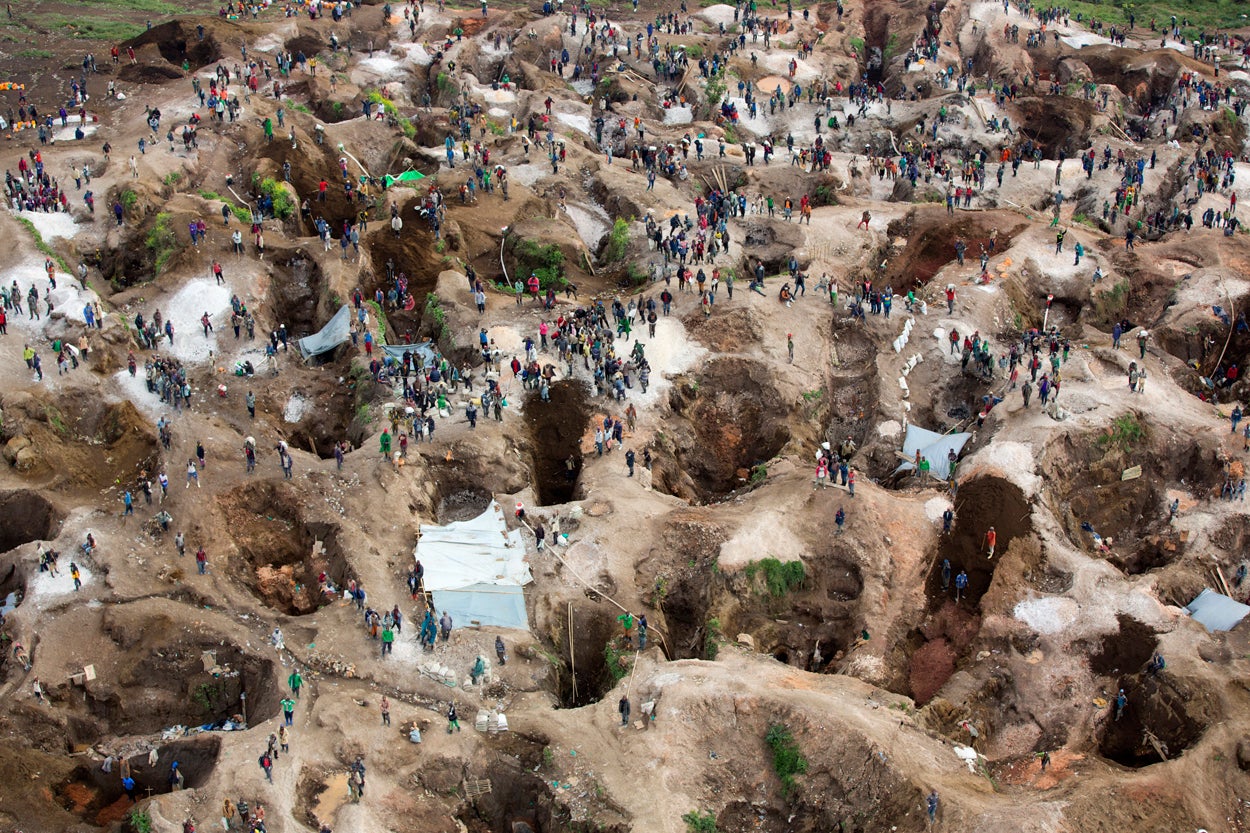
Mass atrocities continue to occur in locations highly correlated with a wide range of resource processes. In Beni and Ituri, the increasing rate of massacres perpetrated under the banner of Allied Democratic Forces (ADF) occurs during the harvest seasons for cocoa, coffee, papaya, rice, and other crops. In the Lubero territory, killings are perpetrated by numerous armed groups in areas of artisanal mining.
Mathieu believes that efforts by the military and police to prevent violence potentially made the situation worse, saying:
“The police service attempted to provide the public with a toll-free number to facilitate intervention in crimes and conflict. However, the expected results have not been achieved due to negligence or lack of resources. This police hotline is not only ineffective, it increases the risk of users and has resulted in real world harm. The system does not provide adequate security for civilians, as it can be quickly detected by operators, especially at night, and results in many deaths by gunfire in cities.”
When security alerts or requests for protection were sent to the authorities nothing ever came of it.
Local community groups have attempted to work more closely with local authorities, but these are always fraught with tension, as authorities tend to shift the blame onto civilians during these discussions. Mathieu noted, “in a workshop we held, a police chief told us that the population is providing the army and police with undesirable soldiers. He explained that families only want children who cause trouble to go into military service and only want their more conscientious children to become priests or pastors. Faced with this response, he seemed to assume that the training of security units was the responsibility of the families of origin.” Felix believes that community concerns were never truly prioritized by local authorities, “when security alerts or requests for protection were sent to the authorities nothing ever came of it.”
Other international organizations operating in North Kivu display serious shortcomings in their own limited efforts to alert the local populations. “These organizations take considerable time to raise or share alerts, as they initially treat the information as their own” says Mathieu. “Others restrict information sharing to other trusted sources, and more still neglect to share information with local communities through channels the residents are likely to use.”
Deliberate misinformation campaigns, conducted by nearly all parties to the conflict, facilitate the growth of armed groups by agitating individuals and entities who feel wronged by local governments, and spread fear and confusion among the populace with wild and often contradictory speculation. This information vacuum allows important issues to fester, preventing accurate and reliable information to penetrate into underserved areas.
Local Knowledge
The information ecosystem in North Kivu is typical of conflict zones the world over. Local populations are frequently bastions of strong situational awareness for their immediate surroundings, holding unique and valuable insights. Residents, familiar with the area and with strong social bonds to the community, share information with close networks regarding sightings of armed groups and other identified threats. Within these relatively small areas, communities are able to understand complex and fluid situations with remarkable detail. However, the nature of these networks are largely ad hoc, improvised from a limited number of basic tools which are already found close at hand; mobile phones, social media, and word-of-mouth.
More vitally, there lacks a formal process to link these locations to larger networks to transmit information both directions. The insights of other similar communities remains locked within small geographic areas and is infrequently transmitted with expedience to other locations which might benefit from the information. Similarly, broader information gathered by entities with the resources to implement EWEA programs rarely connects with these rural communities. The result is that advanced warning fails to reach remote areas, who are then displaced by fighting too late for it to matter. The information these remote communities possess only arrives at larger population centers when residents reach IDP camps or other informal settlements in and around larger cities. Information travels at a walking pace.
In addition, shortcomings of local administrative and security elements degrade the ability of local populations to make sense of rapidly developing and highly fluid circumstances. Poorly trained intelligence staff ignored important local insights which resulted in this information failing to reach higher echelons of command. These failures stifle the flow of vital information, and frustrate local residents who provide the information, often at great personal risk.
Making the Case for Localized Early Warning and Early Action
Localized EWEA efforts are not waiting for external funding or foreign expertise to coalesce; they are being implemented in whichever forms are viable for protection by the people who are most affected. Importantly, these community initiatives emerged in environments where armed elements tasked with the protection of civilians failed to maintain that protection, and in many cases contributed to the chaos by denying the reality of the deteriorating situation.
The circumstances that Goma found itself in early 2025 were not unique. In recent years there have been many examples of military and security forces seemingly evaporating in the face of a belligerent’s advance, leaving the population to bear the burden of occupation with almost no warning:
- In 2014, the Islamic State of Iraq and the Levant (ISIL) captured the Sinjar district of the Nineveh Governorate in Northern Iraq. Swathes of the Iraqi army defected or deserted and Kurdish peshmerga fighters who moved in to replace them offered only sporadic resistance in Yazidi villages like Gir Izer. ISIL elements rapidly captured territory and brutally executed and abducted thousands within days.
- In January 2019, militia groups engaged in a series of reprisal killings in the Yirgou district of the Barsalogho department of Burkina Faso. This same area saw JNIM attacks which killed hundreds. In these circumstances, the Burkinabe military either neglected to intervene or fled, resulting in the majority of deaths being civilians.
- In 2021, Islamic State (IS) linked rebels attacked the northern Mozambique city of Palma with security forces offering only token resistance. Indeed, the Islamic insurgency in the Cabo Delgado province of Mozambique has seen repeated instances of massacres perpetrated after government forces seemingly abandoned communities.
- The disorderly withdrawal of forces from Afghanistan in 2021 and the inherent weakness of the Afghan government and military resulted in rapid Taliban advances, often in the face of little or no resistance. Many civilians were unaware of the advances and had little to no time to react.
- In the ongoing Sudanese civil war (2023 to present) the Sudanese Armed Forces and allied militias have been accused of refusing to defend civilian populations against Rapid Support Forces attacks, especially in the Darfur region.
Much has been made about the localization of humanitarian and development funding, and major reductions in foreign aid funding have accelerated calls to localize future programming. There is now a unique opportunity to address these matters while the development field is reassessing its priorities. Not only because of an alignment of circumstances which might allow for the implementation of local early warning, but also because local communities will and have developed their own ad hoc EWEA systems within the limits of the resources and knowledge at their disposal. The role of the international community in EWEA would not be to parachute novel and foreign concepts into remote communities but to facilitate local expertise.
Aside from the demonstrated need and desire by community organizations, local EWEA systems show promise by using this close coordination with local organizations to learn from effective community practices, meaning that the international community is able to absorb new concepts and adapt to highly variable environments. Localized EWEA mechanisms place key staff close to the operational area which diminishes time delays, establishes an almost entirely local feedback loop, and allows the design and implementation of programming to be shaped by local experts. Importantly, by utilizing fewer staff from outside of programming areas, projects can be scaled to local economic conditions and represent an opportunity to implement a lean intervention model. Lastly, local EWEA systems can operate during the crucial period where early warning and early action functions transition to mitigation and protection efforts. This period is historically a weak point for atrocity prevention efforts because international organizations and even military contingents evacuate personnel while local communities are often left to fend for themselves. Even heavily battered and degraded EWEA systems operated by at-risk communities can provide some semblance of organization for shelter, safety and coordination.
However, local EWEA efforts do show significant limitations. Implementers and participants face great personal risk due to insufficient security controls, which are consistently underdeveloped due to funding and expertise shortages. Communications and information technologies are frequently inefficient, lack redundancies, and present digital security vulnerabilities. These inefficiencies do not necessarily demand the application of more exotic technologies, only a better utilization of existing technologies. Lastly, operational limitations in the form of insufficient cooperation with other similar EWEA networks in the vicinity, and a lack of connections with outside actors who can amplify and assist, means that local EWEA initiatives frequently operate in physical and technical isolation.
Local EWEA with international cooperation can overcome the capability and obstruction issues faced by at-risk communities. International assistance, rather than directing all oversight, can provide more tools and efficiency and to some degree bypass the potential information vacuum created by local authorities.
Building on existing localized early warning concepts, local EWEA should prioritize the following tenets:
- A meaningful portion of the staff and decisionmaking apparatus are located within the risk affected area
- Processes are driven by community and local actor input; actions are informed by local circumstances
- Local ownership is central; external cooperation and technical assistance may be necessary but local agency is critical
- Emphasis on use of ‘everyday peace indicators’ and plain-language communication, while reducing the reliance on abstract numerical models and mathematical calculations
- Accessible tools for conducting local analysis of risks, evacuation plans for organizations and populations at high-risk of being targeted
- Information is publicly available by default after responsible vetting and anonymization
These guiding principles provide global oversight while retaining local ownership. They also ensure that international actors benefit from the information and can make better decisions from these local insights. They may merely utilize the information provided, or find greater benefit from actively participating.
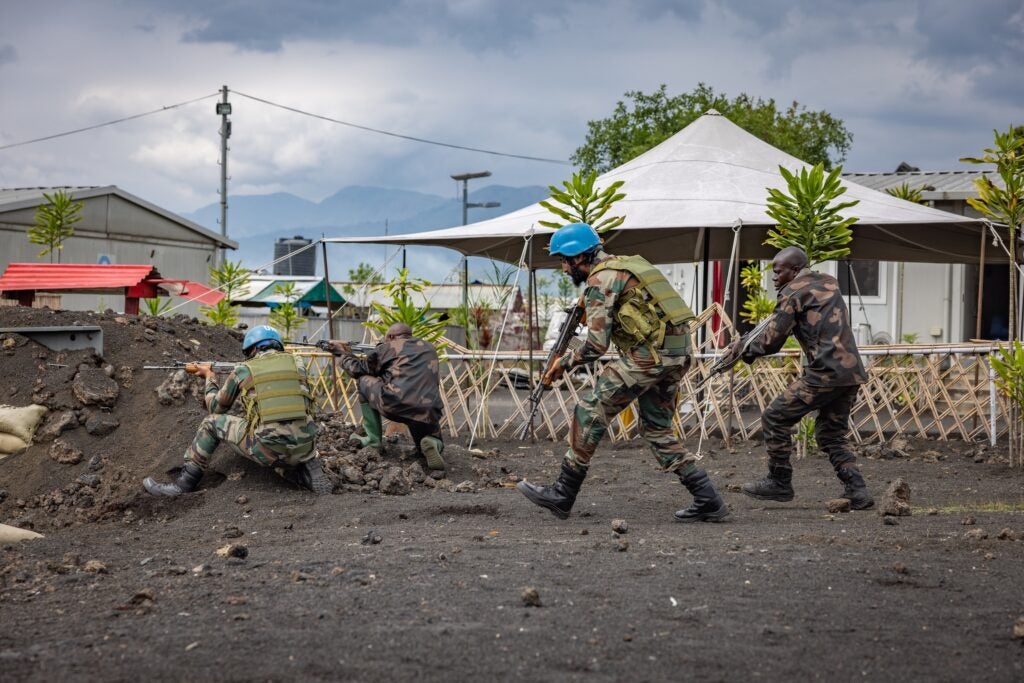
Many of these efforts merely require a greater degree of interoperability between existing community and security functions, along with a willingness to share information more freely. This aspect was not lost on Celestin, who stated that through his experience of the fall of Goma, “I understood that quality information, shared at the right time and with the right people, can save lives.” By their nature, these systems can also inform other local structures including anti-corruption, good governance, public health, and community service efforts.
Looking Forward
The fall of Goma and the circumstances surrounding it was not an isolated case. It is yet another example of vulnerable populations abandoned by the forces meant to protect them.
I understood that quality information, shared at the right time and with the right people, can save lives.
The argument that authorities do not share accurate assessments with the larger population to avoid panic or maintain morale hinges on the idea that this information would be harmful in some way to these communities. However, when these same authorities are aware that their positions are effectively captured, and are making plans for their own escape, this sentiment falls apart.
Local communities frequently form ad hoc early warning networks out of necessity, and these networks are often capable of surprisingly robust reporting. However, their improvised nature means they frequently lack coordination with other networks or larger reporting mechanisms. As a result, hyperlocal situational awareness can be impressive but understanding regional events and dynamics are underdeveloped.
Especially given the extreme changes in funding dynamics by the United States government, shifting atrocity prevention and early warning programming much closer to the source of conflict is not just crucial but also more viable than ever before.