DrPH graduate focuses on digital innovation for diabetes prevention

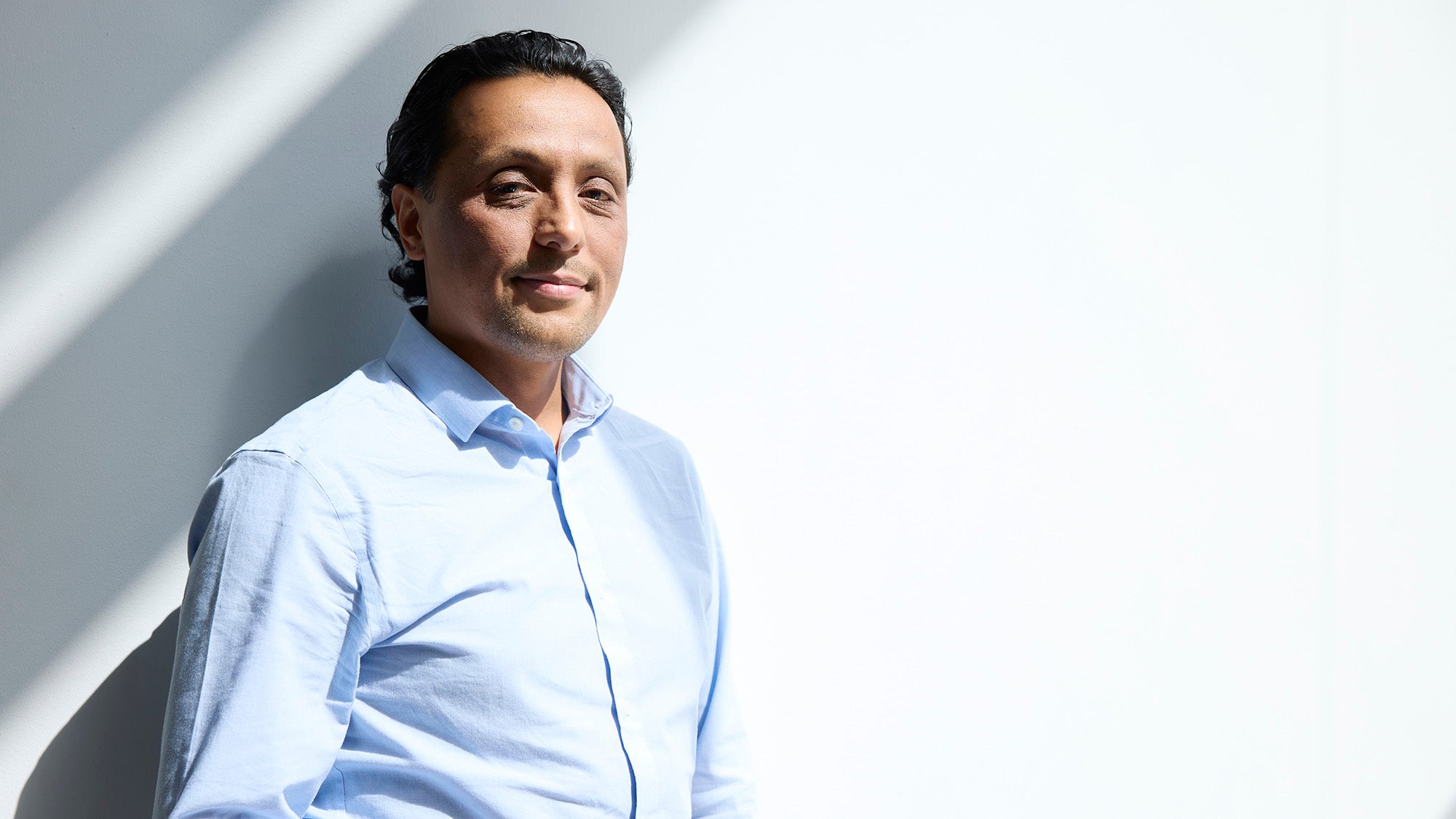
As a research fellow working in Boston a decade ago, Qais Dirar kept a brochure from Harvard T.H. Chan School of Public Health’s Doctor of Public Health program for inspiration. This month, he graduated with his DrPH and plans to return home to Saudi Arabia to help lead the regional expansion of a digital health company focused on diabetes prevention.
Dirar’s path to the School didn’t quite follow the one he’d once carefully mapped out, but he said that he’s come to see the value in taking unexpected career turns. “I used to think my career had to follow a straight line,” he said. “Now I’m more focused on discernment and asking where I can be most useful, staying open to unexpected doors, and trusting God’s plan rather than clinging to a rigid script.”
Dirar grew up in Jeddah and Riyadh, Saudi Arabia, the son of Sudanese parents who fled that country’s civil war in the 1980s. He developed broad cultural horizons at a young age, listening to the stories of his historian grandfather and traveling with his family. “I believe those experiences help me now with the work that I do,” Dirar said. “They broadened my perspective, teaching me to value the world’s diversity and to see every person’s unique capacity and potential. They also shaped how I lead, by looking for the full complexity in people and systems instead of reducing them to simple stories.”
A path to public health
He was the first in his family to go into medicine and debated whether to focus on clinical practice or research. A chance conversation while he was a medical school student at Alfaisal University sent him down the second path. He made a connection who helped him secure a summer internship with Martin Pollak, researching kidney diseases at Beth Israel Deaconess Medical Center in Boston. On the strength of that experience, he was recommended to work with prominent Saudi researcher Maha Almozaini, who was studying HIV and the immunocompromised host. Dirar said that this experience marked his first real exposure to public health and to working at the intersection of research, policy, and community outreach in a highly sensitive context.
After graduation, Dirar returned to U.S. as an ophthalmology research fellow at Boston Children’s Hospital, and his curiosity led him to pursue a new career direction. One day, while walking through the corridors of the Dana-Farber Cancer Institute at Longwood Medical Area, he heard musical instruments playing in one of the rooms. Inside, he discovered the Zakim Center for integrative therapy, which uses music therapy and other wellness practices to help patients undergoing cancer treatment. Through conversations with clinicians at the center, he was inspired to look into other avenues for approaching health holistically, ultimately landing on public health.
He later earned an MPH from Washington University in St. Louis in 2021, with a specialization in biostatistics and epidemiology, During his studies, he became deeply interested in multidimensional poverty and how sociodemographic factors shape premature mortality and life expectancy, particularly in low-income communities. That training, he said, sharpened his understanding of how structural inequities drive health outcomes and informed his later focus on prevention and health systems.
After graduating, he returned to Alfaisal University in Saudi Arabia as a senior lecturer of biostatistics, epidemiology, and public health, and the director of the university’s Health Innovation Initiative. In the latter role, he designed hackathons, incubators, and accelerator programs that helped students and faculty turn ideas into research projects and early‑stage ventures.
At the university, Dirar also helped mentor more than 50 graduate students on developing their master’s theses and said that it was one of the most rewarding parts of his work. “I loved seeing my mentees become more confident in their analytical skills, going from being intimidated by data to being able to design and interpret their own studies and seeing new possibilities for their careers,” he said. “Many still reach out to share their career milestones and accomplishments, which is incredibly meaningful to me.”
A program that develops leaders, encourages creativity
At Harvard Chan School, Dirar said the DrPH program and the community that developed within his cohort helped him not only become a stronger leader but also a more authentic one. “I came in thinking leadership was mostly about strategy and technical skill,” he said. “The DrPH helped me see leadership as an inner orientation: being clear about my values, integrating my identities across cultures, and showing up in ways that are true to who I am.”
He credited mentor Rick Siegrist, a senior lecturer in health care management and the faculty director of the DrPH program, with encouraging his creativity and connecting him with Willow Laboratories, a California-based health technology company, that became the host organization for his doctoral project.
For the last nine months, Dirar worked at Willow’s headquarters in California, focusing on business development and clinical research at the intersection of clinical evidence, product design, and market strategy. For his doctoral project, Dirar interviewed policymakers, business executives, clinicians, and researchers to evaluate the system readiness for digital innovation in Saudi Arabia. He also helped develop a market-entry strategy for Willow’s digital prediabetes prevention program, Nutu, which provides users with a daily score based on nutrition, movement, and sleep, along with tailored coaching and nudges to help them build sustainable, diabetes‑preventing habits. He found the Saudi health system to be highly complex—with multiple regulators, payers, and providers—but also strongly interested in using digital health tools as a complement to traditional care, particularly for diabetes and other noncommunicable diseases.
Siegrist said, “Qais exemplifies what we aim for in our DrPH students: strong analytical skills with a focus on real-world implementation. As a teaching fellow in our Innovation and Entrepreneurship in Health Care course and through his doctoral project, he has shown the ability to translate innovative ideas into practice. He is well-positioned to make a meaningful impact on public health.”
Dirar will soon become Willow Laboratories’ regional director of business development and clinical affairs in the Middle East, helping to lead the company’s expansion, localization, and research collaborations. Over time, he said that he hopes to support local manufacturing and research partnerships so that more of the value generated by digital health innovation is created within the Kingdom.
Long term, he’d like to work on public health projects with large-scale impact in lower-income communities. He imagines creating an organization or platform that supports students and early‑career professionals from under‑resourced settings to build innovations in health and entrepreneurship. “I’m interested in innovation not just as a business concept,” he said, “but as a way to give people tools to change their own communities.”
But for now, he’s excited to take advantage of the opportunities his new role presents. “My niche is at the intersection of digital innovation, chronic disease prevention, and health systems,” Dirar said. “I see an opportunity to grow as a leader by bridging disciplines, adapting to different roles, and leveraging the breadth of knowledge and tools I’ve gained across Saudi and U.S. systems.”
Quick hits
My favorite ways to unwind: Exercise is a big one—going to the gym, doing Pilates, barre, or going for a run. And family time, of course. My family is 11 hours away, so I talk to them every day.
Something people might not know about me is that I play the violin. I also enjoy learning new skills, such as cooking, languages, and horseback riding.
A book I like to recommend is Power, for All by Julie Battilana. It’s about how power works within organizations and between people, and how you can leverage it to help people rather than be a source of corruption. I took her one-week course at Harvard Kennedy School this year and loved it.