What is my compass? Reflections on the three Ps and the messiness of research

Junita Henry is a Rose Service Learning Fellow and a PhD candidate in the Department of Global Health and Population.
As researchers, we like to believe we approach our work objectively. But every study begins somewhere– in a question we chose to ask, a population we chose to centre, a framework we trusted enough to use. That somewhere is rarely neutral. It is shaped by what we believe about the world. It is shaped by us. I did not fully reckon with this until I was sitting with data I did not know how to hold.
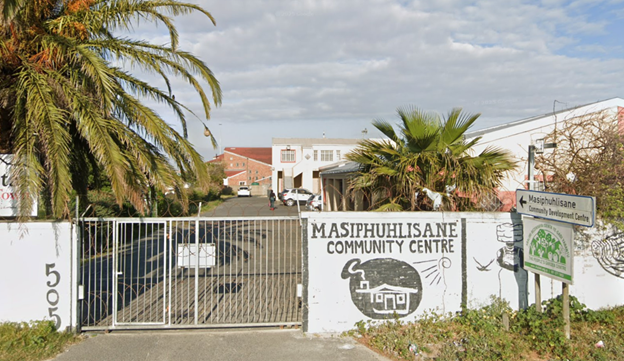
With support from the Rose Service Learning Fellowship, I was involved in a study with the Masiphuhlisane Community Research Centre (MCRC) investigating the role of religion and spirituality in child-caregiving practices in Khayelitsha, Western Cape. The motivation is straightforward– while the majority of South Africans hold religious beliefs, early childhood development programming and measurement practices largely ignore these lived realities, particularly in low-middle-income countries. We conducted individual interviews with 28 primary caregivers of young children aged 3–6, and held two focus groups with community and faith leaders.
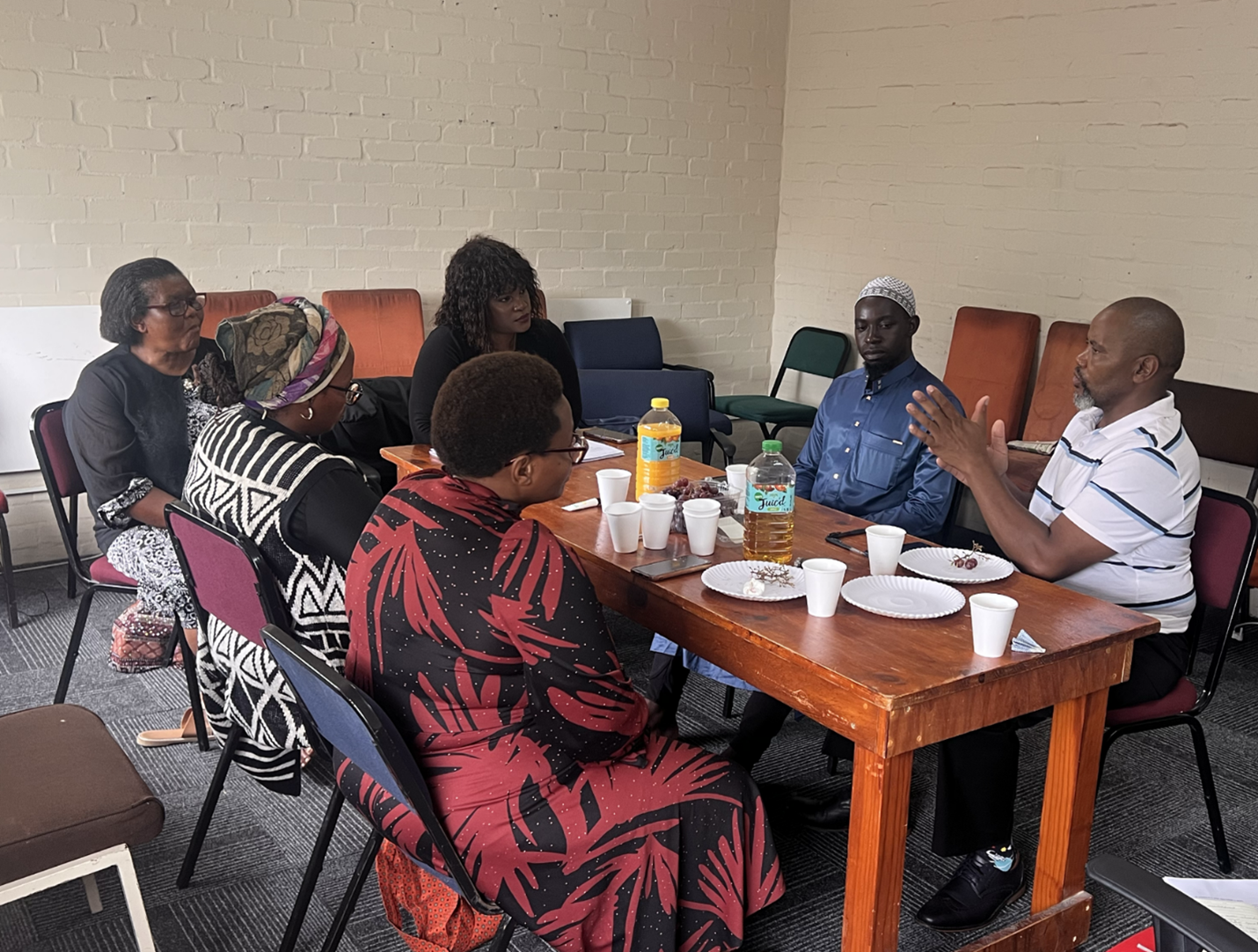
Caregivers across faith traditions spoke about religion and spirituality (R/S) not as background noise in their lives, but as something active and protective– a “shield” and a “compass” for their children. Many held dual belief systems, weaving together monotheistic faith with ancestral traditions, not as contradictions but as a form of coherence. These were not separate worlds. They were the same worlds. My own hypotheses about how these pathways worked began to unravel… the in-field realisation that things are messier than you assumed.
Sitting with these stories– a caregiver describing burning incense for her child’s wellbeing and good health, an infant ceremony to introduce a newborn to the ancestors, or speaking about the very real threat of child kidnapping and faith as the only ground on which community could stand together– I found myself asking a question I was not prepared for: How would any of this ever show up in quantitative data?
We are always aware, as researchers, that our measures are imperfect. We speak carefully about confounding, about the crudeness of our instruments, about what we cannot capture. But there is a difference between knowing that abstractly and feeling it concretely. These were not gaps at the margins. These were the thing itself– the living texture of how people protect their children and make meaning in hard circumstances– and I had no variable for it.
The finding that stayed with me most was that religion and spirituality functions as a moral compass for both caregivers and children. It orients them. It tells them which direction to move. But a compass is relative. When I came to write the final reflection on the impact of this research, I turned this metaphor back on myself. As a researcher, in which direction am I leaning? My own positionality has always quietly guided the questions I ask. My own beliefs are not invisible in my work– they are in it, whether I name them or not.
The Rose Service Learning Fellowship gave me language for what I was navigating. Proximity, positionality, and posture. Proximity– the deliberate practice of being present enough with a community to be genuinely changed by it. Positionality– the honest reckoning with who I am and how that shapes what I see. And posture– perhaps the most important of the three to me, the orientation I bring to the work. Not the posture of an expert arriving with answers, but of a learner arriving with questions.
And now I was sitting with findings that confirmed the importance of belief systems, with implications for research I will continue to do. How do I carry these findings forward honestly? How do I use them to build something meaningful without flattening the very complexity that made them matter? I do not think the answer is to resolve that tension. The answer is to stay in it– and to keep returning to the work with the posture of a learner.
That, I think, is the work. Checking in on myself as a researcher, noticing when I am leaning too far in one direction, holding the tension between rigour and learning, between measurement and meaning, between my compass and yours. Not resolving the tension, but learning to stand in it– with the curiosity of a learner rather than the certainty of an expert.
What is your compass– and are you holding it with the posture of a learner?