Meet Chimba Sanga: Zambian physician, public health leader, LinkedIn influencer
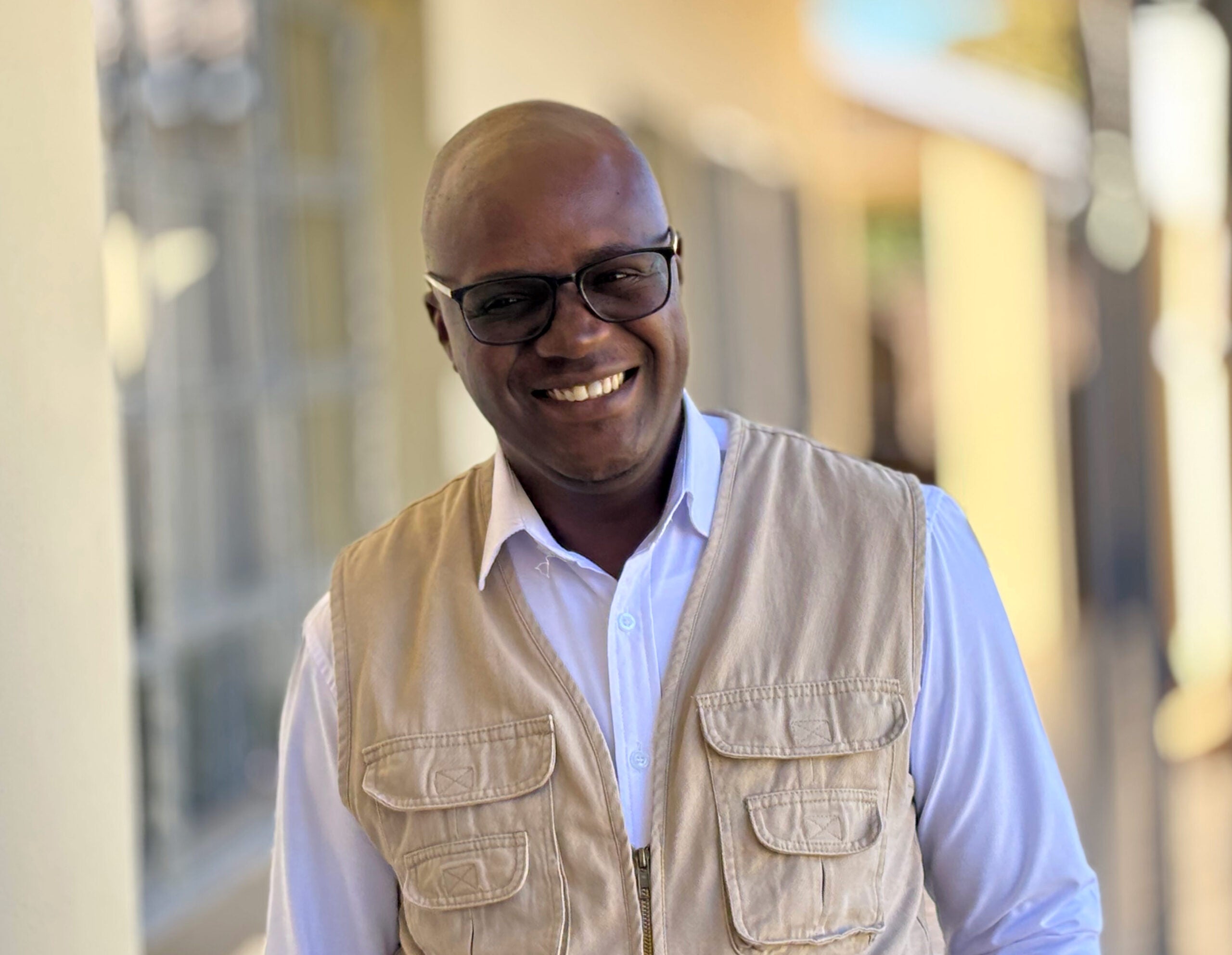
Sanga, MPH ’26, is using his new training in epidemiology to improve HIV and TB care at home in Zambia
At age seven, asked by his teacher what he wanted to be when he grew up, Chimba Sanga declared he would be a doctor. He’d never been asked that question before, but the answer came without thinking.
“I went home and told my mom, ‘I don’t know whether the response I gave was correct, but I said I wanted to be a medical doctor,’” Sanga recalled. “She asked me why, and I told her, ‘Because I want to be like you. I want to help people.’”
Sanga’s mother was a nurse, and her impact in their small community in Zambia was clear to Sanga. “I would visit her at the hospital and see her doing such good work caring for patients. And because the hospital was quite a distance away, patients would often come to our home as a first stop to ask her about symptoms or how to properly take medication,” he said. “Seeing people’s gratitude for her advice and care was indescribable. I really fell in love with medicine.”
With his mother’s example as his north star, Sanga went abroad to Russia to earn his medical degree and, later, to London to tack on a master’s degree in global health policy. Back in Zambia, he worked as a doctor at a major hospital, then as a medical officer in the U.S. Centers for Disease Control and Prevention (CDC)’s Zambia country office, monitoring PEPFAR-funded HIV and tuberculosis (TB) care.
“When I started working with the CDC, I realized I needed training in epidemiology to help me do my job well,” Sanga said. That realization led him to Harvard T.H. Chan School of Public Health’s hybrid, part-time master of epidemiology program. He’s slated to graduate this May.
“What appealed to me about Harvard Chan School’s program was not only its academic excellence, but also that it’s structured for people to continue to work while they study,” Sanga said. “Each year I’ve spent a few weeks on campus, but otherwise I’ve continued living and working in Zambia, taking online classes from there and implementing what I’m learning in real time.”
Becoming a biostats ‘mini expert’
As a medical student in Russia, after learning about the country’s high levels of mortality from cardiovascular diseases, Sanga had planned on becoming a cardiothoracic surgeon. He pivoted once back home in Zambia.
“I discovered the number one cause of death here is infectious diseases, HIV and TB in particular,” Sanga said. “I wanted to be part of the solution—and not just as a physician, but also from a public health standpoint.”
Working for the CDC, Sanga oversees and supports all HIV and TB services provided in Zambia’s Eastern Province, including testing, treatment, case management, and social support programs. He also monitors and analyzes data related to all of these services—which is where his Harvard Chan School education has proven essential.
“I had all this data, but for the most part, I didn’t know how to analyze it in a way that could inform HIV and TB programming,” Sanga said. “I just didn’t have the skills.”
Sanga credits a biostatistics class taught by Brian Healy, associate professor in the Department of Biostatistics, with turning him into a “mini expert” in data analysis.
“I’ve done schooling and training on different continents and have been exposed to a lot of people. Professor Healy is hands down one of the best,” he said. “And not just him—all of the faculty at Harvard Chan School have a way of simplifying complex things. I’ve learned biostatistics before, but it wasn’t until I did so at Harvard that it really became understandable.”
Sanga put these newly gained skills to use to complete his practicum—a project that will have real-world impact on children and adolescents in Zambia affected by HIV. Currently, across the districts in Eastern Province, health officials implement one of two programs to mitigate pediatric HIV mortality. The “standard” program is a comprehensive—and expensive—intervention providing medical support and education, plus cash assistance, to youth living with HIV or who have otherwise been affected by the disease, typically through loss of a parent or parents. The other is a newer “light” intervention focused exclusively on providing medical support to youth living with HIV. Sanga has been analyzing data on pediatric HIV viral loads district by district, to understand where, and through which program, the disease is best kept in check.
“Before this, there was no research comparing the effectiveness of the standard program versus the light program,” Sanga said. “It’s an essential question to answer—whether the light version will perform well enough and meet our viral suppression goals—especially as Zambia and other countries work to make HIV interventions more cost-effective and sustainable in the long term.”
Sanga’s research found that children and adolescents enrolled in the light program had 71% lower odds of achieving durable viral suppression than those enrolled in the standard program—suggesting, Sanga said, that expanding HIV prevention efforts through lower-cost programming may compromise clinical effectiveness, and that family-centered components of the standard program must be preserved in order to meaningfully address pediatric HIV.
Sanga was mentored by Jeff Imai-Eaton, associate professor of epidemiology, throughout his practicum.
“Professor Imai-Eaton has a lot of experience working on HIV in southern Africa and offered so much knowledge, and even connections to others in Zambia working on HIV programs,” Sanga said. “He was a joy to work with.”
Inspiring others to follow his path
After being the one of the only few Africans in his London School of Economics cohort and the only Black person in his medical school class, Sanga has developed a particular passion for further increasing diversity in higher education. When he isn’t working or studying, he’s using LinkedIn to reach his 16,000 followers—most of them from low- and middle-income countries in Africa and Asia—with tips for applying to universities and for scholarships and financial aid. He also reposts educational, professional, and funding opportunities his followers may not otherwise hear about.
The goal, Sanga said, is to inspire and inform others through his story—a Zambian who, without the connections many of his followers assume are required, has earned multiple degrees and scholarships, including Harvard Chan’s MPH-EPI Scholarship.
“So many of my fellow Zambians, Africans, and others from less wealthy countries are underrepresented at universities worldwide, especially elite ones. These are people with good grades and a good story, but who are often misinformed or totally in the dark about what kind of schools are in their reach, how to apply to them, and how to fund their education,” Sanga said. “These are people I want to help.”