Together We are Mighty: Water Filter Distribution in Rural Rwanda
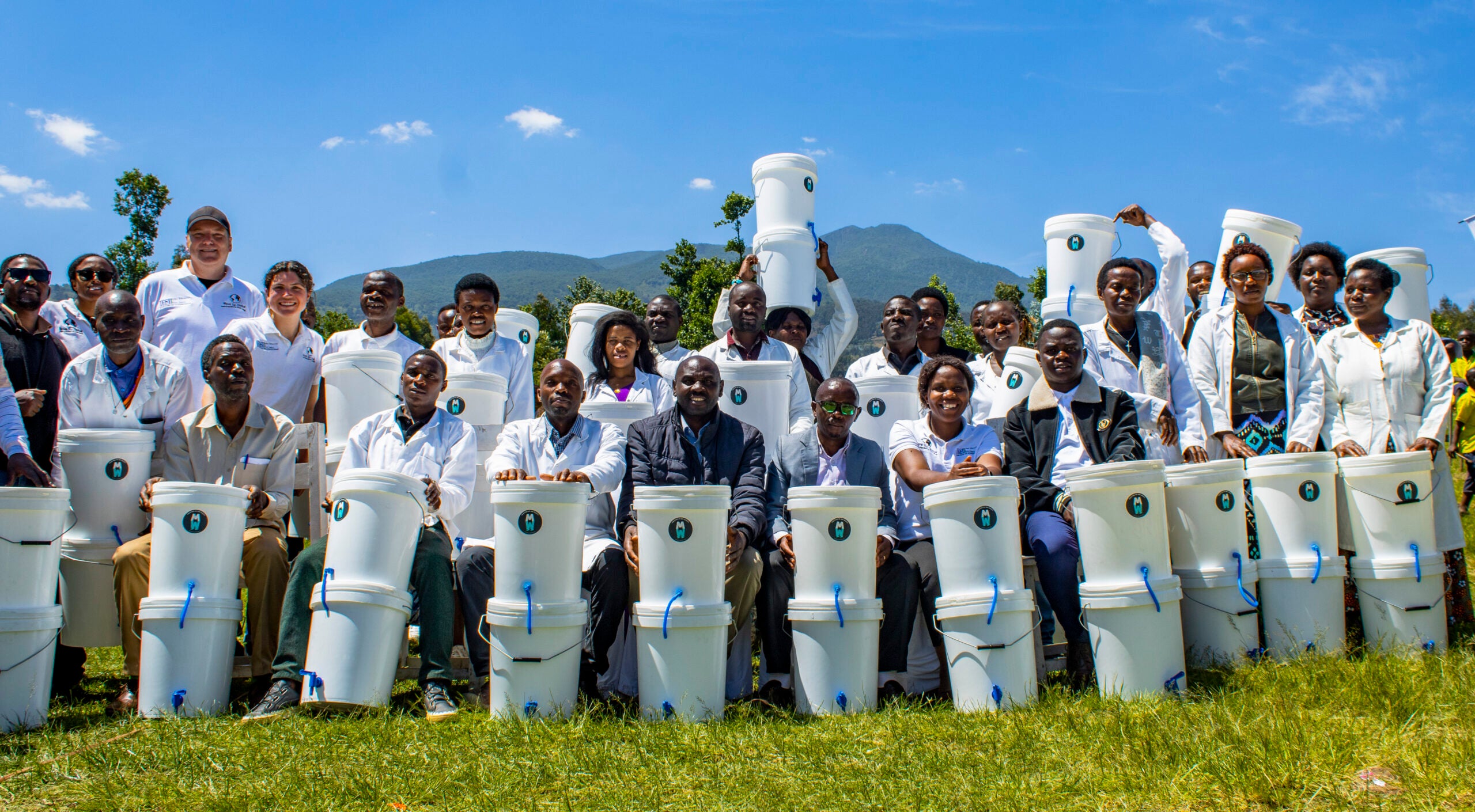
Cora Cunningham is a Rose Service Learning Fellow and a Master of Science candidate in the Department of Global Health and Population.
A chorus of song erupted in the courtyard and in unison, 51 people clapped to the beat. At the center of the crowd beneath a bright blue sky, a man and woman danced amaraba, a traditional Rwandan dance. The orange cloths wrapped around their waists blew with every step. The energy was contagious. Signaling gratitude, the dance ended with an embrace. The dance, however, was not for a holiday, birthday, or other event; it was for clean water.
Tourists from all over the world come to Volcanoes National Park to see one of Rwanda’s most famous sights: its gorillas. While tourists search for gorillas, rural communities search for water. Water fetching in the park is prohibited, but often left with no other option, children spend hours trekking into the park’s forests to fetch turbid and contaminated surface water. Other common water sources, such as piped water and rainwater, are often inaccessible, scarce, or costly. The lack of access to safe water, sanitation, and hygiene (WASH) infrastructure exacerbates neglected tropical diseases. Over 40% of school-aged children in these communities report signs of intestinal worms, which worsens malnutrition, exacerbates school absenteeism, and hinders child growth and development. The solution? Water filtration. Specifically, hollow fiber membrane filters are a type of household water treatment technology that are low cost, easily maintained, and effective at removing harmful contaminants from drinking water.
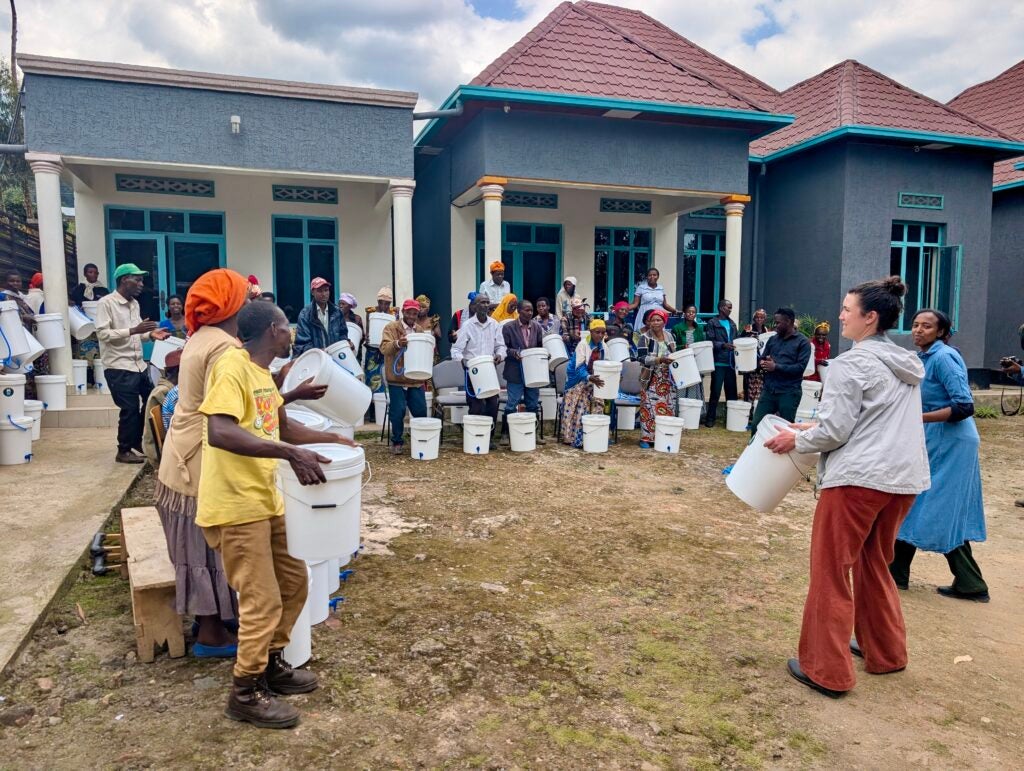
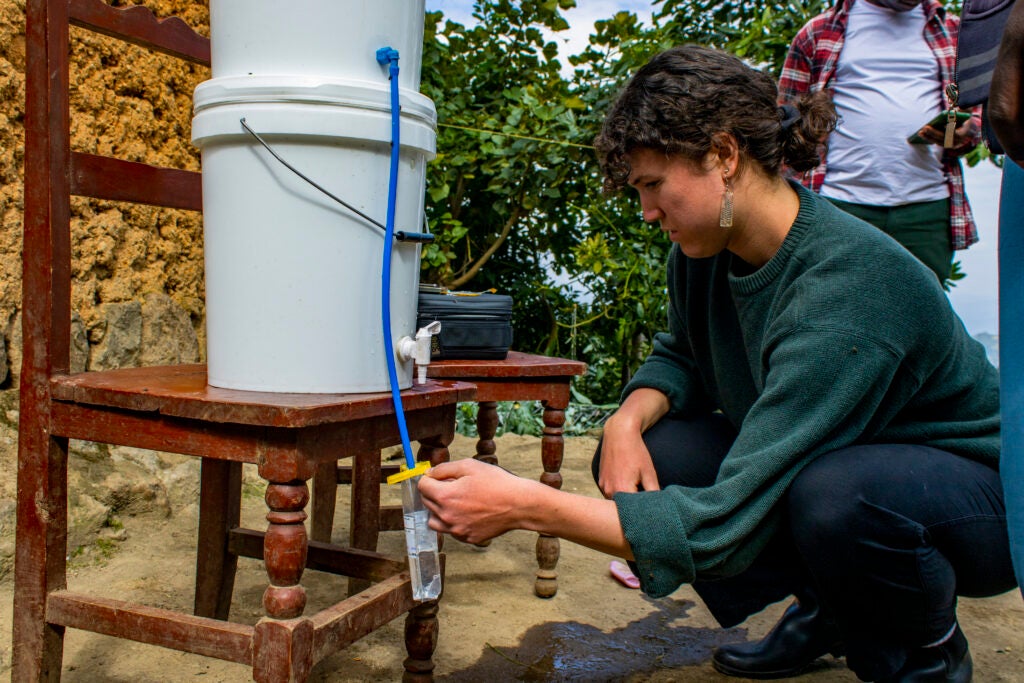
As a Rose Service Learning Fellow, my project aims to examine the feasibility, acceptance, and family-reported health and education outcomes of these water filters. My first introduction to the communities surrounding the park was in 2024, when I spent the summer implementing a project focused on WASH education as a Move Up Global Fellow and Davis Projects for Peace Grantee. Move Up Global (MUG) is a Boston-based non-profit that aims to improve health and education outcomes in rural Musanze District, Rwanda through the Ipfundo (The Knot) framework, which capitalizes on building linkages between education and community health systems. After joining MUG’s Board of Directors in September 2025, the Rose Service Learning Fellowship provided the ideal opportunity for me to return to Musanze to expand MUG’s evidence base and assist in the distribution of a second round of filters. Together with Ireme Education for Social Impact (IESI), MUG’s implementation partner, and Mighty Water, a U.S.-based non-profit responsible for the design and supply of the filters, we drilled 600 buckets, distributed 195 water filters, administered household surveys, and conducted water tests for E. coli contamination. The study remains ongoing.
“Dance to clean” is the method used by Mighty Water to teach filter recipients how to clean their water filter. Dancing is fun, reflective of cultural heritage, and rooted in community values, but when used for public health messaging, it also becomes symbolic of community transformation. From toddlers to the elderly, everyone danced in celebration of clean water. In addition to dance, skits, storytelling, and visual representations led by IESI were all vital to community-engaged WASH education. In this context, the success of these tools is largely attributed to IESI’s connection to the community. As a Rwandese organization based in the village, IESI is uniquely positioned to tackle issues related to WASH, which rely upon behavior change. Whether hiking through the village to a home visit, assembling filtration systems, or collecting water samples, IESI always operates as a team and even more so as a family unit. While Mighty Water brought the technical expertise and IESI the local knowledge, my role became to bridge the two.
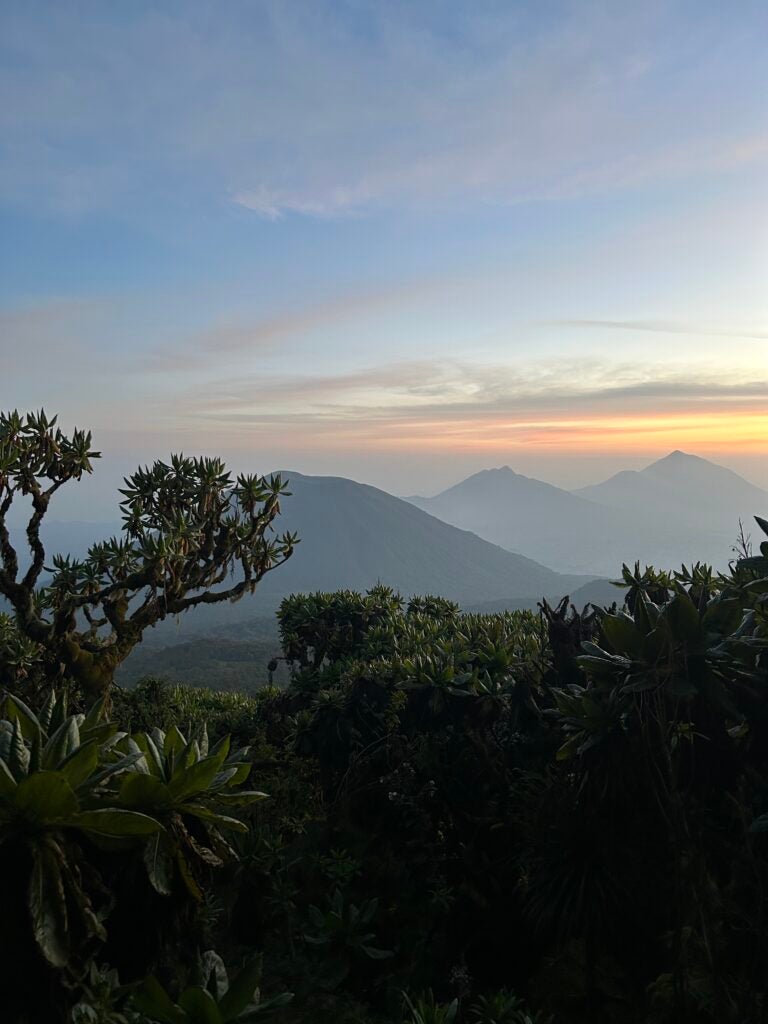
After a week of workshops to distribute the water filters, four of us had the opportunity to trek Mount Karisimbi, the tallest volcano in Rwanda and the eleventh highest peak in Africa. The trek served as a space for reflection. The collaboration between MUG, IESI, and Mighty Water had impacted thousands of lives, yet we all felt there was still so much to be done. With this in mind, we hiked through the dense jungle, across lush meadows, and into the clouds. The trek took us 33 hours to complete and comprised over 6,000 feet in elevation gain. It was one of the most challenging but rewarding treks I have ever done. In global public health, some problems seem too big to overcome. Whether through one home, one school, or one village, but always with many dance parties, I have witnessed WASH transform the health of communities. Lasting change is built in collective movement, gratitude, and togetherness. Together, we are mighty.