Making sense of the new U.S. childhood vaccine recommendations
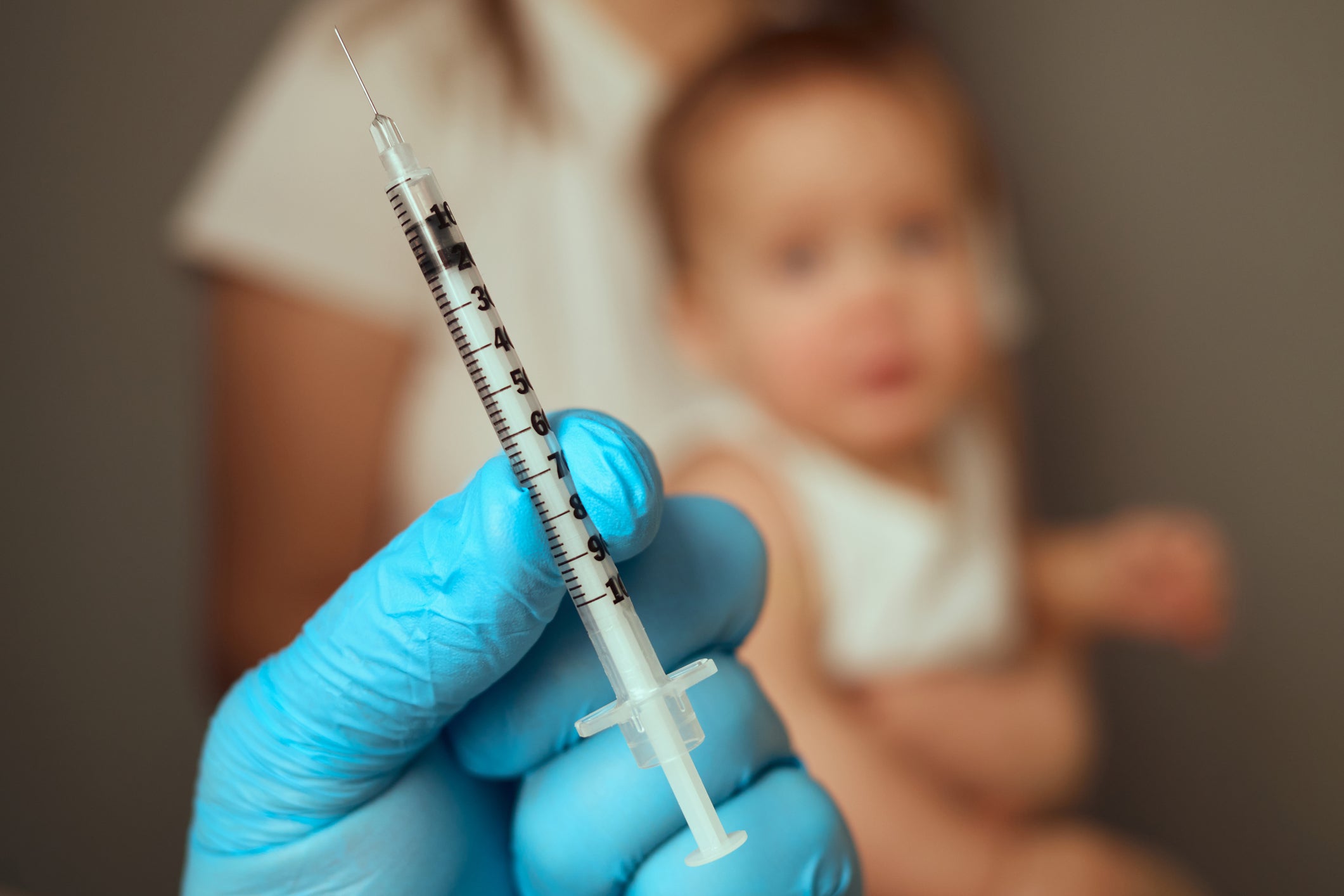
On Jan. 5, the U.S. Department of Health and Human Services (HHS) released the new childhood immunization schedule, which provides recommendations on which vaccines every child should receive. The new schedule reduces the number of universally recommended vaccines from 17 to 11. Previously universally recommended shots offering immunity against hepatitis A and B, rotavirus, meningococcal disease, flu, RSV, and COVID are now recommended only after “shared clinical decision-making”—having discussions with health care providers—or for children at high-risk. The updated schedule also reduces the number of recommended vaccines against human papillomavirus (HPV) from two or three to one.
Below, Bill Hanage, professor of epidemiology at Harvard T.H. Chan School of Public Health, offers his perspective on the new vaccine schedule.
Q: What might we expect if U.S. vaccination rates drop?
A: The bottom line is that if fewer people are protected, there will be more preventable illness, suffering, and death.
Exactly how much and how soon will depend on the vaccine, the disease it targets, and how long it takes for the impacts on health to show up. Hepatitis B, for example, can lead to chronic disease, including liver cancer or liver failure, the full impact of which will take years to appear. Meanwhile, in the shorter term, meningococcal meningitis is an acute and deadly illness. Rotavirus causes diarrhea, and before vaccines were available, was responsible for tens of thousands of kids needing care in the ER or admission to hospital. Flu season claims the lives of children every year. Last year, a record 289 children in the U.S. died from the flu, and we find ourselves now in the midst of a particularly nasty season, with cases of the virus reaching record levels.
If fewer children receive these vaccines, we can expect more of these diseases, all of which can be dangerous both in the near-term and down the line. Uniquely and disproportionately at risk are children without a primary care provider or who are uninsured. These children are also the ones who will find it most difficult to access vaccines going forward.
Q: Why were these particular vaccines removed from universal recommendation? What are your thoughts on the decision?
A: Some reasoning has been telegraphed at recent meetings of the Advisory Committee on Immunization Practices, albeit without evidence to justify it. A common idea is that most cases of these illnesses are mild, and so the overall risk is low—but that’s like suggesting that because severe earthquakes are rare, we should not bother preparing for them, or that because most buildings don’t have fires, we should abandon fire codes. In fact, the risk of many of these illnesses is so low because of vaccines. Take, for instance, this year’s flu vaccine. The current flu season has seen the emergence of a strain that is not included in the vaccines, yet the vaccines still offer significant protection. A study from the U.K. found the present seasonal flu vaccine was 72-75% effective at preventing children and adolescents from needing to visit the ER or get admitted to a hospital for their illness. So even this admittedly imperfect vaccine offers protection against serious illness.
Q: What about the reduction in recommended vaccines against HPV?
A: The HPV vaccine prevents infections that over time can lead to cervical cancer. Although the World Health Organization recommends one dose, that is in the context of low- and middle-income countries with weaker health systems, where it makes sense to prioritize a single dose to achieve as broad protection as possible.
Q: Are there any lessons from the COVID pandemic and the development and implementation of that vaccine that are useful to understanding the new recommendations?
A: During the pandemic, I got endless questions about “herd immunity,” meaning the proportion of the population that cannot be infected because they are already immune. If this number is high enough, it can completely exclude a virus. Until recently, this is exactly what happened with measles: High vaccination rates stopped people from getting infected and transmitting the disease to others. In other words, a strong reason to be vaccinated is that it protects your neighbors as well as yourself.
In the case of COVID, vaccines greatly reduce severe illness without completely stopping transmission. That doesn’t mean COVID vaccines were or are a failure: On the contrary, they have saved millions of lives, and are particularly impactful in older people who are at higher risk of getting seriously sick. But the fact that transmission continues—and the extent to which individual risk of severe disease varies—may help explain some of the vaccine skepticism that seems to be animating these recommendations.
Q: What do you make of the “shared clinical decision-making” recommendation in the new guidelines?
A: “Shared clinical decision-making” sounds good but requires additional contact with a health care provider, which takes time and money and reduces the chances a person gets a shot. It also implies there is some reason you might not benefit from a vaccine or would rather take your chances with the infection itself. To pick just one example of the risks of not getting vaccinated, meningococcal meningitis has a fatality rate of around 10%, and 20% of survivors suffer lasting consequences like amputations or hearing loss. Everybody deserves to be protected from a disease like that.
Q: The administration said that reducing the number of recommended childhood vaccines better aligns the U.S. with peer, developed nations, including Denmark, which immunizes children against just 10 diseases. (The U.S. previously recommended vaccines against 17 diseases.) Thoughts?
A: Countries do vary in the exact vaccine schedule they recommend, based on their priorities and health care systems. If you look at the U.K., Germany, Canada, Australia…the list goes on and on, they vaccinate against the great majority of these diseases.
Denmark recommends unusually few childhood vaccinations. It also has readily accessible universal health care, unlike the U.S. To pick one example of why that context matters, in Denmark, more than 95% of pregnancies are screened for hepatitis B, so exposed babies get the vaccines they need and parents get the care they deserve. In contrast, the U.S. wholly fails to screen 12-18% of pregnancies for hepatitis B. Those who test positive are more likely lost to follow up care, and those who get missed entirely are at higher risk of being positive than the population as a whole. Routine vaccination of all infants against hepatitis B was adopted in the U.S. precisely because targeted vaccination was not working within our health care system.
Q: Could the new recommendations help boost trust in the country’s public health system, which supporters have argued?
A: It seems odd to suggest that we can build trust in public health through recommendations that will mean more people get sick.
Q: Is more research on vaccine efficacy and safety indeed needed?
A: We should of course continue to collect evidence so we can make good decisions. That said, there is already an enormous body of research on these vaccines, and the evidence it has provided has always informed the U.S. pediatric vaccine schedule. Or at least it used to.
Q: Anything else people should be aware of?
A: Vaccine recommendations are not and should not be set in stone. They get updated as new shots become available, or evidence shows that there are new opportunities to prevent a substantial amount of illness. But those updates are typically small and carefully reasoned. Upending existing guidance in this way is unprecedented.
Professional medical associations, along with initiatives like the Vaccine Integrity Project, are independent of the changes at HHS and continue to offer advice based on evidence. Those are good resources to check out.