India Health Systems Reform Project
The India Health Systems Reform Project is dedicated to strengthening health systems in India, working collaboratively to enhance the health and well-being of communities across the nation.
665 Huntington Ave
Building 1
12th Floor
Boston MA, 02115
Featured Projects
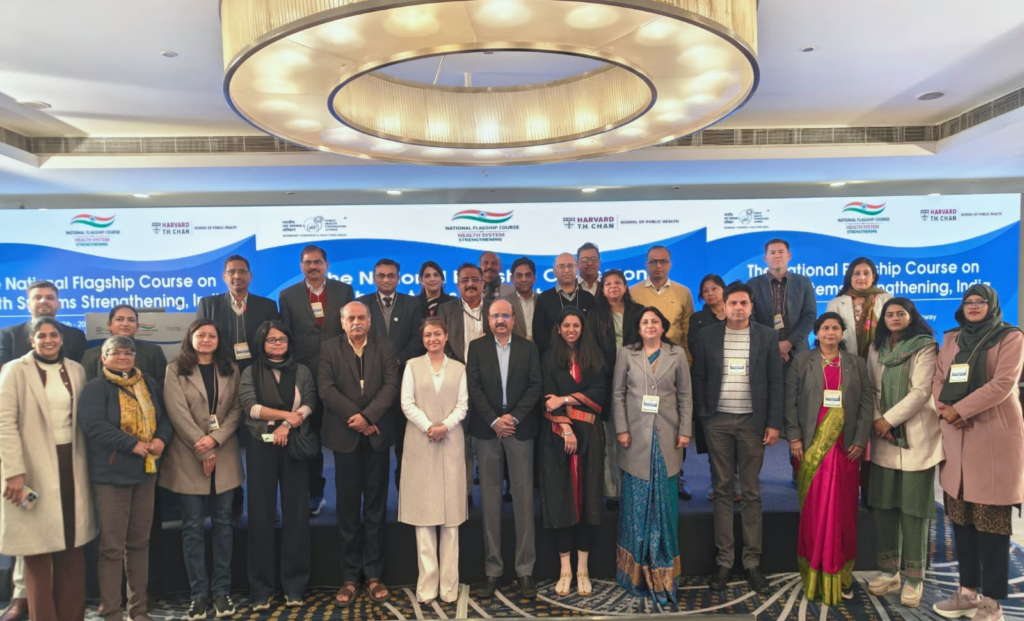
The India Health Systems Project at the Harvard T.H. Chan School of Public Health, in collaboration with the Public Health Foundation of India (PHFI), recently hosted the 6th National Flagship Course on Health Systems Strengthening for India from January 15-20, 2026, in New Delhi. This year’s cohort brought together senior policymakers from Assam, Bihar, Meghalaya, Odisha, and Uttar Pradesh, including officials from the Departments of Health and Planning, the Indian Council of Medical Research (ICMR), and the National Institute of Health and Family Welfare (NIHFW).
Launched in 2017, the National Flagship Course for India is an executive education program designed to strengthen the health policy leadership of senior national and state-level decision-makers. The Course is built upon the Flagship Framework jointly developed by Harvard faculty and the World Bank. The primary objectives of the course are to provide participants with analytical approaches and tools to assess their health systems’ performances, diagnose root causes of underperformance, and develop policy and management reforms that are guided by ethical considerations, evidence-based and politically feasible.
The India Flagship course is specifically tailored to the context of India’s national and state-level health systems. Instructions include lectures, case studies, group works and debates.
Winnie Yip, PI of the India Health Systems Project, is the course director. The course’s curriculum is designed and delivered in collaboration with Harvard colleagues (William Hsiao, Anuska Kalita, Kevin Croke, and Ole Norheim) and other India based (Arti Ahuja, ex- Union Secretary of the Government of India; Himanshu Negandhi of PHFI) and global (Ajay Tandon, Somil Nagpal, Sheena Chhabra, Aarushi Bhatnagar, and Om Prakash Kansal from the World Bank; Abdo Yazbeck from Johns Hopkins University) experts.
The Course is made possible through a longstanding partnership between Harvard and the Gates Foundation and reflects a shared commitment to building sustainable institutional capacity for health systems strengthening in India.
Background and Rationale:
Health systems are increasingly challenged by complex performance issues related to access, affordability, quality of care, efficiency, equity, and public satisfaction. Health policymakers and other professionals—strategists, managers, and practitioners—are pivotal for designing health system reforms to address these challenges and for translating high-level policy into impacts that directly benefit people. Yet, these professionals often lack targeted training and support to effectively lead health system assessments, design transformative initiatives, predict and navigate political barriers, or foster innovation. Understanding how health systems function, identifying where and why they underperform, and designing contextually appropriate reforms require a unique and specialized skill set that is not widely available. This capacity is essential not only for responding to current challenges but also for future-proofing systems against emerging challenges—whether it is aging populations, rising healthcare costs, or new diseases.
This virtual course—India Health Systems Strengthening—seeks to fill this critical gap. It aims to equip mid-career professionals—who play a pivotal—yet often under-supported with the skills to comprehensively understand health systems, assess performance using robust frameworks, diagnose systemic weaknesses, and design transformative reforms that are tailored to local realities.
The Course is organized by the Public Health Foundation of India (PHFI)—an Indian not-for-profit academic and research institute, developed by Harvard, and taught by instructors from Harvard and other institutions. The Course is supported by a Gates Foundation grant (known as the India Health Systems Reform Project), led by Prof. Winnie Yip at the Department of Global Health and Population. Since 2021, this team has been offering versions of the course (funded by the Gates Foundation)—for health system researchers, practitioners, and policymakers in India. Each iteration of these courses has been exceptionally well received by the participants, donors, governments, and non-government collaborators.
Besides fulfilling the Gates Foundation grant’s objectives and obligations, this proposed course aligns with the School’s mission to advance public health globally through learning, discovery, and communication. It creates opportunities for engagement with partners in governments, multilateral agencies, and philanthropy to build health systems leadership capacity at scale.
Aims and Objectives:
The overarching aim of this course is to equip mid-level health professionals with the analytical capacity and networks to strengthen and transform health systems in their contexts. Specific objectives include:
- Enable participants to critically assess the performance of a health system and to diagnose the underlying causes of these performances. This approach emphasizes ‘why’ it is important to focus on health systems design.
- To deepen understanding of key policy levers they can use for health system reforms based on their systematic assessment and diagnosis.
- To provide actionable skills for designing reforms.
- To build sustainable capacities on health systems analytical thinking and support context-sensitive approaches to health systems leadership.
Target Audience:
- Professionals in national health programs and public health agencies in India
- Program managers and technical officers in philanthropic, bilateral, and multilateral donor agencies
- Professionals in think tanks, consulting firms, and other organizations engaged in providing technical assistance to governments and private sector institutions
- Staff of NGOs, philanthropic organizations, and implementing partners
Participants would have at least 6 years of relevant experience and hold a mid-level or emerging leadership role. Participants will be selected based on an application accompanied by their CVs and statements of purpose. In response to the call for applications issued by PHFI, they received 328 applications. Out of these, ~40 candidates will be selected.
Course Instructors and Leaders:
The course is conceptualized and proposed by Prof. Winnie Yip and Dr. Anuska Kalita from the Department of Global Health and Population. While Yip and Kalita will provide overall leadership, they will leverage the expertise of faculty and researchers from Harvard and affiliate institutions to teach different modules and sessions. Potential instructors will include stalwarts and thought leaders in health systems, such as Profs. Bill Hsiao, Michael Reich, and Kevin Croke. In addition, guest instructors (primarily drawing on the School’s alums) will share policy design and implementation experiences of relevant health reforms from different country contexts. These guest instructors include Prof. Annie Haakenstad (Institute of Health Metrics and Evaluation, Seattle), Prof. Terence Cheng (Monash University, Australia), Prof. Rockli Kim (University of South Korea), Prof. Indranil Mukopadhyay (Jindal Global University, India), Abdo Yazbeck (World Bank), and Prof. Abril Campos (Tecnológico de Monterrey, Mexico).
Funding and Tuition:
The costs of the Course, including honoraria to instructors and organizing costs incurred by PHFI, are funded through the Gates Foundation grant—India Health Systems Reform Project. The Course is offered free of charge to the selected participants.

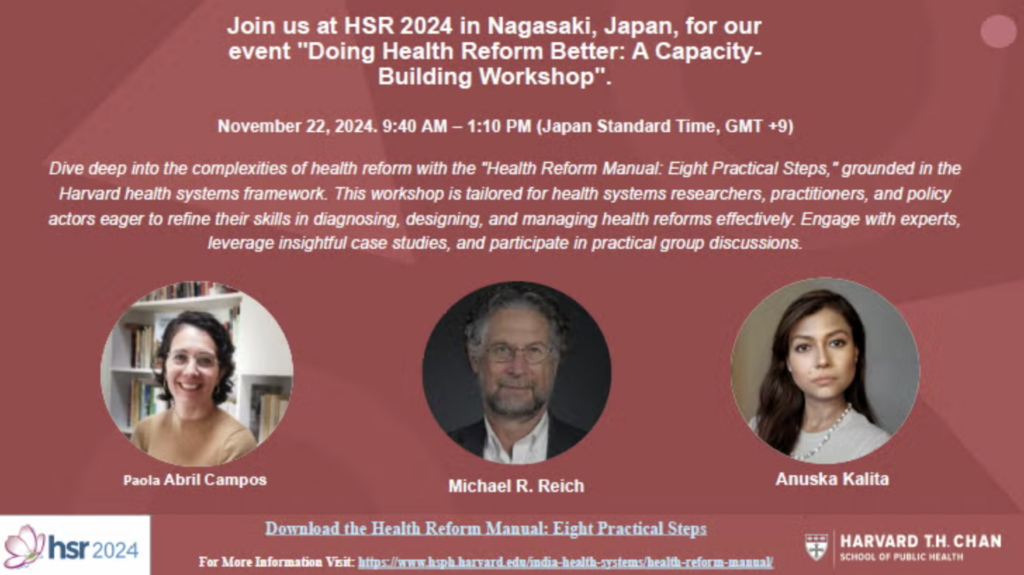
Where: Nagasaki, Japan
Date: November 22, 2024, 9:40 AM – 1:10 PM (Japan Standard Time, GMT +9)
Instructors: Michael Reich, Abril Campos, and Anuska Kalita
We are pleased to announce our event at HSR 2024, Doing Health Reform Better: A Capacity-Building Workshop, led by Michael Reich, Abril Campos and Anuska Kalita.
About the Course
Systematic, evidence-based health system assessments and diagnosis are essential for driving impactful health reforms. A health system’s performance is measured by its ability to achieve both end goals and intermediate outcomes. Unlike traditional evaluations of specific interventions and programs, these diagnostic strategies and assessments require a holistic approach that encompasses all facets of the health system, extending beyond basic indicators like mortality and morbidity.
This free course on Health System Assessments and Diagnosis adopts Harvard’s Getting Health Reform Right Framework, a pioneering approach to analyzing health systems. Participants will learn the methodologies and data necessary for conducting comprehensive assessments and diagnosis, enriched with case studies from India and other nations. This course is designed to equip participants with the tools to evaluate and enhance health system performance effectively, and is available to selected participants at no cost.
Objectives:
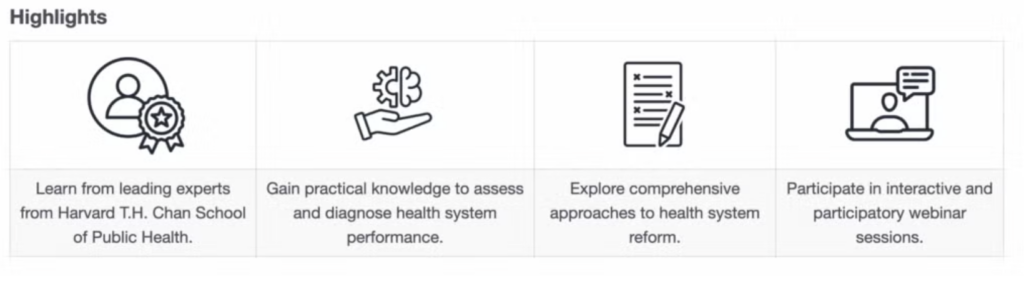
- This course aims to equip participants with a robust conceptual framework and systematic processes for conducting health system assessments and diagnosis, with a focus on India’s unique contextual realities.
- Participants will learn the critical importance of examining health system design, identifying key aspects to measure, and understanding how to evaluate a health system’s performance comprehensively.
- Our goal is to support researchers and practitioners in the practical task of conducting health system assessments and diagnostics. This includes identifying the underlying causes of both successful and poor performance and leveraging evidence to inform and design effective health system reform.
Organizers

Public Health Foundation of India (PHFI)
PHFI is a public private initiative that has collaboratively evolved through consultations with multiple constituencies including Indian and international academia, state and central governments, multi- and bi-lateral agencies and civil society groups. PHFI is a response to redress the limited institutional capacity in India for strengthening training, research and policy development in the area of Public Health.
Harvard T.H. Chan School of Public Health (HSPH)

At the forefront of global public health education, the Harvard T.H. Chan School of Public Health leverages decades of experience in researching health systems worldwide. Our faculty and researchers have been instrumental in shaping policy and designing health systems in India, as well as in comparable countries.
Course Modules
The Course will consist of 10 modules, each with interactive and participatory webinar sessions. Although each session will be conducted as a standalone webinar, the topics are interlinked. Participants interested in learning about comprehensive health system assessments will benefit the most by participating in the entire course. Participants would have the choice to select the modules they want to attend and benefit from. However, only those participants who attend the entire course will be awarded completion certificates.
Context
Over the past few years, India has introduced several major healthcare reforms like the National Health Mission (NHM), Pradhan Mantri Jan Aarogya Yojana (PMJAY) and the Health and Wellness Center (HWC) Programs, and the recent National Digital Health Mission (NDHM). In addition, India has implemented various state-level initiatives on health financing and healthcare delivery—all seeking to improve the health system’s performance. There have, undoubtedly, been some significant achievements, especially in increasing access and utilization of health services. However, India continues to face challenges in achieving better health system outcomes such as assuring financial risk protection, affordable and equitable access to quality healthcare, efficiency in service delivery, and citizen satisfaction about how the health system performs.
To design effective solutions for these persistent challenges, we first need deep and comprehensive diagnoses of their root causes – a systemic analysis of the health system. With this aim, the Harvard T.H. Chan School of Public Health (Harvard) in 2019-2020 undertook the Health System Assessment Study in Odisha, one of the poorest states in India, with a population of ~40 million. This study is a part of the Odisha Health System Project led by Harvard T.H. Chan School of Public Health (Harvard) with support from the Bill and Melinda Gates Foundation (BMGF). The project’s overarching goal is to design evidence-based solutions for Indian states to improve affordable and equitable access to quality care while avoiding major financial risks and improving citizen satisfaction.
The study provides a comprehensive and evidence-based assessment of Odisha’s health system. It diagnoses the underlying causes of the strengths and challenges, measured in terms of UHC goals like financial risk protection, access, quality of care, and citizen satisfaction. As the first large-scale health system assessment in India, the lessons from the study apply not just to Odisha but to the comparable Empowered Action Group (EAG) states, which together represent more than 52% of India’s population.
Like many other states in India, Odisha has made progress in maternal and child health (MCH) and nutrition. These advances reflect the government’s priorities and donor support for vertical programs in MCH. However, as India aspires to move towards UHC, many challenges lie ahead and its health care system requires revisioning and redesigning, especially given the additional challenges in the context of the COVID-19 pandemic.
Overview of Study
With preliminary analysis completed at the end of 2020, the Odisha Health System Assessment Study illustrates how Odisha’s health system is performing and highlights strengths and challenges, measured in terms of a set of final and intermediate outcomes based on the Control Knob framework (Roberts et al., 2008). The study represents a systematic analysis of Odisha’s health system using new key data gathered through a novel survey conducted in Odisha 2019-2020 and linked with existing data sources where appropriate.
Due to gaps in existing data (National Sample Survey, National Family Health Survey, Economic Survey, and Rural Health Survey), the Harvard team concluded that existing data cover only a subset of the Indian health system and therefore are not adequate for a systemic analysis. The team therefore designed an innovative and new package of surveys for a comprehensive assessment of Odisha’s health system. This package included ten different surveys with over 33,000 respondents including households, patients, over 2,000 individual providers, public and private sector health facilities at various levels of care, and chemist shops. The surveys concentrated on knowledge gaps such as linking demand with supply-side characteristics; providing a more comprehensive understanding of the private health sector; collecting geospatial data to allow public-private market analyses; and going beyond physical access and quantity of service to assess quality and effectiveness of care.
Key Findings
- Current public insurance program in India does not address the main cause of financial hardships: Residents in Odisha experience high financial risks, with out-of-pocket spending on medicines from the private sector contributing up to 69% of all expenses, even for people who seek care at public sector health facilities. Most health expenses and financial hardships were due to spending on drugs, especially for outpatient care, rather than on hospitalizations. Existing government health insurance programs provide limited protection against these financial hardships as it covers only hospitalizations and not outpatient care or medicine expenses, which are the primary source of high health spending. Similar levels of financial hardships are faced by both insured and uninsured families, and at both public and private sector hospitals.
- The private sector, formal and informal, constitute a main source of care: The majority of residents (54%) seek outpatient care from the private sector, including from chemist shops. A larger number of people go to chemist shops and solo providers (both qualified and unqualified), rather than to public sector primary healthcare facilities, like PHCs, Sub-Centers, and Health and Wellness Centers (HWCs). Even when people seek care at public sector facilities, ~70% buy their medicines from private chemist shops. This is due to 1) the poor availability of drugs at public sector facilities: only 38% of essential medicines were in stock at PHCs and a mere 18% at Sub-Centers and 2) inconvenient locations and opening hours of the public sector.
- Quality of care is very poor across all providers: Low quality of care is one of the most significant challenges for Odisha’s health system. Ours was the first study to assess the quality of care from both patient and provider perspectives at a state level. We found poor competence among providers to diagnose and treat common conditions, poor patient safety culture in public sector hospitals, and low levels of patient satisfaction, especially among vulnerable groups. Only 2.4% of outpatient care providers knew the correct treatment for common conditions, including illnesses like TB, diarrhea, and pre-eclampsia, which have been national priorities for decades. All providers, irrespective of their qualifications, in rural and urban locations and across public and private sectors, prescribed incorrect and unnecessary treatments. Over 90% of public hospital staff have never reported adverse events and medical errors, which are critical for improving patient safety. These worrisome findings raise the question: are people getting value for their money spent?
- The public delivery system suffers from inefficiencies: Public sector facilities in Odisha have lower than recommended occupancy rates, sub-optimal staff mix, and idle capacity of doctors. There is a lack of backward referrals from hospitals to primary care facilities even for simple illnesses. This result indicates that public hospitals are not being used to their full potential and that scarce and more expensive resources like specialist care and hospitals are inefficiently used for cases that could be managed at lower-level facilities.
- Citizens are dissatisfied with the health system: Our assessment of citizen satisfaction, the first in India, can help inform policymakers and political leaders about how the public views the health system and the new health reforms. We found that 91% of the surveyed respondents expressed that the health system needs improvement and 33% felt that the health system needs to be completely rebuilt. Confidence in the health system was lower among people in rural areas, those belonging to lower castes and tribal groups, those without insurance coverage, and among households with low income and educational attainment, raising concerns about equity of health system performance for different population groups in Odisha.
Funding from the Bill and Melinda Gates Foundation (OPP-1181215 and OPP-1181222) is gratefully acknowledged.
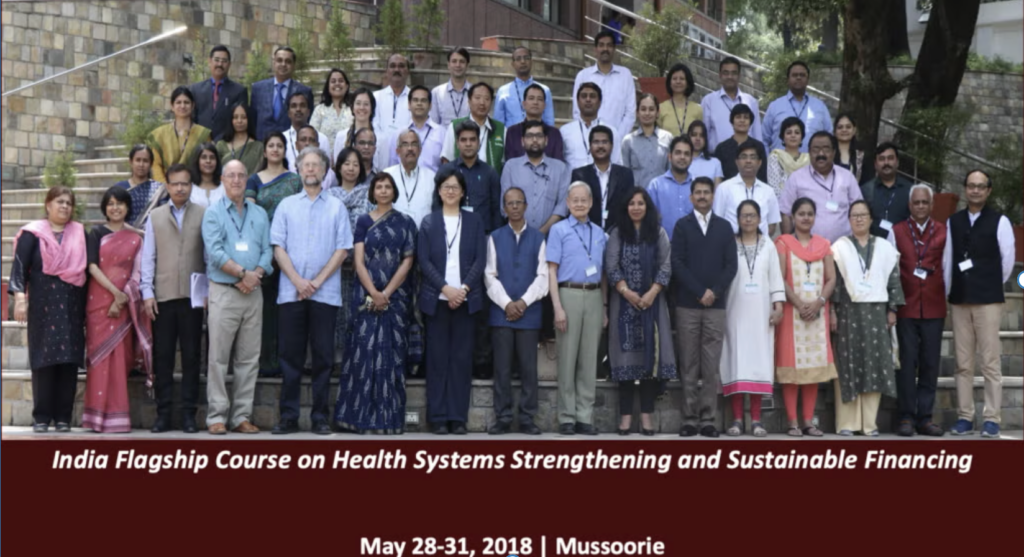
India is undergoing a transformational shift where states have greater fiscal responsibility or the implementation of central government schemes and programs, combined with greater power and autonomy. The newly launched Ayushmaan Bharat with the Pradhan Mantri Jan Arogya Yojana (PM-JAY) and the Health and Wellness Centers (HWCs) presents opportunities for states to design health systems that are responsive to their unique challenges, and formulate sustainable solutions that continue to show long-term impact.
As an initiative towards realizing this, the India Flagship Course on Health Systems Strengthening and Sustainable Financing was designed and directed by the Harvard T.H. Chan School of Public Health (Harvard). The course sought to further strengthen the capacity of senior bureaucrats and researchers of local state-level institutions in India in their role of informing and designing health system policies and programs.
The course was organized by the Lal Bahadur Shashtri National Academy of Administration (LBSNAA), Mussoorie in partnership with the Health Systems Transformation Platform (HSTP); and was supported by the Ministry of Health and Family Welfare (Government of India).
The course is modelled on the Global Flagship Course originally developed by Harvard University and the World Bank and is tailored to the Indian context.
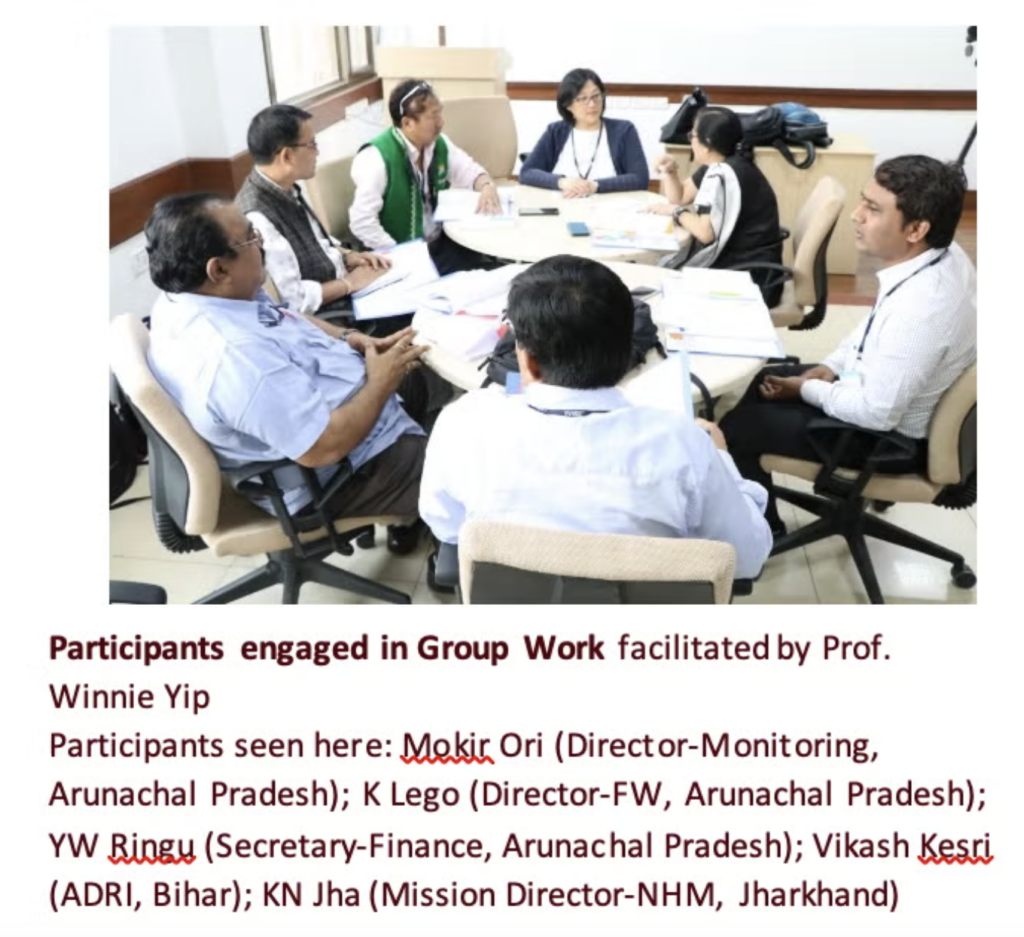
The Flagship Course was organized from May 28-31, 2018 at LBSNAA in Mussoorie (India). The four-day course was designed for senior policymakers/bureaucrats and representatives from institutions working on health research.
Participants engaged in systematic analysis of the challenges, opportunities and potential risks associated with using different policy levers to strengthen health systems. The course approach integrated lecture, group work, and case studies. The course approach was not advocacy but analysis.
The course ended with an assignment for the teams to design a draft health transformation plan based on the new program launched in India – the Ayushmaan Bharat.