BayesMendel Lab
The BayesMendel Lab develops sophisticated statistical models and software that identify individuals with elevated cancer risk due to inherited genetic factors, providing them with accurate risk assessments, and better access to detection and prevention strategies.
450 Brookline Ave
Boston, MA 02215
Our Team
Giovanni Parmigiani is a Professor of Biostatistics in the Department of Biostatistics at the Harvard T.H. Chan School of Public Health. His research focuses on developing statistical models and software for predicting genetic susceptibility to cancer, including risk assessment for breast, ovarian, colorectal, pancreatic, and skin cancers. He also works extensively on statistical methods for high-throughput genomic data, contributing to the analysis of cancer genome sequencing projects and the integration and validation of genomic findings across technologies.
In addition, Professor Parmigiani leads work in comparative effectiveness research, developing comprehensive models of lifetime chronic disease outcomes and advancing Bayesian meta-analysis, Bayesian causal inference, and decision analysis. His methodological interests further include Bayesian modeling and computation, particularly multilevel models, decision-theoretic approaches to inference, and sequential experimental design for adaptive and multistage clinical and epidemiological studies.
Danielle Braun is a Principal Research scientist in the Biostatistics Department at the Harvard T.H. Chan School of Public Health and at the Department of Data Science at Dana-Farber Cancer Institute. Her areas of research include risk prediction, genetic epidemiology, measurement error, survival analysis, frailty models, clinical tool development, causal inference, and environmental health. As a Principal Research Scientist Danielle co-leads the BayesMendel lab and is Director of Data Science for Environmental and Climate Health in the NSAPH group.
Software Contributions
BayesMendel R package: BayesMendel
PanelPRO R package: Fam3PRO
ASK2ME Risk Prediction Tool: ASK2ME
MyLynch: MyLynch
CausalGPS R package: CausalGPS

Maria Sol Rosito is a Research Fellow at the Harvard T.H. Chan School of Public Health and the Dana-Farber Cancer Institute. She is a mathematician and physicist with over a decade of experience in statistics, machine learning, and computational modeling. Her research focuses on developing probabilistic and statistical methods for cancer risk prediction and early detection, including screening strategies that combine simulation-based approaches, statistical inference, and algorithmic tools. She develops and integrates modern AI and machine learning approaches, with emphasis on large language models, into research workflows in cancer genetics. She contributes to the development and maintenance of software tools created within the group.

Jintong Zhao is a Biostatistician at the Harvard T.H. Chan School of Public Health and the Dana-Farber Cancer Institute. She works across several clinical and computational research programs, including the development of hereditary cancer risk prediction models in the BayesMendel Lab (Fam3PRO), the analysis of patient-reported outcomes and decision-making in clinical genetics.
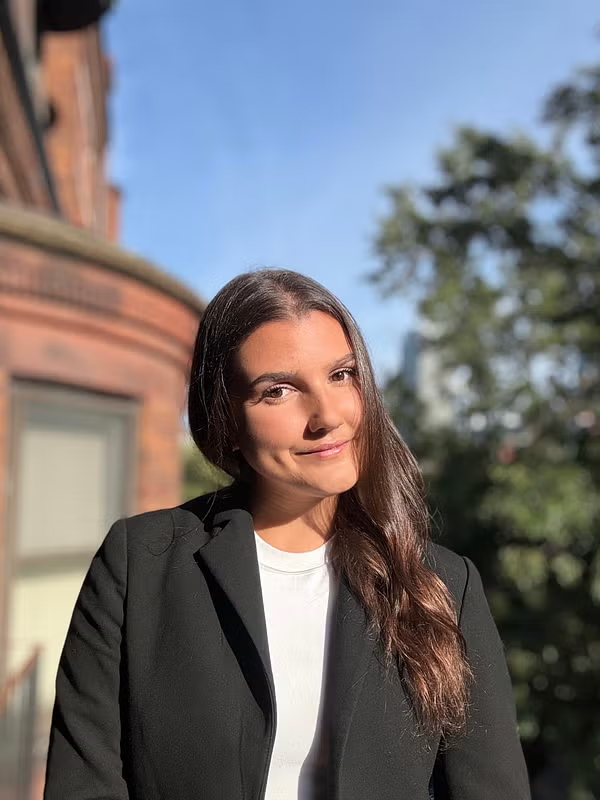
Julie-Alexia Dias is a PhD candidate in the Department of Biostatistics at the Harvard T.H. Chan School of Public Health, where she focuses on building a mutation-level extension of the lab’s existing Fam3PRO model. She first joined the lab during her master’s and enjoyed it enough to never truly leave. Julie-Alexia earned her BSc in Mathematics from McGill University and her MSc from Harvard Chan before diving into her doctoral research.
Eric Gong is an undergraduate researcher and software developer working at the Dana-Farber Cancer Institute and Harvard University. At Dana-Farber, he develops web applications and API gateways to deploy statistical tools created by DFCI researchers, enabling their use by patients, clinics, and collaborators. His work spans front-end development, backend integration, and bridging computational statistics with accessible clinical tools, using technologies such as R, React.js, and modern web frameworks.
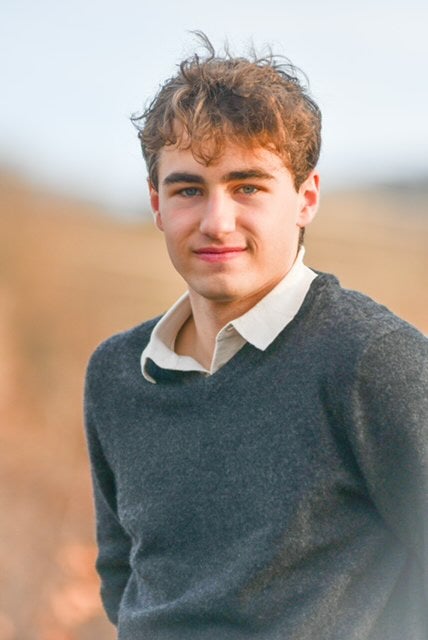
Ben is an undergraduate researcher working on Bayesian and survival-modeling approaches for hereditary cancer risk. His current work focuses on deriving updated age-specific penetrance functions by fitting parametric models to sparse cumulative-risk data and evaluating model behavior across gene–cancer combinations. His broader interests include statistical genomics, hierarchical modeling, and developing interpretable probabilistic tools for clinical genetics.
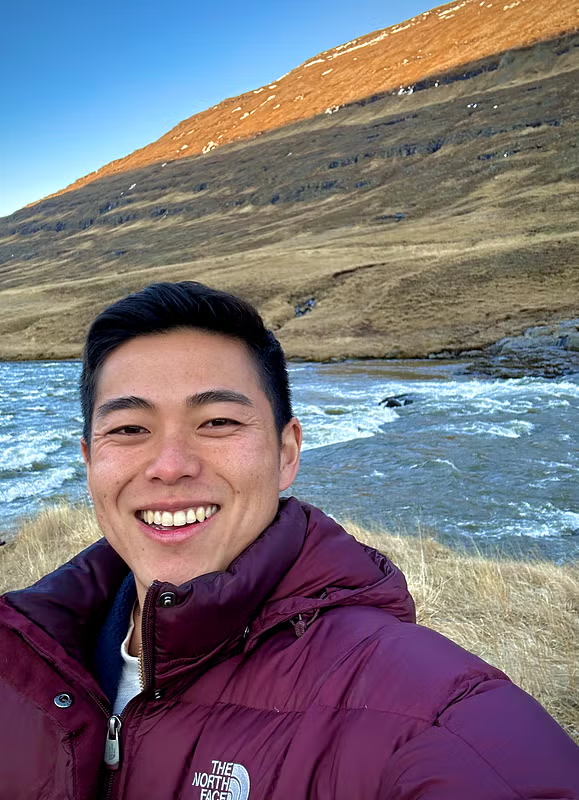
Koki Takabatake is a medical student at the Boston University Chobanian & Avedisian School of Medicine. At Dana-Farber Cancer Institute, he uses machine learning to study hereditary cancer risk and explores applications of large language models in cancer care and clinical decision-making. He aims to build a career at the intersection of biostatistics, clinical oncology, and epidemiologic research to improve patient outcomes.

Alice is a master’s student in Biostatistics at the Harvard T.H. Chan School of Public Health and a graduate researcher in the BayesMendel Lab. Her research interest focuses on the development and application of machine learning and statistical methods in biomedical research, particularly in genetic epidemiology. She contributes to the lab’s penetrance estimation package, which supports likelihood‑based and Bayesian approaches for estimating age‑specific penetrance functions.
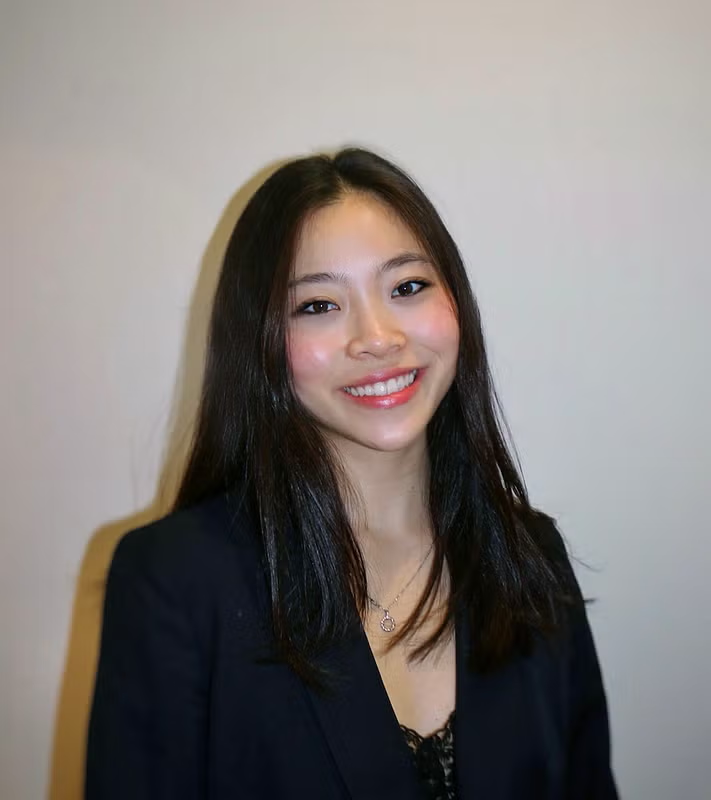
Joyce Gong is an undergraduate researcher at Dana-Farber Cancer Institute and the Harvard T.H. Chan School of Public Health, having started in December 2023. Under the mentorship of Danielle Braun and in collaboration with genetic counselors, she developed TGD CanScreen, a full-stack clinical decision support tool that generates cancer screening recommendations. Her research interests center on hereditary cancer syndromes, particularly Lynch syndrome, and the ways biostatistical modeling can strengthen risk assessment and screening recommendations to improve patient care.
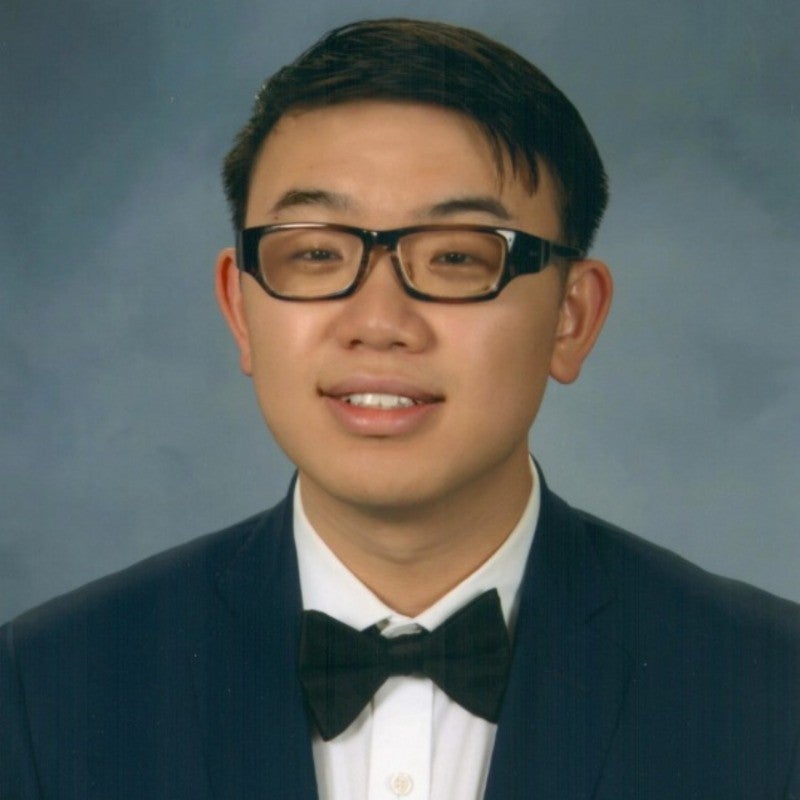
Andrew is a masters student in biostatistics at the Harvard T. H. Chan School of Public Health. At the BayesMendel lab, he works on the Fam3PRO model. He is interested broadly in how to do good data science work in health-related fields. Previously, he earned a degree in mathematics.
Shirley Chen was a Master’s student researcher in the BayesMendel Lab from 2023 to 2025 while completing her graduate studies in Computational Biology and Quantitative Genetics at the Harvard T.H. Chan School of Public Health. Her work focused on developing interactive R Shiny applications for hereditary cancer risk modeling, including contributing to updates and feature enhancements for the Fam3PRO Shiny interface.
Nicolas Kubista was a Research Fellow at Harvard University from 2023 to 2025. His work focused on developing machine learning and artificial intelligence methodologies, models, and software for predicting cancer-related risks. He contributed to the design, implementation, and evaluation of computational tools within the BayesMendel framework, integrating statistical modeling with modern AI approaches to advance hereditary cancer risk assessment.