Providing quality, access to health care in rural Indonesia
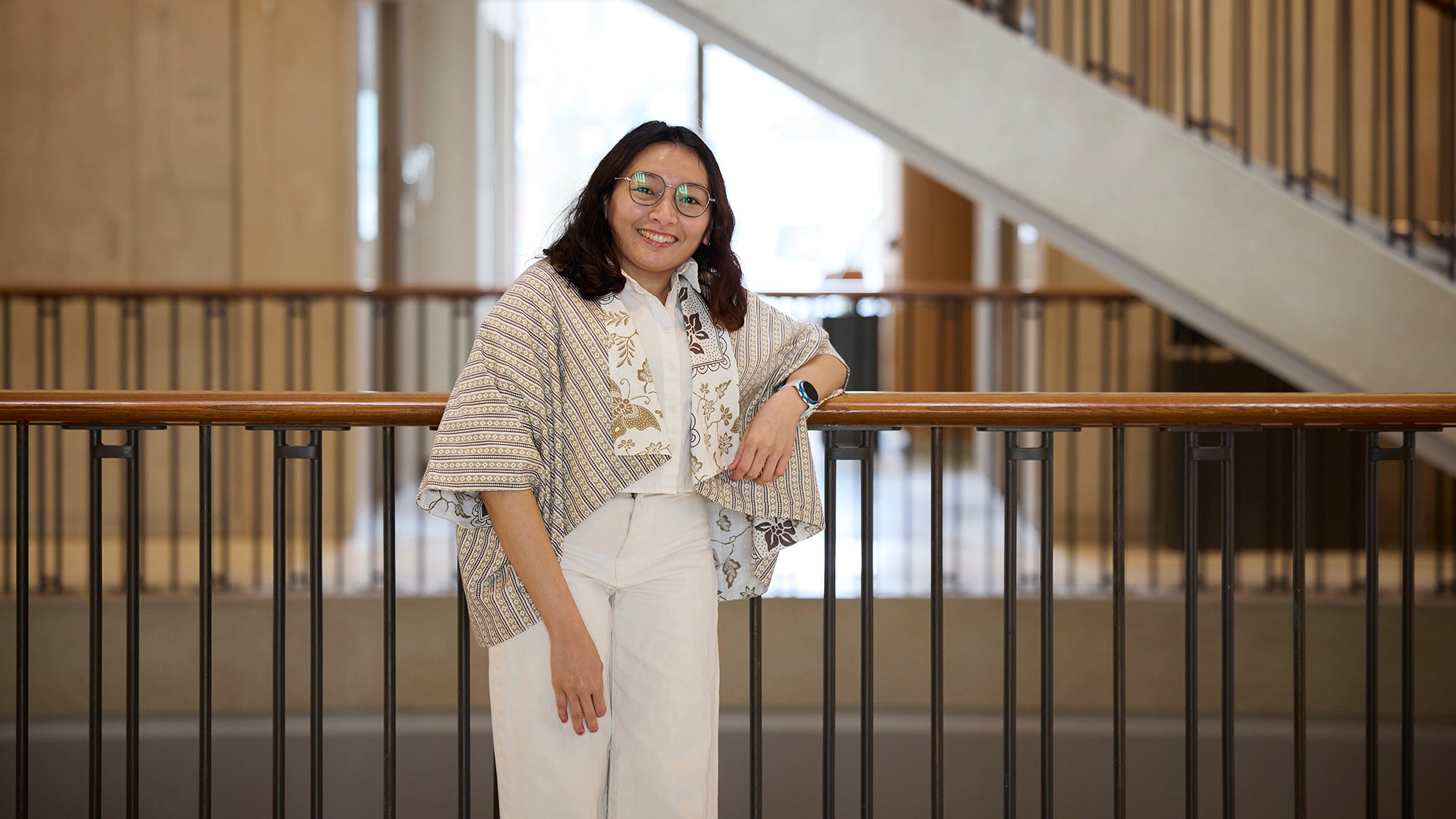
Leni Siagian, MPH ’26, wants to ensure care for those who face challenges getting it
Growing up in North Sumatra, a mostly rural province in western Indonesia, Leni Siagian saw the limitations of local health care when her father suffered two serious health crises—first a stroke that debilitated him, and then, years later, a heart attack that killed him.
The first crisis spurred her to become a doctor and to work in a rural hospital near where she grew up. Over time, she saw that treating people at the hospital was important, but not enough; health care—including preventive health—needed to improve both at the hospital and beyond. The second crisis only deepened her resolve.
Now Siagian is on track to earn a master of public health in health management at Harvard T.H. Chan School of Public Health—and she’s hoping that skills learned at the School will help her improve health care in her own community and in other rural and underserved settings.
“Working with underserved communities is powerful and important,” she said. “This is why I’m here.”
A crisis and a calling
Siagian was 13 when her father had a stroke. To minimize harm from stroke, treatment needs to happen quickly. One of the first steps in treatment is to do brain imaging—but the local hospital didn’t have a CT scanner.
The hospital in Medan, the capital of North Sumatra, had one. But it was six hours away.
“My mom had to drive six hours to the city as my father was gradually losing consciousness in the car,” Siagian recalled. Her father survived that crisis, but the limbs on one side of his body were significantly weakened. He’d been a businessman before the stroke but was unable to continue working afterwards.
“After my father’s experience, I understood how difficult it was to access health care in my community,” Siagian recalled. “It made me think that maybe I could help.”
She went to medical school, then went on to work at HKBP Hospital in Balige, North Sumatra, working in various roles over the course of a decade.
Four years ago, Siagian’s father had a heart attack. The hospital was 30 minutes from where Siagian lived with her parents—but by the time her father arrived there, he’d passed away. Said Siagian, “That’s the moment when I asked myself again what I should do with my life, because I’d thought that becoming a doctor and moving back to my hometown would help people—but I still hadn’t been able to help my father. I tried to think about what more I could do.”
Learning while doing
In 2020, Siagian became head of medical and health service at HKPB Hospital. But she didn’t have any formal management training; she simply learned by doing. “It was difficult for me,” she said. “Many colleagues were older than me. And, in Indonesia, it’s not common to have women as leaders, especially in a health care setting. In our hospital, I’m the only woman in a leadership role. It’s hard.”
Siagian wanted to boost her skills so that she’d be a better leader. Also—with her father’s experience in mind—she wanted skills that would enable her to improve health care access and quality in the hospital as well as in the surrounding communities. “That’s what led me to apply to Harvard,” she said.
Her experience at Harvard Chan School has been incredible, she said. She’s learning, for instance, about organizational and financial management, negotiation, and public speaking. “I’m also learning that change can happen,” she said. “Indonesia faces many gaps compared to countries with more developed health systems. But seeing what has been achieved elsewhere helps me believe that similar progress is possible in Indonesia as well.”
Supporting a stigmatized population
In January, Siaigian got the chance to design and implement a community-based mental health initiative for young adults living with HIV in Indonesia, thanks to a Rose Service Learning Fellowship. Rose Fellowships support community-engaged projects with partner organizations around the world, helping students deepen their skills and foster professional growth.
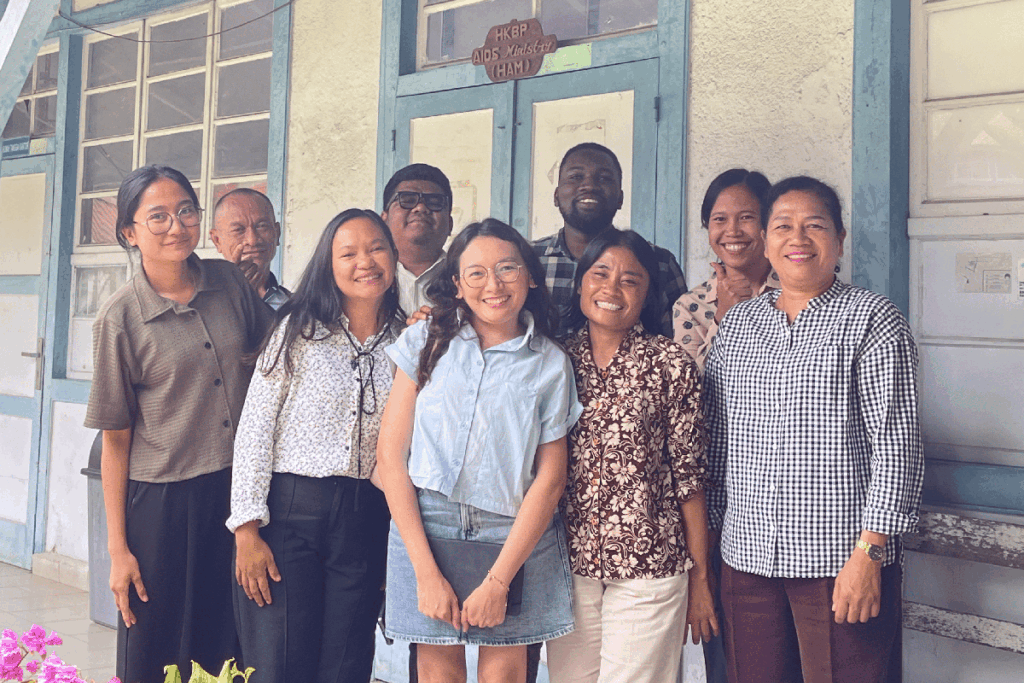
Siagian worked with Balige-based HKBP AIDS Ministry—a faith-based institution for HIV/AIDS education, sex education, advocacy, support, and empowerment of people living with HIV—on a project including peer support and expressive writing activities for young people living with HIV.
“This is a population that is often stigmatized,” Siagian said. “Indonesia is a very religious country, and sometimes people feel judged by others. Often people with HIV live in isolation. They also may live in remote areas where they can’t easily find people who have the same experience as them. They may struggle with mental health issues because of their diagnosis.”
Initially, it was hard to convince young people to join the project. They were reluctant to share their stories. “We tried to convince them that it’s really important for them, when they feel low or depressed, to have someone with a similar experience that they can talk to,” Siagian said. Eventually the group of about 20 coalesced and began to talk about their feelings and to encourage each other, discussing topics such as how to tell parents about their status and how to live life while confronting a serious diagnosis. “It was powerful when they started to share with each other,” Siagian said.
Closing rural-urban health care gaps
Siagian has been thinking about what she wants to do when she returns to Indonesia. Closing the rural-urban gap in health care access and quality is a top priority. In addition, she said, it’s not enough to treat people in the hospital and simply send them home. “We need to start thinking about their care even after they leave,” she said. Providing more holistic care could benefit patients as well as the hospital, she added. “If we can provide this sort of care, it will help improve hospital quality in terms of patient outcomes, and it could also reduce readmissions, length of stay in the hospital, and costs.”
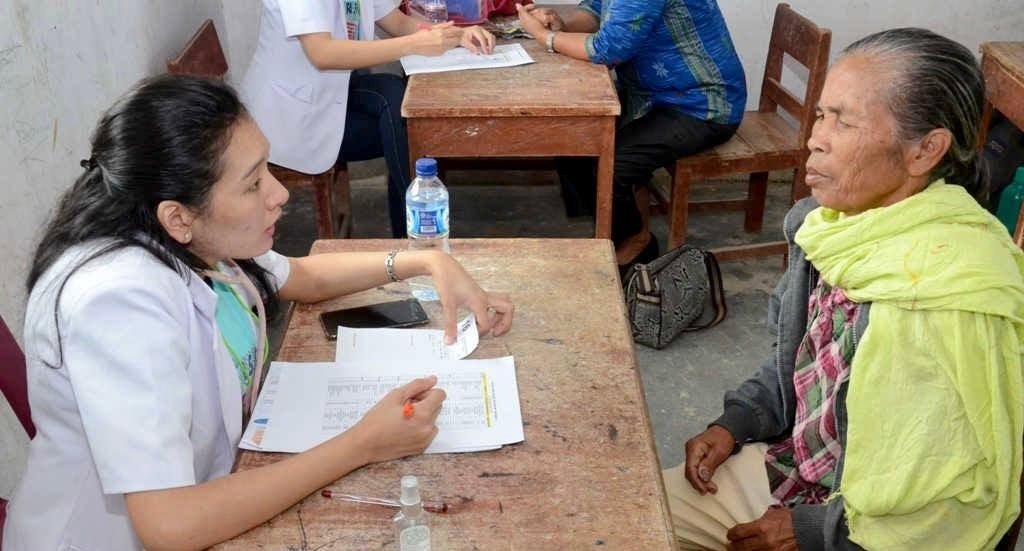
Siagian has already been making progress. For instance, around seven years ago she led a project aimed at making the HKPB Hospital more inclusive for people with disabilities, trying to ensure that those who come for treatment feel that they are accepted and that they receive good care. Prior to that, she’d been part of a team that periodically visited people living in remote communities in the Lake Toba region, some of which are several hours from the hospital across mountainous terrain and winding roads. “We came to their towns every three months to offer free health services,” she said. “I loved it. When I had conversations with the people there, I could see hope in their eyes.”
Siagian isn’t yet sure where she’ll be working when she returns home. But she does plan to implement what she’s learning at Harvard Chan School in a rural setting, somewhere in the country, improving care for people on the margins. “That’s what I’m passionate about,” she said.
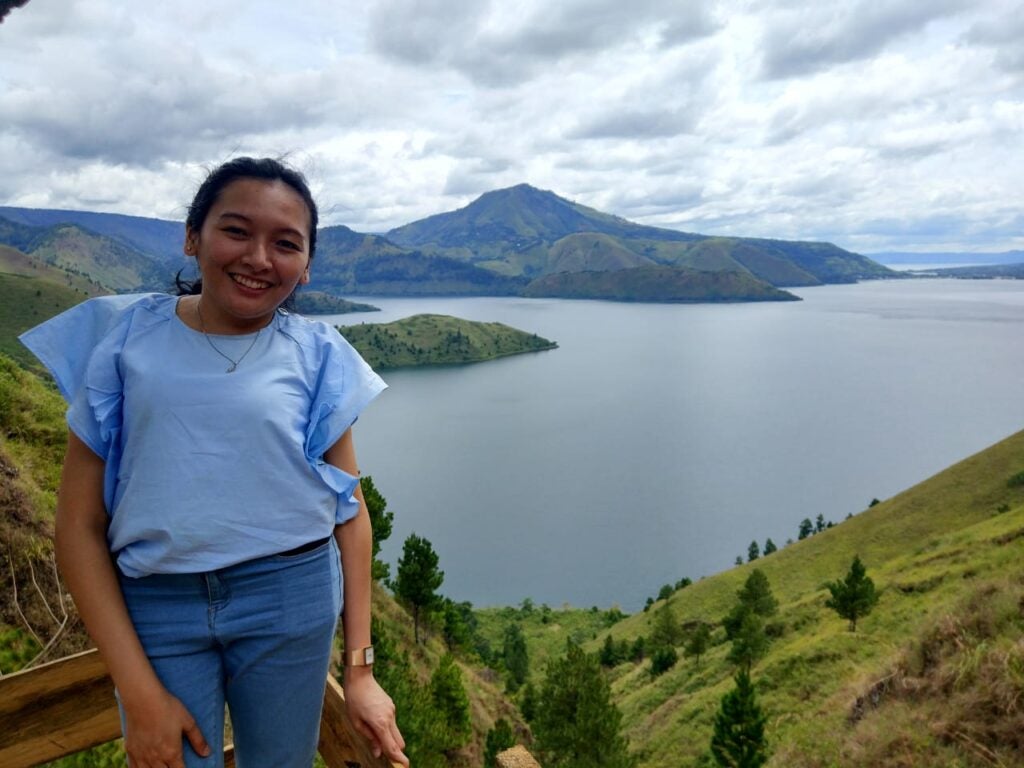
Photos of HKBP Ministry and Lake Toba: Courtesy Leni Siagian