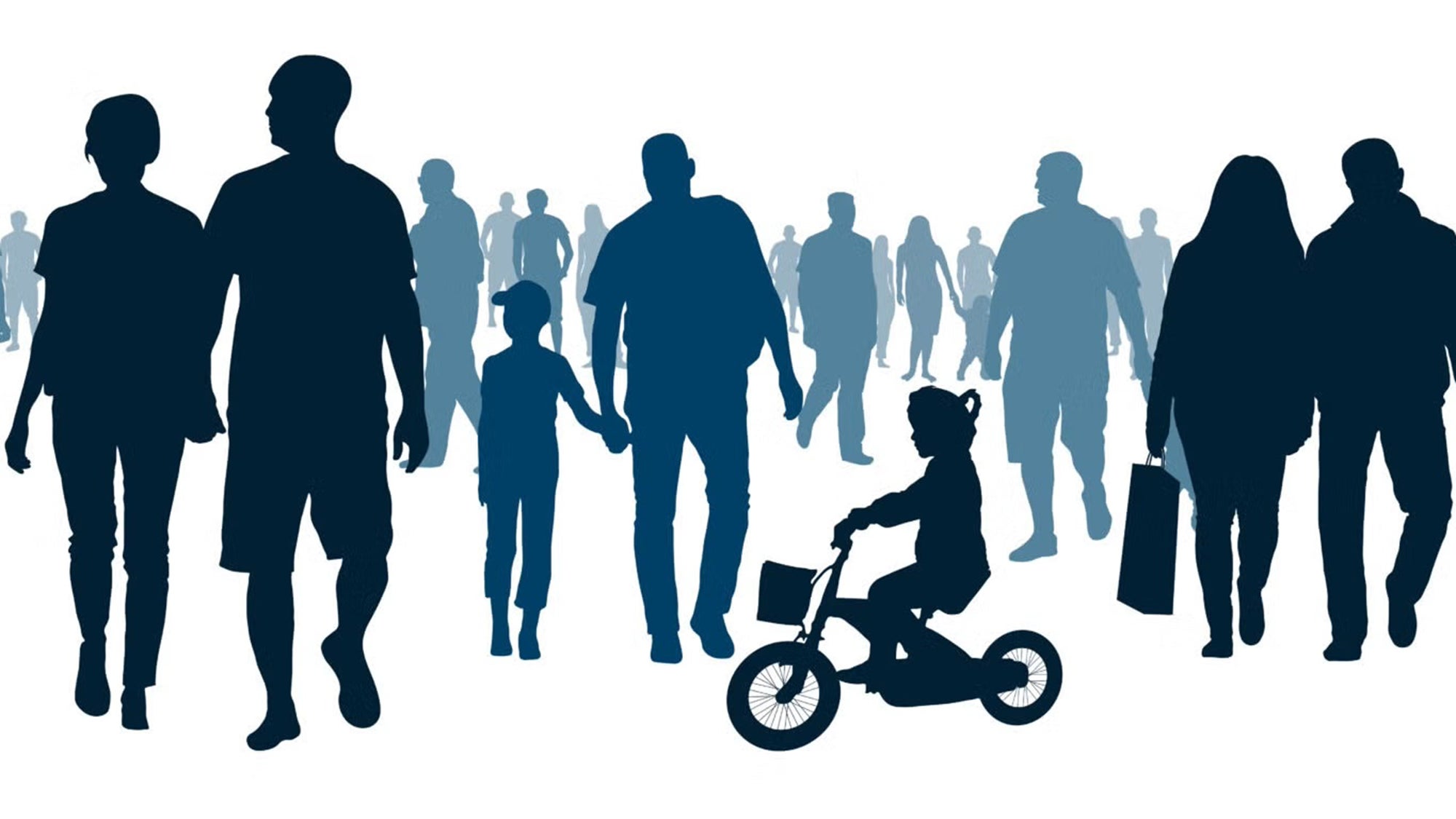
The world appears to be facing a substantial population decline. But experts disagree on whether or not that could spell problems for future generations.
David Bloom, Clarence James Gamble Professor of Economics and Demography at Harvard T.H. Chan School of Public Health, was among those quoted on the topic in a Feb. 19 Discover article.
“Demographic change has already arrived,” he said. “Over the last 25 years, fertility rates declined in every region of the world and in every World Bank country income group.” He said that, given the declining rates, the current global population of roughly 8.3 billion could peak at 10.3 billion in 2084, then start to decline.
The article listed various reasons for the decline, such as more people not wanting to be parents and China’s one-child policy that lasted from 1980 to 2015.
Concerns vary about what population decline will mean for society. Some experts think that, as the population ages, there won’t be enough younger workers to provide eldercare, or to pay taxes needed to fund eldercare benefits or services, the article noted. Others worry that science and innovation could slow with fewer people entering these fields.
But others—including Bloom—don’t think that population growth is necessary for innovation and prosperity. “With respect to economic growth, research shows that a population’s productive characteristics are more important than its size,” he said. “That is, it’s not the sheer number of total people as much as it is the number of healthy and well-educated people that determine productivity.”
Read the Discover article: The World May Face Population Decline Later This Century — What Does This Mean for Society?