Improving health care for neurodivergent individuals
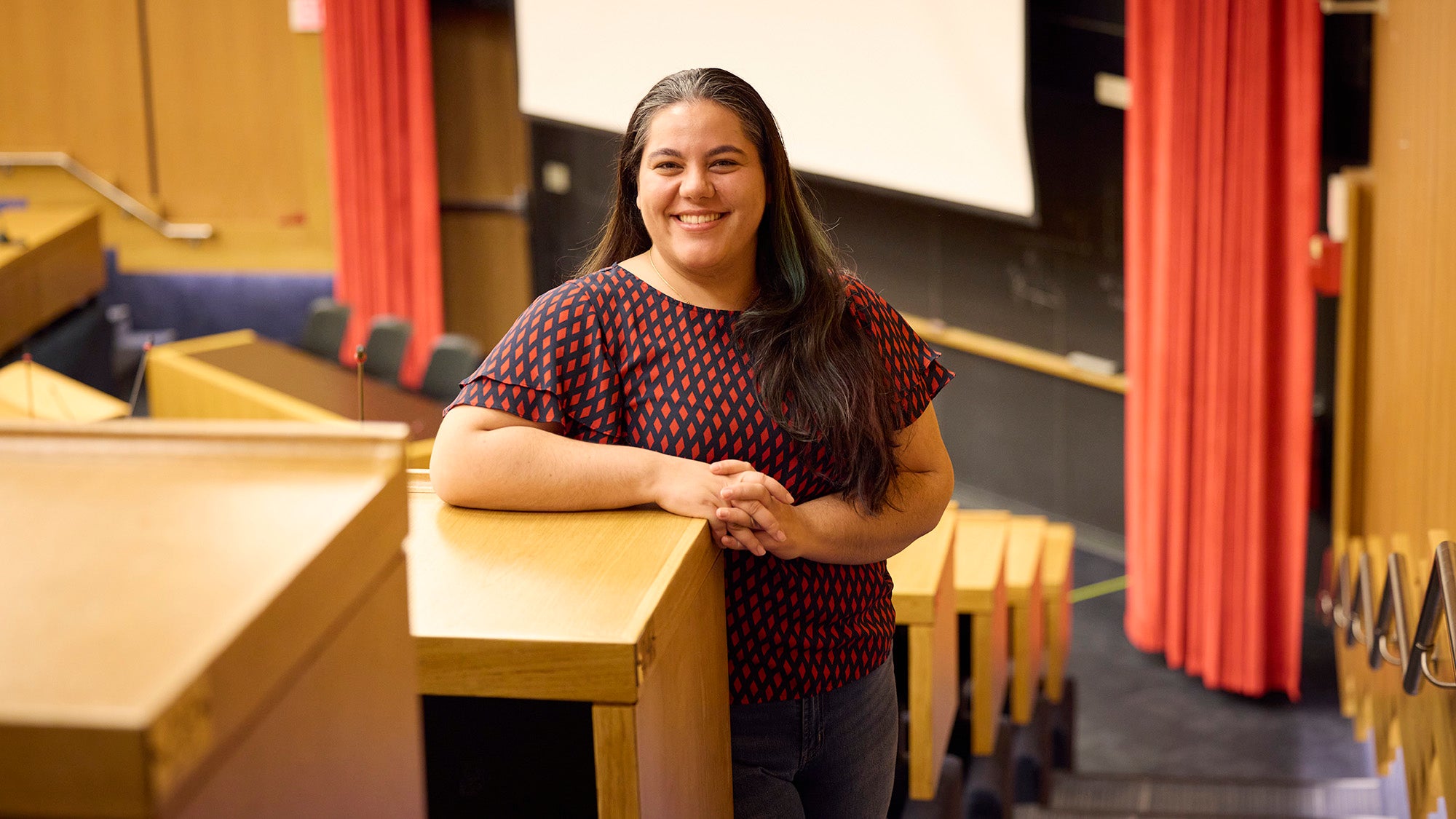
Mojdeh Mostafavi, MPH ’26, has seen firsthand the ways the health system is not geared toward helping people like her brother with autism. She aims to change that.
Mojdeh Mostafavi’s career goals—to train in both internal medicine and pediatrics, to focus on gastroenterology, and to pursue a master of public health (MPH) degree in clinical effectiveness at Harvard T.H. Chan School of Public Health—are deeply rooted in her experience growing up and caring for a brother on the autism spectrum.
One incident stands out in her mind. Three years ago, Mostafavi’s family rushed her younger brother, 27-year-old Payam, to the emergency room. Payam, who has profound autism, had been engaging in self-injuring behaviors, brought on by severe pain. But the doctors struggled to help him. With limited verbal communication skills, Payam was unable to share information about the location and nature of his pain, and he was extremely agitated in the hospital environment with its unfamiliar sights and sounds.
Because Payam was so dysregulated, the doctors eventually placed him in a medically induced coma just to keep him in the hospital, so they could effectively evaluate him. A few months later he wound up having both his appendix and gall bladder removed. Afterwards, his self-injuring behaviors abated.
The experience left Mostafavi shaken—and thinking hard about how hospital experiences could be improved for people like Payam. She was particularly disturbed by doctors’ initial assumption that Payam’s problem was behavioral—having to do with his autism—as opposed to being a medical problem. Said Mostafavi, “This experience at the hospital highlighted to me the degree of disparity facing neurodivergent individuals, and made it apparent that they are at such high risk of really significant harm because we as a health system don’t know how to support them and work with them.”
Following in her parents’ footsteps
Mostafavi, Payam, and their younger sister Roya grew up in a family of doctors in Amherst, Massachusetts—their father was a urologist, their mother a dentist. Payam was cared for at home, supported by providers like occupational therapists and speech-language pathologists who visited on a regular basis. Mostafavi often helped out, which made her feel valued.
Growing up with a brother with autism was “such an immense experience in our lives,” Mostafavi recalled. Both she and her sister would go on to choose medicine as a path to continue supporting the autistic population.
Mostafavi is currently completing a fellowship in pediatric gastroenterology (GI) and nutrition at Mass General Brigham for Children. After she finishes in June, she’ll begin a second fellowship, in adult GI, at Beth Israel Deaconess Medical Center. Mostafavi noted that doing both pediatric and adult GI training is extremely rare—fewer than 10 people in the U.S. have pursued both—because the residency and fellowship requirements take an additional three to four years to complete. Previously, she earned her MD at Tufts and did her medical residency at Baystate Medical Center in both internal medicine and pediatrics.
Mostafavi is pursuing dual training in both pediatric and adult care because she’s seen for herself how difficult it was for Payam to transition from the former to the latter, and she wants the skills to manage care for neurodivergent people across all ages.
She also would like to improve how doctors are trained in this area, and to improve access and care systems for neurodivergent individuals. To that end, she is working toward an MPH in Clinical Effectiveness at Harvard T.H. Chan School of Public Health, on track to earn her degree in spring 2026. She says the program is helping turn her “pie in the sky” vision into reality.
New model of care
As she began her Mass General Brigham fellowship in 2023, mentors there encouraged her to sign up for Harvard Chan School’s six-week Summer Program in Clinical Effectiveness (PCE). She found that the program covered topics that dovetailed with her goals and it was the springboard for her decision to pursue an MPH.
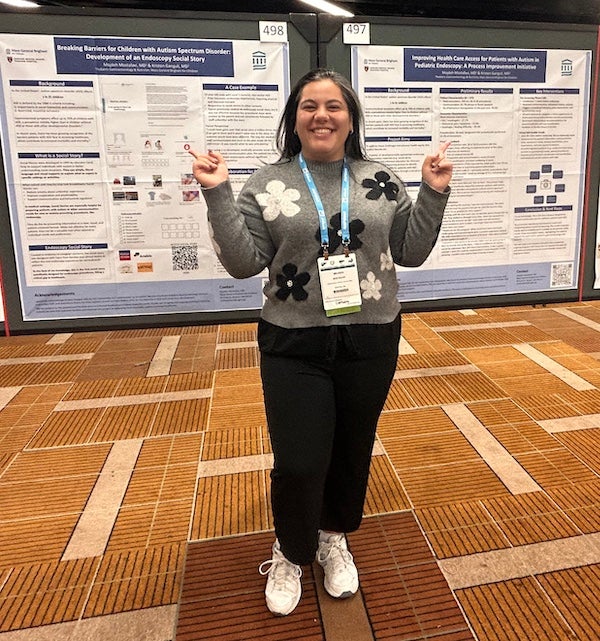
During her time at the School, Mostafavi has valued learning about topics such as qualitative research methods and implementation research methodology—skills that she can tap to develop a new model of care for neurodivergent individuals, to disseminate it, and to provide data to prove that it can be beneficial. She’s already bringing what’s she’s learned to Massachusetts General Hospital. In fall 2024—tapping into skills gleaned from the PCE program she’d just completed and having just started her MPH studies part-time—she began work on a project in the hospital’s pediatric endoscopy unit aimed at improving the care experience for individuals with autism spectrum disorder who were undergoing procedures. Improvements she developed included a new process for identifying and screening individuals with autism, better care coordination, and more education for providers. She’s currently conducting research to evaluate the project’s implementation, looking at factors such as patient, family, and provider experiences, and clinical outcomes.
A narrative leadership course taught by Predrag Stojicic, adjunct lecturer on health policy and management, has been another highlight. “It’s all about storytelling,” said Mostafavi. “That’s not something that you get trained in in medical school, but it’s critically important in terms of being an effective communicator, in terms of, say, ‘How do I convince the hospital or the patients or the providers that we should be doing things a little bit differently?’”
Wider benefits
Outside of her work at Mass General and her studies at Harvard Chan School, Mostafavi has volunteered with Operation House Call, a program run by the Arc of Massachusetts, an advocacy organization for people with intellectual and developmental disabilities and their families. Her work there has involved helping medical students across the state develop essential skills in interacting and caring for neurodivergent individuals—and she has learned that, by and large, medical students are unfamiliar with those skills.
“You hear these common threads, about the lack of training, the lack of knowledge,” she said, adding, “Everyone comes into health care with the best intentions. You want to help people. It’s not your fault that you’ve not been educated in these things.”
Mostafavi believes that if medical providers learn more about how to care for people with intellectual or developmental disabilities, it will help a broader population of patients.
“Everyone can benefit from this—like the anxious person who doesn’t have a neurodevelopmental disability but who can benefit from a system that aims to reduce medical trauma,” she said. “Even individuals who are able to communicate verbally may still struggle in certain situations. Each individual may have strengths in one area and challenges in another, and that can change situationally. And we as providers need to be aware of that so that we can promote a safe space where everyone gets equitable access to the health care that they need.”
Quick hits
Favorite pastime: Mostafavi likes to keep her hands busy during classes with crafts such as crochet and embroidery. “I crocheted these little succulent coasters—coasters that, when you fold them up and put them in a little pot, they look like a little plant—and gave them to all of my professors,” she said. “I made a ridiculous amount of them.”
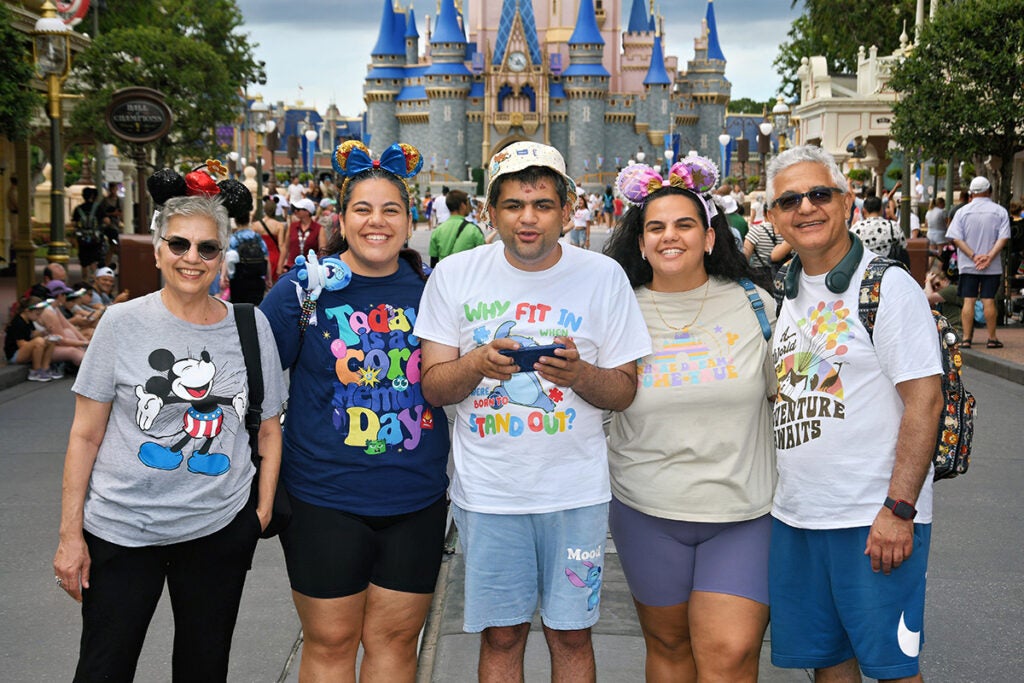
Favorite family activity: “My family—my brother and I especially—are big Disney lovers. We take trips to Disney World and watch Disney movies. We just saw Zootopia 2. I highly recommend it!”
Feature photo: Kent Dayton / Harvard Chan School
Other photos courtesy Mojdeh Mostafavi