Commentary: Why focusing on ‘resilience’ after disasters is not enough
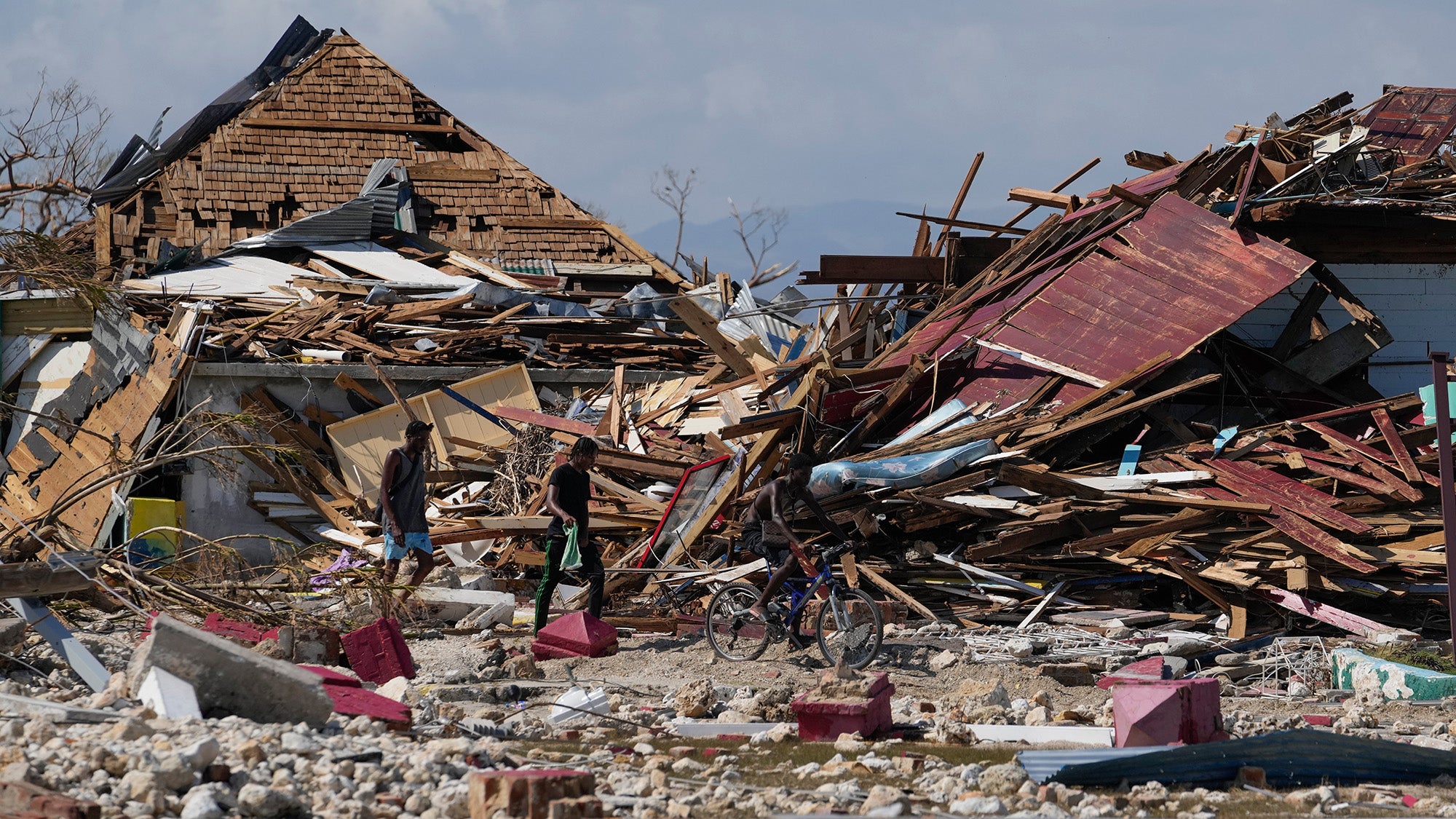
In the wake of recent disasters—such as the 2010 earthquake in Haiti and the devastation wrought by Hurricane Melissa in Jamaica in late October of this year—the development sector has increasingly focused on the resilience of affected communities. But Harvard T.H. Chan School of Public Health’s Jehane Sedky argues that, rather than communities being expected to “bounce back,” governments should be working harder to strengthen systems and reduce inequities so that people would be better protected from disasters in the first place.
In a Nov. 21 commentary on WBUR’s “Cognoscenti,” Sedky, executive director of the FXB Center for Health & Human Rights at Harvard University, wrote that the development sector—including government donors, NGOs, and foundations—has “subtly redirected attention away from governments as duty bearers, making it easier for donors to fund a patchwork of NGO projects rather than invest in the public systems that genuine resilience requires.”
She added, “In celebrating the resilience of the poor—of people who have suffered unimaginable loss—development professionals often began to romanticize survival itself, to praise endurance rather than demand change.”
But focusing on people’s resilience “cannot be the end goal,” Sedky wrote. “Our task is not to make vulnerable populations more adaptable to injustice, but to make the powerful more accountable for it.”
Read the Cognoscenti commentary: Resilience is no substitute for justice

![A vial of blood marked "VDRL- Test [syphilis, gonorrhea]"](https://hsph.harvard.edu/wp-content/uploads/2026/03/horizontal-1.jpg)