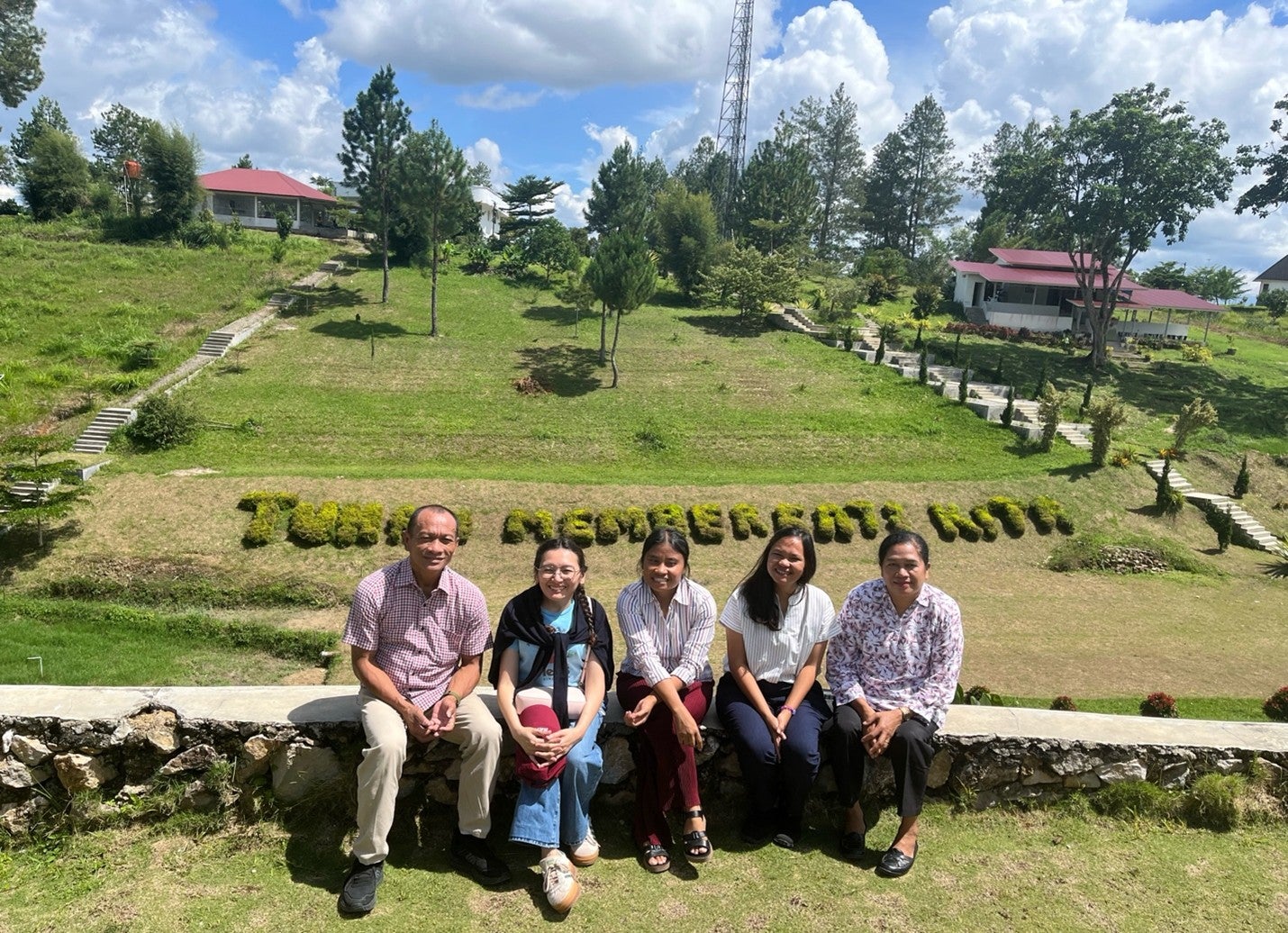
At teaching fellow training, the goal is improving the classroom experience

Every semester at Harvard T.H. Chan School of Public Health, students who work as teaching fellows provide support for faculty across approximately 250 courses. Their responsibilities include supporting community in the classroom, grading papers, holding office hours, and running class sections and labs.
To support teaching fellows in their work, the School holds twice-a-year training sessions for all new fellows. A few dozen attended a recent training in January, which featured topics such as how to establish a good working relationship with faculty, how to engage constructively in the classroom, and how to support students both academically and professionally. Overall, over 100 first-time fellows, in addition to several who return for a refresher, attend these trainings each year.
Training for fellows is just one aspect of Harvard Chan School’s emphasis on strong teaching and mentoring. “Our School is committed to supporting a culture of growth in teaching and learning and supporting great teaching teams,” said Jennifer Betancourt, co-lead of the training and director for educational policy, who helped organize the January session. “Teaching fellows play a critical role in our classrooms.”
Preparing for success
One part of the January training, held virtually, covered various scenarios teaching fellows might encounter during their time in the classroom. For example, Natalie Slopen, associate professor of social and behavioral sciences, led a discussion about the importance for teaching fellows of establishing a good working relationship with the faculty and co-instructors on their teaching teams. Discussion scenarios were based on gaining clarity around work expectations, understanding the structure and learning goals of a course, communication styles that work best with the faculty and/or teaching team, supporting student accommodations, and how to request feedback from faculty at the end of the course.
For example, Slopen shared that she and her teaching team work to find a balance between offering flexibility for students—for example, when it comes to deadlines—while at the same time prioritizing fair treatment for all. She emphasized that discussing issues collaboratively as a team helps ensure equitable outcomes.
Another focus of the training was on sharing practices and policies concerning student support. A teaching fellow is a trusted resource and often the first person that a student reaches out to if they have a problem. Colleen Cronin, senior associate director for student support, led a discussion aimed at familiarizing teaching fellows with a variety of student support services, including disability accommodations, medical and mental health services, and academic tutors and coaching.
“It’s wonderful seeing the teaching fellows work through various scenarios, incorporating their perspectives as students and their now new perspective as teaching fellows,” said Sejal Vashi, co-lead of the training and director of learning design and instructional support at Harvard Chan School.
Supporting productive classroom conversations
In a presentation on constructive engagement in the classroom, Bryan Thomas, Jr., chief community and belonging officer, spoke about the importance of being receptive to others’ views. Doing this includes creating the conditions that allow for perspectives to be heard while also showing shared respect and mutual accountability towards one another, he said. Thomas outlined what receptive behaviors look like: suspending judgment of others, allowing people to finish their statements or thoughts, asking for clarification, and admitting and taking ownership of errors.
Current students made two presentations at the training. One focused on rubrics and grading, the other on the Harvard Graduate Student Union.
A ‘good challenge’
After the session, attendee Jesús Rosario Hernández—an MPH candidate in clinical effectiveness slated to graduate in May, and a teaching fellow for the course “Negotiation and Conflict Resolution for Healthcare and Public Health”—said he appreciated the training’s emphasis on psychological safety and embracing inclusiveness in the classroom. “Our responsibility isn’t only mastery and delivery of the content, but also facilitating access to resources, such as accessibility services, that can help all the students at the School succeed,” he said.
He acknowledged that being a fellow is hard work. “It takes time to prepare, it takes effort to be very precise with all the assignments and grading,” he said. “But it is a meaningful challenge for growth—not only for my own development, but in helping cultivate a thoughtful, supportive learning environment that equips students for long-term success.”