Q&A with Elvira Fleury, ultramarathon runner and environmental health researcher
Elvira Fleury is a doctoral student at the Harvard T.H. Chan School of Public Health and a researcher at the Mahalingaiah Lab.
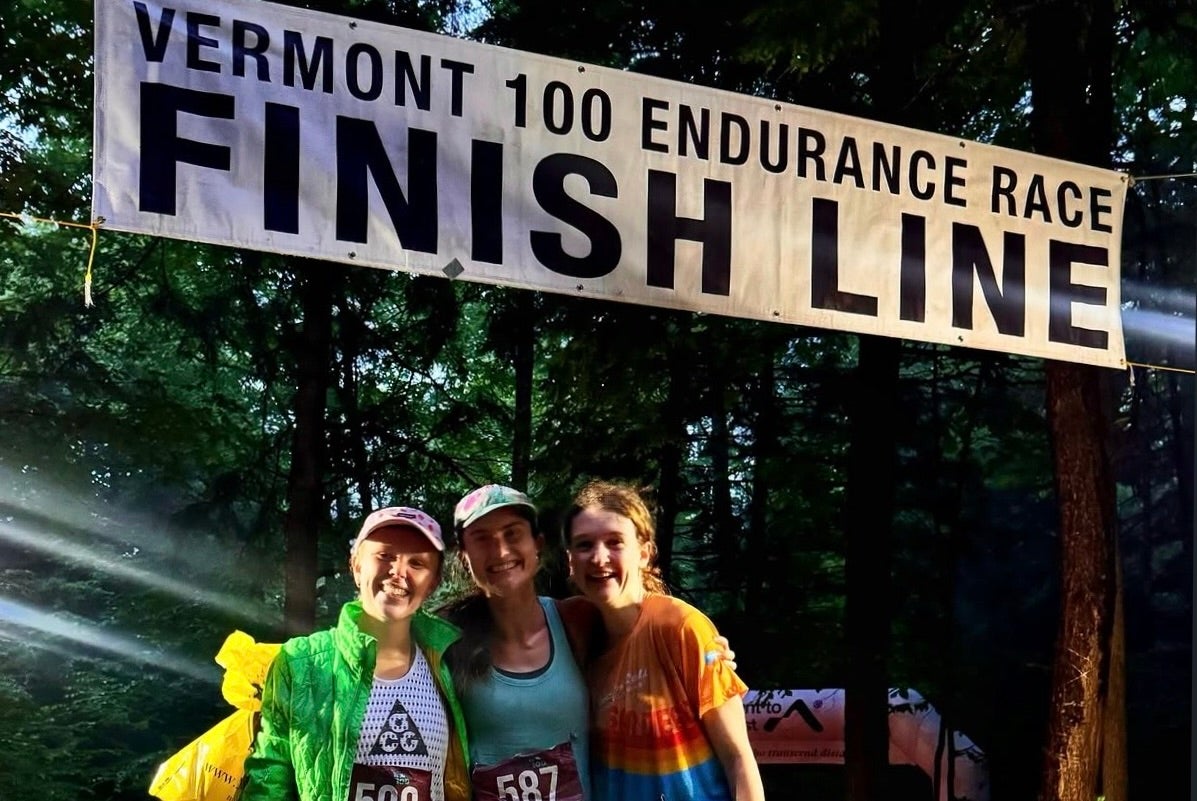
Q1: Congratulations on placing third for women at the 2026 Vermont 100K race! What reflections do you have to share from the day itself?
It was my first time racing 100 kilometers; before the race, the furthest I had ever run was around 50 kilometers. Since so much of it was unknown to me, I worked hard to let go of any expectations, both for my performance and my finish time. One of my biggest takeaways was that everything takes a village, and running a race, especially a long one, is no exception. I tried to focus on my gratitude for my training partners, the race organizers and volunteers, my fellow runners, and my family, fiancé, and friends, who met me at every single aid station throughout the day.
Finally, meeting and racing alongside the other women was the coolest part. I think we are just beginning to understand the full potential women have in ultramarathon running. For example, Rachel Entrekin won the Cocodona 250 outright, setting the course record for both men and women. I can’t wait to see what’s next for women in the sport.
Q2: How did your running journey begin? How has running shaped your life, generally?
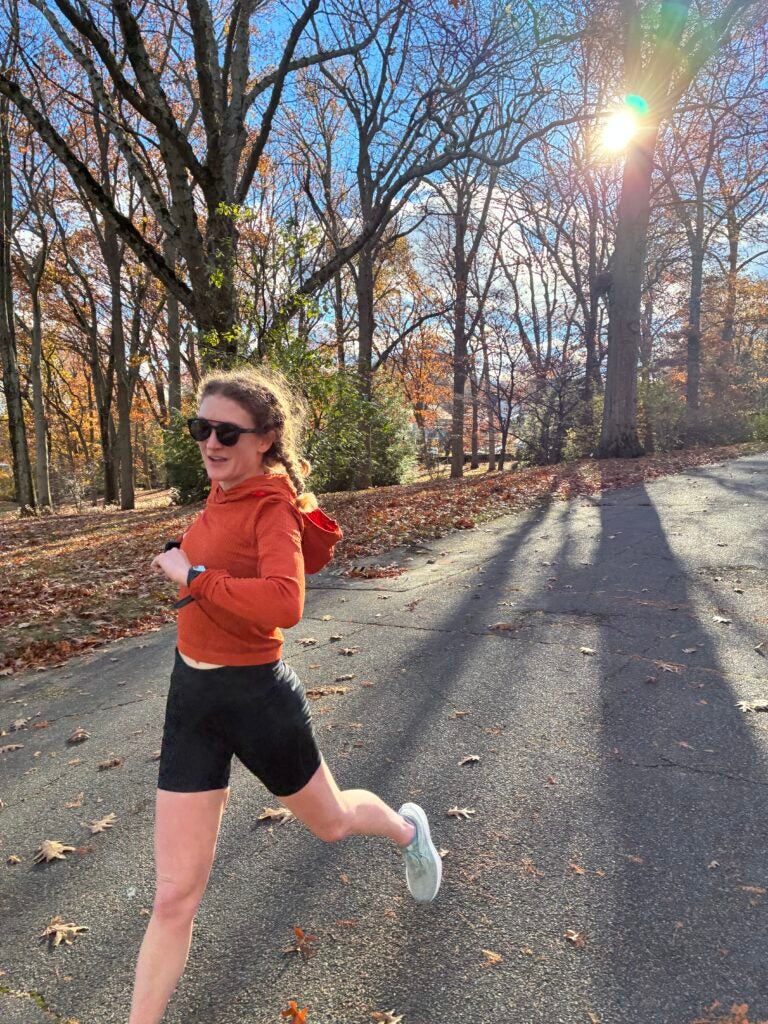
I ran track and cross country in high school but wasn’t particularly good. After I stopped running in college, I was gifted a pair of running shoes during graduate school. They seemed so expensive to me at the time that the only way I could justify them was by training for a marathon. It’s funny in retrospect because I now buy two or three pairs of those same shoes every year.
After that first marathon, though, I wasn’t sure I’d run another. Shortly afterward, I lost someone very close to me who was registered for the Providence Marathon. He never got the chance to run it, so I decided I would run in his place. I can confidently say that running was one of the things that saved my life in the depths of my grief. It gave me something to do, got me out of the house, and forced me to shower and eat afterward (all things that can be difficult when you’re grieving). On another level, it gave me something small to feel accomplished about every day.
Since then, the habit stuck. Running has introduced me to incredible friends and is a central part of my life. I like to say it’s 3-for-1: time outside, time with friends, and exercise.
Q3: You are both an athlete and a women’s health researcher. How does your lived experience as an ultramarathoner shape the questions you ask in your research?
That’s a great question! Because of my running background, I am very interested in how we can use everyday physiological signals, like heart rate, energy levels, and the menstrual cycle, to gain insight into how our bodies respond to training.
Q4: There’s a notable gap in athletic performance research for women. What specific aspects of women’s health and female athletic performance are you most passionate about understanding?
There is definitely a huge gap, but that being said, some amazing people are working very hard to change that. One question I am particularly passionate about is: “How should we train women throughout the life course?” That includes questions like: how can we train as adolescents to reap the benefits of early-life physical activity while preserving bone health and fostering a lifelong love of sport? When does performance actually peak? How should training change during pregnancy, postpartum, and menopause?
Q5: You’ve previously conducted research on air quality and how it may be associated with race outcomes and athletic performance. What is one thing you wish everyone knew about this topic?
Another great question! One thing I wish more people knew is that air pollution can affect athletic performance even at levels below current regulatory standards. We observed an association between air pollution and marathon performance among people healthy enough to complete a marathon. That suggests that the impact of air pollution isn’t limited to vulnerable populations or extremely high pollution.
Interestingly, during my 100 km race, Canadian wildfire smoke led the local health department to advise people to “make outdoor activities shorter and less intense.” Clearly, running 62 miles doesn’t fall within the scope of those recommendations. But I think this highlights an important challenge in public health: after training for six months, most runners are going to race unless the event is canceled. I would say to look for opportunities to improve the air you breathe every day by supporting policies that reduce air pollution. PM2.5 levels dropped over the course of our 17-year study due to stricter air quality standards. Policy level changes can have big impacts, so don’t get discouraged!