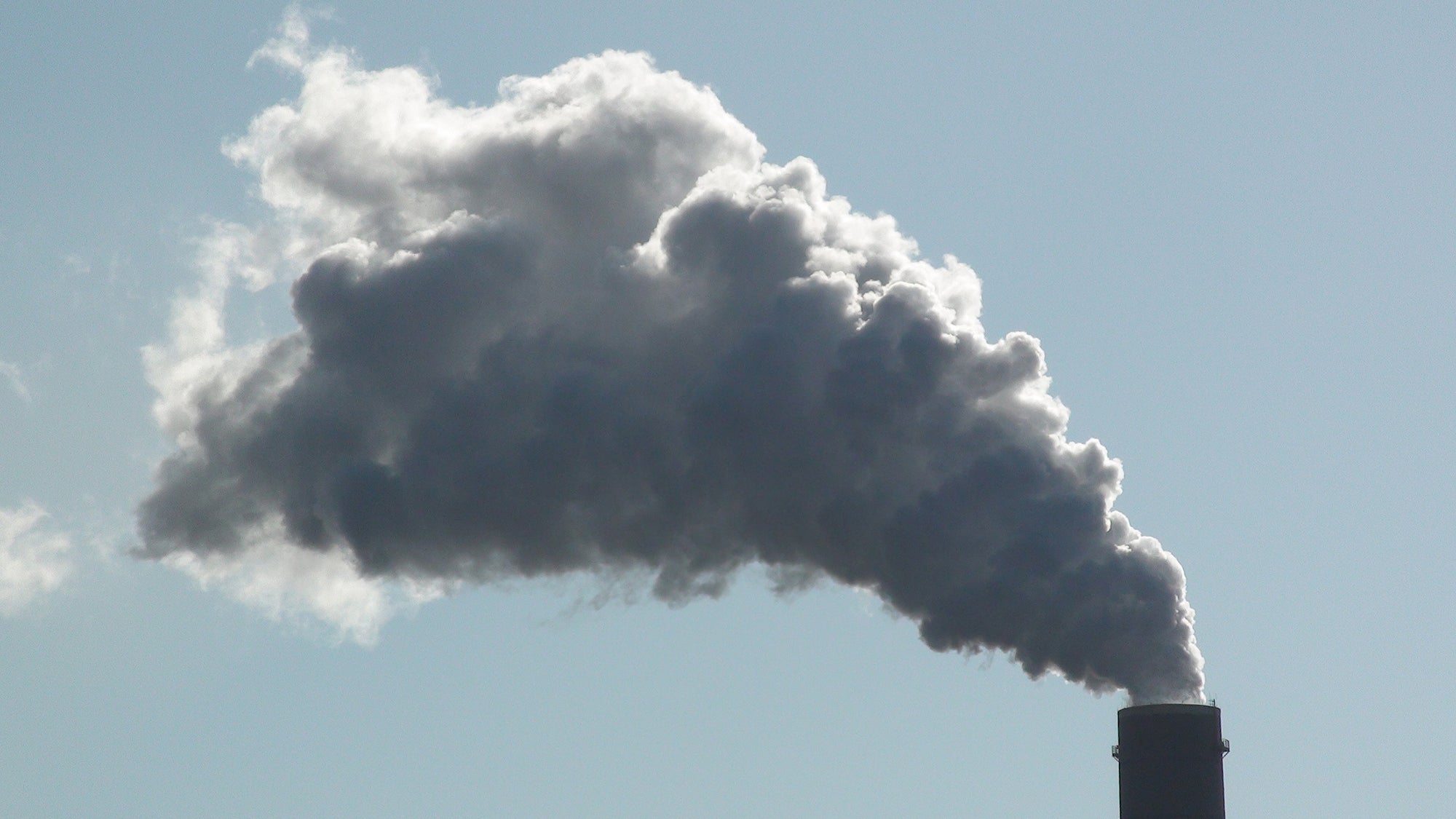
What if we’re measuring only the tip of the iceberg in air pollution?

A column in the new publication, Nature Health, on “The human airborne exposome,” suggests that current methods of measuring and studying the health impacts of air pollution may be inadequate. Peng Gao, Assistant Professor in the Department of Environmental Health, authored the Perspective, which was published in the premier issue of Nature Health.
Dr. Gao explains that, for decades, air-pollution research and regulation have centered on six criteria air pollutants. But real-world inhalation exposure is far broader and more complex: thousands of organic compounds, dozens of inorganic substances, and vast biological components, creating highly individualized exposure profiles that vary dramatically even between neighbors.
In this Perspective, Dr. Gao proposes a framework that integrates:
- Mixture-based approaches that reflect real-world co-exposures
- Advanced personal monitoring to capture individual-level variability
- Systems biology and multi-omics to connect exposures to mechanisms and disease pathways
- Shift from single-pollutant regulation to multi-pollutant/source-based strategies, enabled by a phased roadmap with practicable success metrics.
This roadmap could transform how we understand complex diseases, from neurodevelopmental disorders to cancer to cardiometabolic conditions, and enable precision prevention and intervention for vulnerable populations.
“Air pollution research has long focused on a handful of regulated indicator pollutants, yet people breathe in thousands of chemicals and biological agents every day. This article argues for a fundamental shift toward the human airborne exposome, the full mixture we actually inhale daily, and provides a practical roadmap to measure it and connect it to biology,” says Dr. Gao. “The ultimate goal is precision environmental health monitoring: identifying exactly which components and sources matter most for each region and individual, so that prevention and intervention strategies can become both more effective and more equitable.”
Read the paper in Nature Health here.