Alum Mohammad Haddadnia coaches Team USA International Olympiad in Artificial Intelligence (IOAI)
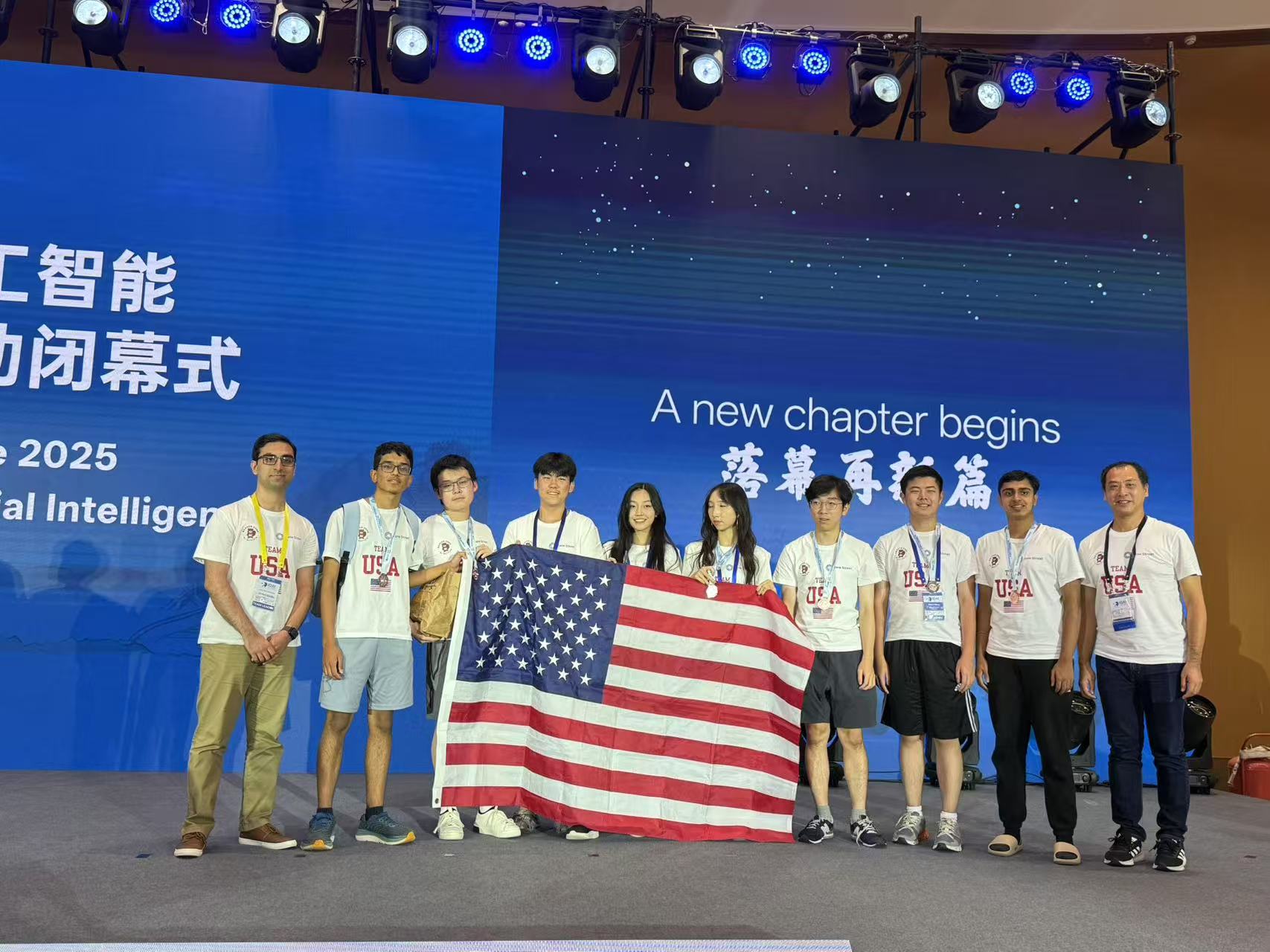
Mohammad Haddadnia, (SM 2025) currently serves as the Team USA Coach, International Olympiad in Artificial Intelligence (IOAI). He has been a coach for about a year and a half, and traveled with Team USA’s delegation to Beijing last year for the 2025 International Olympiad in AI (IOAI), where the team received 6 medals. Mohammad will be traveling with the team this year to Kazakhstan. The USA AI Olympiad will also be hosting an olympiad camp at Harvard/MIT from June 8-12.
Below is a short interview with Mohammad about his experience working with the USA team.
How did you get involved in coaching?
I began doing AI research as an undergraduate at the University of Toronto and the Vector Institute, before the recent wave of public attention around AI. My early work focused on scientific applications of machine learning, including using language models for protein design and AI methods for molecular generation and optimization. At the time, the AI research community felt much smaller and more specialized. As tools like ChatGPT became widely available, I felt that part of our responsibility as AI researchers was not only to advance the field, but also to help educate the public and the next generation of students.
That has meant everything from teaching my grandmother how to use ChatGPT to helping train some of the country’s most talented high school students through the USA AI Olympiad. When I saw the opportunity to be a part of Team USA’s teaching staff, I knew I wanted to apply. I was selected by the scientific committee and team director, Dr. Steven Chen (who is also a former research associate at HBS), to teach topics including graph neural networks, vision transformers, and introductory AI concepts. After several quarters of teaching and receiving positive feedback from students and the scientific committee, I was selected to serve as Team USA’s coach at the international level, helping lead the delegation alongside Dr. Chen at IOAI 2025 in Beijing and now at IOAI 2026 in Astana, Kazakhstan.
How do people participate in the Olympiad camp?
The USA AI Olympiad (USAAIO) has a selection process similar to other academic olympiads. All high school students in the United States are eligible to participate in Round 1, which they can take at their local high school or at a test center approved by the USAAIO scientific committee. The top performers from Round 1 are invited to Round 2, which this year took place over two days at Harvard Medical School and MIT.
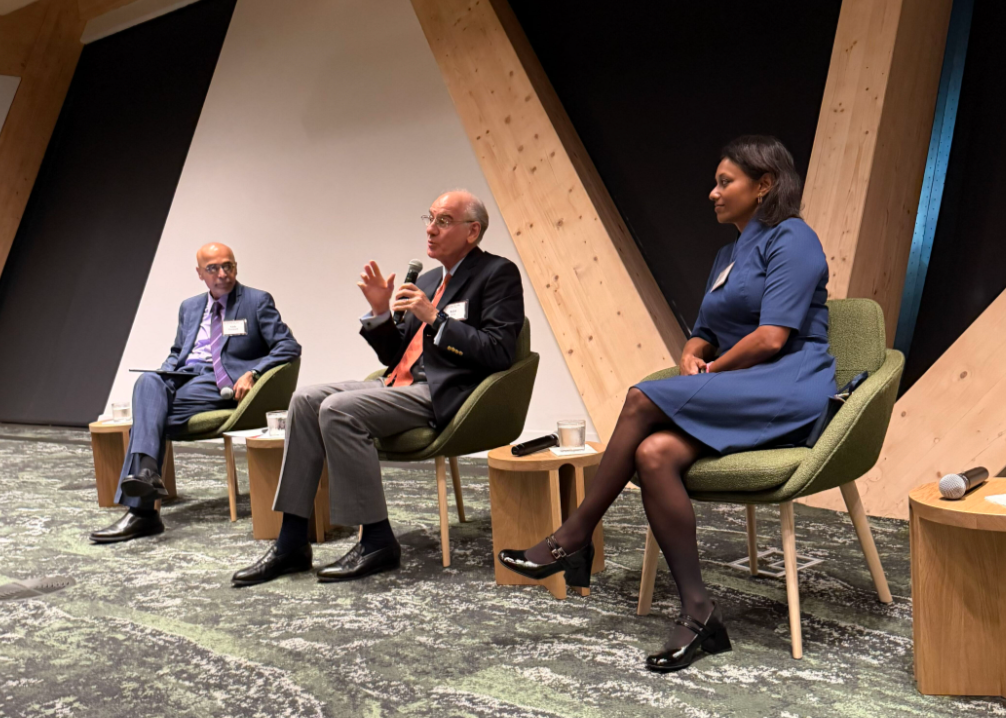
In addition to the contest itself, we held an opening ceremony with talks from Harvard professors Dr. Haribabu Arthanari and Dr. Michael P. Brenner. From Round 2, we select the top 30 to 40 students to participate in the national camp, which is being held at Harvard this year from June 8 to 12. During camp, students stay in Harvard dorms, attend lectures from coaches and guest speakers at Jefferson Lab, and take part in additional contests that determine the final members of Team USA for the international competition.
What do you enjoy about the experience, both the coaching and the Olympiad itself?
I genuinely enjoy teaching, and teaching at this level comes with both excitement and responsibility. These students are still in high school, but they are extraordinarily bright, ambitious, and capable. Coaching them is not only about covering advanced technical material; sometimes it is also about helping them slow down, stay calm, and approach difficult problems with clarity.
One of my favorite parts is working through challenging problems with the students and breaking them down together. The goal is not just to prepare them for a single competition, but to help them develop ways of thinking and problem-solving skills that will serve them in whatever they choose to do next. The international aspect is also a wonderful part of the experience. Traveling with the team and meeting students and coaches from around the world is very special. Last year in Beijing, for example, I received a lapel pin with the lion symbol of Singapore from the Singaporean coach, which was a small but memorable reminder of the global community around these competitions.
Anything else you’d like to add?
What has been most meaningful to me is seeing students realize that AI is not just a set of tools or a popular technology, but a language for thinking about problems across science, medicine, engineering, and society. Many of these students will go on to become leaders in the field, and I feel very fortunate to play even a small role in their development. As a Harvard alum, it is also especially meaningful to help bring students to campus, expose them to the intellectual environment here, and contribute to a program that combines rigorous technical training with mentorship and community.