Passing the torch on healthcare reform
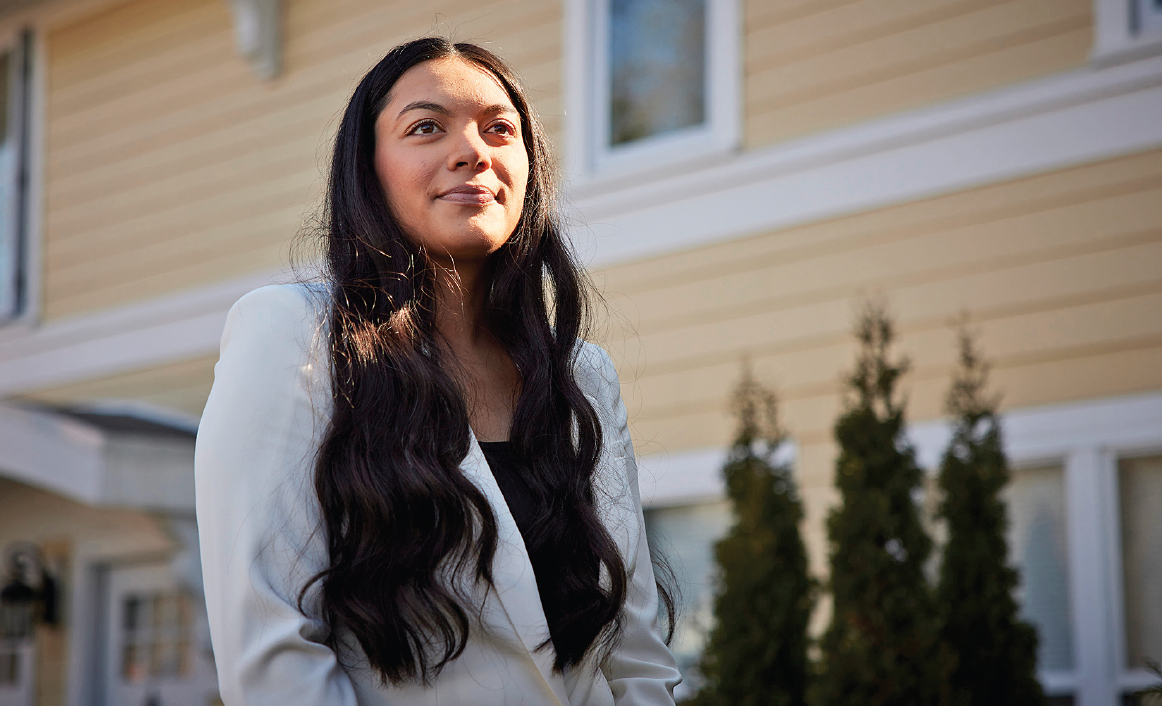
Siale Vaitohi Teaupa’s childhood in Utah was split between two worlds—school, where she was one of just a few individuals of color among the students and staff, and home, with her multi-cultural immediate family and Pacific Islander extended family. Even at a young age, she was aware that people who looked like her white classmates were living vastly different lives than people who looked like her.
The white students’ families lived in large homes, had access to doctors, and earned college degrees, unlike Vaitohi Teaupa’s family. She had cousins who didn’t see doctors regularly and grandparents without health insurance. Wanting a career that would empower her to help people like her family navigate the health care system, Vaitohi Teaupa began her undergraduate studies at Brigham Young University on a premed track.
Vaitohi Teaupa was in her first year of medical school at the University of Utah in 2020 when the COVID-19 pandemic hit. She worked as a contact tracer and noticed that Pacific Islanders had the state’s highest rates of infections, hospitalizations, and health care system, Vaitohi Teaupa began her undergraduate studies at Brigham Young University on a premed track.
A volunteer service trip to the Philippines after her sophomore year in 2014, during which she witnessed the problems faced by people who were living in poverty and lacked access to health care, encouraged her to stay on her path. She recalls thinking, “If I go home and don’t do anything about the inequities that I see, then shame on me.”
Vaitohi Teaupa was in her first year of medical school at the University of Utah in 2020 when the COVID-19 pandemic hit. She worked as a contact tracer and noticed that Pacific Islanders had the state’s highest rates of infections, hospitalizations, and deaths. Despite these numbers, Utah legislators were considering shutting down state-run clinics that served the uninsured, immigrants, and other marginalized groups. “My grandparents used these clinics,” Vaitohi Teaupa says. “It didn’t make sense to me. Why were we going to take away resources from a community that’s being hit the hardest?”
She called state legislators to advocate for keeping the clinics open but was not successful. “I felt really defeated,” she says. “But I realized there was a lot I didn’t understand.”
During the pandemic, Vaitohi Teaupa also volunteered with the Utah Pacific Islander Health Coalition, organizing a team that distributed COVID care packages for community members and providing educational outreach about the vaccine. Her pandemic experiences made it clear to Vaitohi Teaupa that pursuing systemic change required different skills than those she’d learned in medical school. She says, “That’s when I really started to think about public health.”
“Opening the door” for others
Vaitohi Teaupa took a year off from medical school and started Harvard T.H. Chan School of Public Health’s MPH program in health policy last fall. She knew that she wanted to focus on health equity and to help Pacific Islanders for her practicum. She says her program gave her a “toolkit” of skills for what proved to be a meaningful experience—working with the Asian American & Pacific Islanders Commission of Massachusetts on helping the organization get more connected to the Pacific Islander community.
“Whatever space I enter now, I’m going to speak up, raise awareness, and encourage others, especially other people of color, to do the same,” Vaitohi Teaupa says. The Robert Restuccia Health Justice Scholarship Fund is helping her in this endeavor. Its support made it possible for her to come here. “Financial aid is helping me better help my community,” she says.
One of Vaitohi Teaupa’s passions is improving diversity in health care. “The research shows that when patients of color are treated by physicians and providers of color, there are better health outcomes,” she says.
To help further this mission, Vaitohi Teaupa co-founded Pasifikas in Medicine, a group of medical students, residents, and physicians that strives to increase Pacific Islander representation in medicine. As a leader and mentor in the group, she has guided students through the medical school application process. “It’s the coolest feeling to see these students get into med school and know we played a part in their journey,” she says.
For Vaitohi Teaupa, it’s important to hold the door open for others because so many held it open for her, she says. It’s an attitude she was raised with. “In the Pacific Islander community, collectivism is a big thing,” she says.
And when asked what her one public health wish is, she responds with a nod to her scholarship’s namesake, health reform advocate Robert Restuccia—“health care for all.”
A fierce advocate for health reform
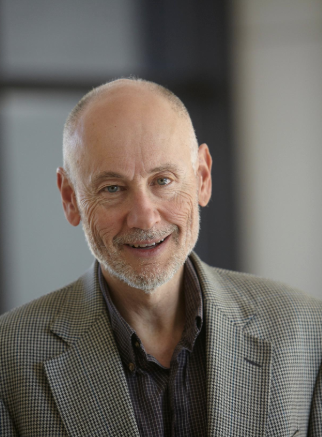
Robert Restuccia is remembered for his health care reform advocacy in Massachusetts and nationwide. In 1989, he co-founded Health Care For All, the largest consumer health care organization in Massachusetts. He also co-founded Commonwealth Care Alliance, a community-based health plan for people with complex medical, social, and behavioral needs. And for nearly two decades up until his death from pancreatic cancer in 2019, he led Community Catalyst, an organization that took the fight for reform to the national level.

Just days before his death, Restuccia published an op-ed in the Boston Globe in which he contemplated his legacy. He wrote, “Though I will not live to see it, I am convinced the march toward universal, affordable, equitable, quality health care is unstoppable. The next generation of advocacy leaders will continue the work I leave unfinished.” In 2021, the Commonwealth Care Alliance made a gift to Harvard Chan School to create the Robert Restuccia Health Justice Scholarship Fund in his memory. Alexis Brimage-Major, who worked with Restuccia at Community Catalyst, says, “To create a society where health is a right for all, we need to have public health practitioners and physicians who are fighting for this cause alongside us. Rob understood the importance of race equity and health justice, and the need to share power and work toward a collective vision to create a society where health is a right for all.”