McNamara Lab
Our lab focuses on System Serology, a comprehensive approach to studying humoral immunity. We analyze antibody responses to infectious diseases using high-throughput functional assays and biophysical profiling techniques. We integrate wet lab immunology with computational modeling and machine learning to uncover the antibody signatures linked to disease outcome, allergy sensitivity, or as a biomarker for health status. We are particularly interested in how the immune system moves over time, and how we can incorporate models of immune temporal fluidity into next generation vaccine approaches, immune therapies, and allergy desensitivity.
Harvard T.H. Chan School of Public Health
667 Huntington Avenue, Building 1, Room 406
Boston, MA 02115
Our Team

Ryan McNamara
My name is Ryan McNamara. I earned my bachelor’s degree in chemistry at New Mexico State University and my Ph.D. in Microbiology at the University of Texas Southwestern Medical Center. After that, I became a postdoctoral research fellow and later a staff scientist at the University of North Carolina School of Medicine. Throughout my career, my research interests have lied at the intersection between immune responses to infectious diseases and how the infectious agents seek to bypass them. I have employed “systems”-based approaches to understand this battle, whether it be at the gene expression or antibody-signaling level. I also like to incorporate mathematical modeling into these biological events, and then see how applicable these models are across distinct diseases.
What really motivates my work is to bring new ideas and approaches to solve age-old problems. Many of the infectious diseases, malignancies, and immune disorders I study have been around and were characterized long before I was born, yet they continuously menace our public health. Keeping these public health menaces in check through currently employed measures allows us to maintain a relatively healthy society; but my goal is to bring new measures that do more than keep them in check. To do that, you have to be creative and resourceful. When I was a staff scientist at UNC, we were one of the first teams to identify variants of SARS-CoV-2. We employed a community sequencing approach to track the spread of the virus and found that the virus was adapting itself to continuous transmission within humans. Moreover, when a person exhibited a prolonged infection, the virus accumulated a number of mutations, which is how we proposed variants came about; not through spillover events, but from a persistent infection state of a single host. In just a few years, we have learned so much from the pandemic about how the immune system and pathogens are locked in a perpetual war. Using the knowledge and resourcefulness generated from this pandemic can help us prevent the next one.

Researchers

Bonjour, my name is Ross Blanc. I earned my Bachelor’s degree in Biology from Clark University, followed by a Master’s in Molecular and Cell Biology from Brandeis University. Currently, I am a bench scientist in the McNamara Lab, where I focus on System Serology and Immunology. In my free time, I enjoy playing video games, as well as reading and watching fiction, including books, comics, and anime. I also have a passion for sports, particularly basketball and soccer, both as a player and a spectator.

In the Fortune-McNamara Lab, Samreen’s research will center on systems immunology and immune correlates of protection against infectious diseases.

Hi, I’m Megan and I’m a Research Assistant III/Lab Manager in the McNamara Lab. I moved here from the Ragon Institute with the lab. My current interests are all things operational with a focus on lab safety. In my free time, I like to sing karaoke and go boating with my friends, do barre classes, and tend to my two senior cats.

Kelly is a visiting PhD student from the Yale School of Public Health in the Epidemiology of Microbial Diseases department. She has joined the McNamara Lab to incorporate systems serology approaches into her PhD thesis focused on the kinetics and dynamics of functional immune responses to the blood stage of the Plasmodium falciparum parasite.
Outside of lab, field work, and parasite culturing, Kelly enjoys weekend getaways, reading, and spending time with her two dachshunds, Izzy and Rupert.

My name is Hadar. I’m a Project Manager in the McNamara lab. I coordinate the objectives and milestones of all lab projects.

Hi, I’m Lindsay. I attended Boston College and graduated with a B.S. in Neuroscience before joining the McNamara lab. I grew up just outside of Boston and enjoy sailing and hockey and am a huge Boston Bruins fan. As a technician in the McNamara lab, I utilize my wet-lab bench science skills to perform assays.
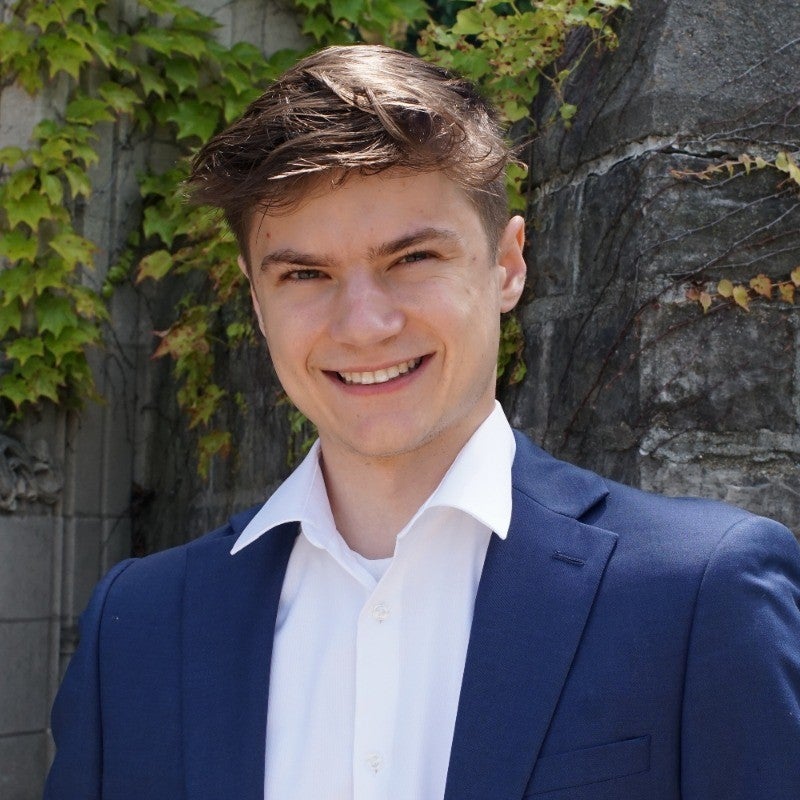
Sean is a graduate student in the department of Biological Engineering at MIT, where he is studying immune cell communication using in silico and in vitro models of macrophage plasticity. He grew up in Tucson, AZ, where he initially became interested in the biological systems that allowed life in the desert, which pivoted into an interest in immunology during his undergrad in Biology at Northwestern (where the flora was less intriguing).
In his free time he loves exploring coffee shops (especially ones where you can do work) in the Boston/Cambridge/Somerville area on his bike, or scouring Facebook marketplace for good deals.

Hi, I’m Eben! I utilize research and industry experience to contribute to efforts in the Antibody Observatory. I am currently working on a serological tool to track the spread of vector borne diseases, as insect habitats continue to evolve due to climate change.

Hi, I’m Ellis! I’m a student in the Biological Sciences in Public Health Program at HSPH, and am currently on a joint rotation in the McNamara and Fortune labs.
I’m interested in understanding the immune response to vaccination, and am currently focusing on TB vaccines
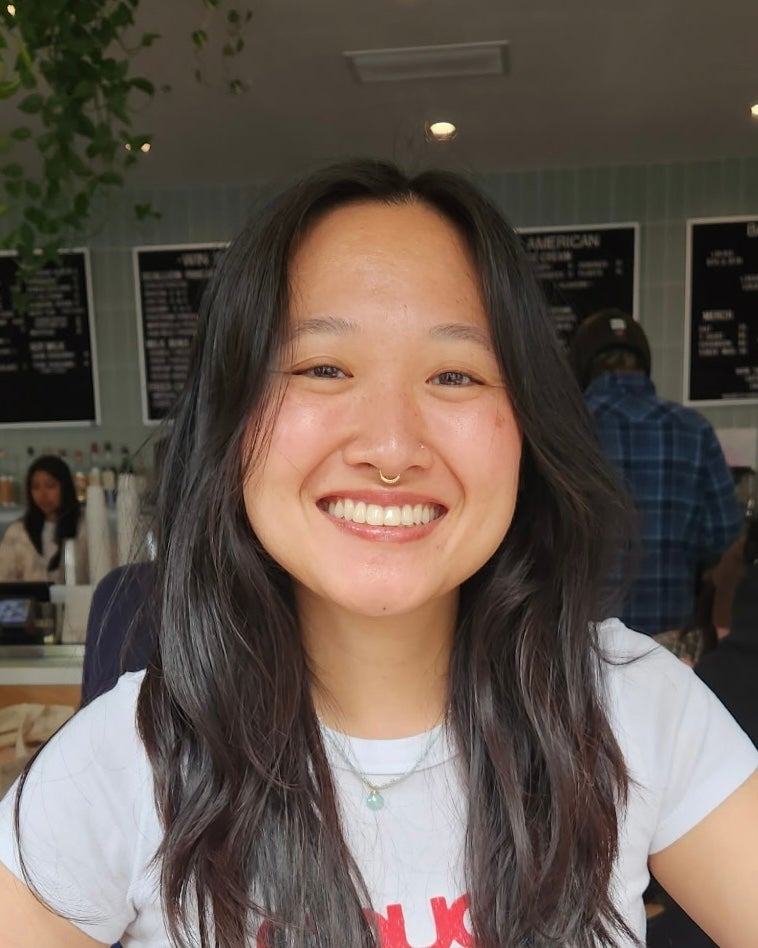
Julia is a second-year Ph.D. student in Doug Lauffenburger’s lab at the Massachusetts Institute of Technology. She is interested in leveraging computational modeling and machine learning for understanding antibody features of protection in the contexts of infectious disease and vaccines. While in IID, she will be learning about the lab’s systems serology workflows.
In her spare time, Julia enjoys singing, biking around the city, and spending money on good food!
Postdoctoral Fellows

I’m a physician-scientist who studies the impact of environmental exposures on the development of the immune system in the digestive tract of children in diverse settings, leveraging systems biology and big data. When not pipetting or coding, I practice pediatric gastroenterology with a focus on nutrition, growth and autism, spend time with family, knit and garden.