Remembering Felton “Tony” James Earls III
To the Harvard Chan community:
It is with great sadness that I write to inform you that Felton “Tony” James Earls III, professor of human behavior and development, emeritus, passed away on Sept. 5 at age 84 due to progression of Parkinson’s disease.
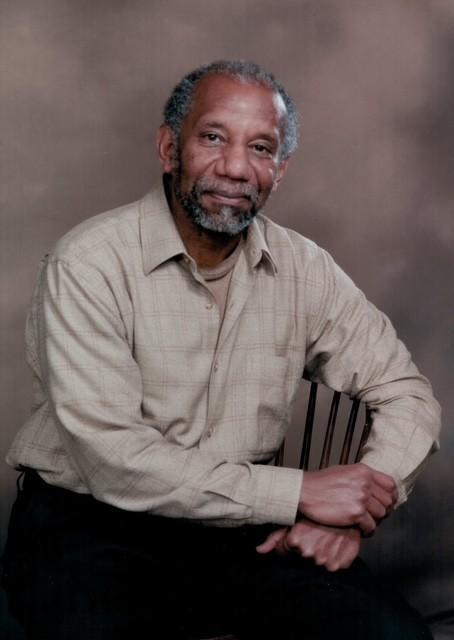
Tony, who also held an appointment as professor of social medicine, emeritus, at Harvard Medical School, was a leader in the fields of social medicine and human behavior. He was described by those who knew him as a pathbreaking scholar with a legendary public health career.
Tony made seminal contributions to the understanding of neighborhood contextual influences on violent crime, on the developmental consequences of children’s exposure to violence, and on the psychological impacts of the HIV/AIDS pandemic on children in sub-Saharan Africa.
His groundbreaking study, the Project on Human Development in Chicago Neighborhoods, a 10-year, $51 million study, was imperative to deepening understanding of the role of social cohesion and “collective efficacy”—when neighborhood residents work together to solve problems in their community—in preventing crime. His theories were later applied in the Tanzanian context to mobilize youth to engage in HIV prevention. In his retirement, Tony focused his efforts on enhancing community efficacy to promote public health, notably in reducing violent behavior in post-Hurricane Katrina New Orleans, where he was born.
Tony’s interest in medicine led him to Howard University, where he earned a bachelor of science in chemistry in 1963 and a doctor of medicine degree in 1967. He did post-graduate training in neurophysiology at the University of Wisconsin, where he met Mary “Maya” Carlson, whom he married in 1971. Together, as professional partners, they spent decades studying children’s rights, human development, and civic agency across multiple countries. They co-authored the book Voice, Choice, and Action: The Potential of Young Citizens to Heal Democracy, a culmination of their insights into youth participation in civic life.
Tony trained as a pediatrician at East Harlem’s Metropolitan Hospital and as a child psychiatrist at Massachusetts General Hospital, and earned a public health degree at the London School of Hygiene and Tropical Medicine. He joined the faculty of Harvard Medical School in 1974; moved to the Washington University School of Medicine in St. Louis in 1981 to become professor of child psychiatry and director of the Division of Child Psychiatry; and returned to Harvard in 1989. In addition to his Harvard appointments, Tony served as director of the Harvard South Africa Fellowship Program and on the Board of Directors of Physicians for Human Rights. In 2017, Harvard Chan School honored Tony with the Professor Emeriti Award.
Ichiro Kawachi, John L. Loeb and Frances Lehman Loeb Professor of Social Epidemiology, said that Tony’s research focused on the upstream conditions in people’s neighborhoods that perpetuated the cycle of violence. “Tony was a pioneer in the concept of collective efficacy, which he defined as people’s shared beliefs in their ability to influence their futures through collective action,” Kawachi said. “He believed in the capacity of children and youth to mobilize their communities to solve problems. His deep belief in humanity and his humility shone throughout his every interaction with colleagues and students.”
Sharrelle Barber, an associate professor of epidemiology at Drexel University’s Dornsife School of Public Health, studied with Tony as a doctoral student at Harvard Chan School. “He was a gift of an advisor,” she said. “As a mentor, he challenged me toward deeper and more critical thinking around my research on the health of Black communities in the U.S. South.”
Sharrelle recalled an email Tony wrote to her in 2019, which said: “I greatly admire your seamless synthesis of science and activism in forging a career. It takes courage and exposes a certain vulnerability, but without it we are hopelessly wasting time.” Sharrelle said those words stuck with her. “In our current political climate with ongoing threats to science, public health, anti-racism, and our shared humanity, there is indeed no time to waste,” she said. “May we all have the courage to answer the call of our times as he did.”
I want to express my deepest sympathies to Tony’s wife Maya, his daughters Leigh and Tanya and their husbands, six grandchildren, and two sisters, and to all who had the privilege of knowing and working with him. The Department of Social and Behavioral Sciences will share information about a celebration of Tony’s life when details become available.
Best,
Andrea
Andrea Baccarelli, MD, PhD
Dean of the Faculty