Flagship Courses
Flagship Courses
Context:
India is undergoing a transformational shift where states have greater fiscal responsibility or the implementation of central government schemes and programs, combined with greater power and autonomy. The newly launched Ayushmaan Bharat with the Pradhan Mantri Jan Arogya Yojana (PM-JAY) and the Health and Wellness Centers (HWCs) presents opportunities for states to design health systems that are responsive to their unique challenges, and formulate sustainable solutions that continue to show long-term impact.
As an initiative towards realizing this, the India Flagship Course on Health Systems Strengthening and Sustainable Financing was designed and directed by the Harvard T.H. Chan School of Public Health (Harvard). The course sought to further strengthen the capacity of senior bureaucrats and researchers of local state-level institutions in India in their role of informing and designing health system policies and programs.
The course was organized by the Lal Bahadur Shashtri National Academy of Administration (LBSNAA), Mussoorie in partnership with the Health Systems Transformation Platform (HSTP); and was supported by the Ministry of Health and Family Welfare (Government of India).
The course is modeled on the Global Flagship Course originally developed by Harvard University and the World Bank and is tailored to the Indian context.
The India Health Systems Reform Project at the Harvard T.H. Chan School of Public Health, in collaboration with the Public Health Foundation of India (PHFI), recently hosted the 6th National Flagship Course on Health Systems Strengthening for India from January 15 to 20, 2026, in New Delhi. This year’s cohort brought together senior policymakers from Assam, Bihar, Meghalaya, Odisha, and Uttar Pradesh, including officials from the Departments of Health and Planning, the Indian Council of Medical Research (ICMR), and the National Institute of Health and Family Welfare (NIHFW).
Launched in 2017, the National Flagship Course for India is an executive education program designed to strengthen the health policy leadership of senior national and state-level decision-makers. The course is built upon the Flagship Framework jointly developed by Harvard faculty and the World Bank. The primary objectives of the course are to provide participants with analytical approaches and tools to assess their health systems’ performances, diagnose root causes of underperformance, and develop policy and management reforms that are guided by ethical considerations, evidence-based, and politically feasible.
The India Flagship Course is specifically tailored to the context of India’s national and state-level health systems. Instructions include lectures, case studies, group work, and debates.
Winnie Yip, principal investigator of the India Health Systems Project, is the course director. The course’s curriculum is designed and delivered in collaboration with Harvard colleagues (William Hsiao, Anuska Kalita, Kevin Croke, and Ole Norheim) and other India-based (Arti Ahuja, former Union Secretary of the Government of India; Himanshu Negandhi of PHFI) and global (Ajay Tandon, Somil Nagpal, Sheena Chhabra, Aarushi Bhatnagar, and Om Prakash Kansal from the World Bank; Abdo Yazbeck from Johns Hopkins University) experts.
The course is made possible through a longstanding partnership between Harvard and the Gates Foundation and reflects a shared commitment to building sustainable institutional capacity for health systems strengthening in India.
The Flagship:
The 2019 Flagship Course was organized from August 19-23 at LBSNAA in Mussoorie (India). The five-day course was designed for senior policymakers/bureaucrats and representatives from institutions that are engaged in health research. The course applied the Flagship analytic framework to enable structured and strategic thinking about how to move health systems towards providing affordable and equitable access to efficient and quality health care with financial risk protection.
The course was aimed at understanding why it is important to examine health systems design, and which levers can be used to develop new designs.While Harvard designed the pedagogy and formulated the fundamental course content, Indian experts and resource persons participated in the process of adapting the curriculum to the Indian context. The Course included data from Indian states and experiences of programs undertaken in India on topics relevant to the course. The course material included case studies from different initiatives in India, that were written specifically to illustrate theoretical concepts.
Course Participants:
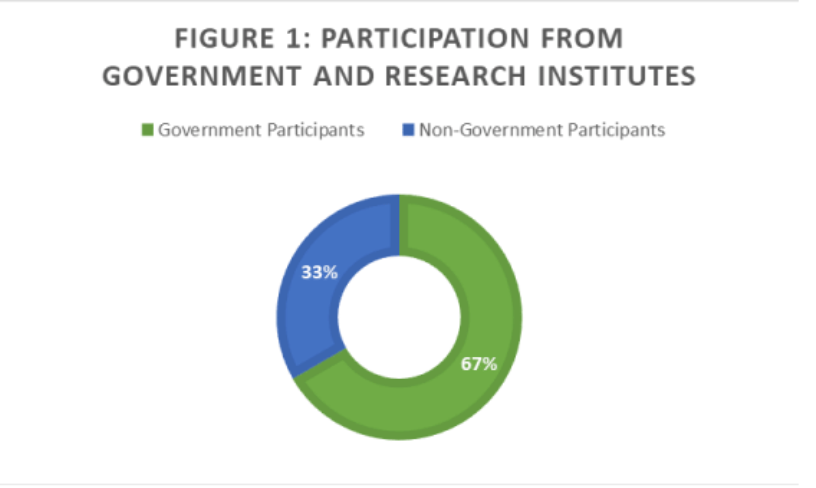
The audience of the course included high-level policymakers/bureaucrats (as opposed to operational managers and technical staff) from the Departments of Health, Finance, and Planning from different states, and representatives from local institutions with an interest to develop capacity in health system and policy analyses and design.The bureaucrats were nominated by the respective state governments upon invitation from LBSNAA. They included the highest-ranking officials (PrincipalSecretaries, Additional Chief Secretaries andSecretaries) of the Departments of Health, Finance, andPlanning, Mission Directors of NHM, and theCEOs/Executive Directors of the State Health Agencies in charge of implementing Ayushman Bharat from across 13 states– Bihar, Delhi, Gujarat, Haryana, Karnataka, Kerala, Madhya Pradesh, Maharashtra, Odisha, Rajasthan, Sikkim, Tamil Nadu, and Uttarakhand.
The Course was taught by senior faculty from Harvard School of Public Health – Profs. Winnie Yip (Course Director) and Michael Reich (Technical Advisor); and faculty from Indian and international institutions – Drs. Ajay Tandon (The World Bank), Indranil Mukopadhyay (from OP Jindal Global University), Mita Choudhury (from the National Institute of Public Finance and Policy), Dr. Avni Kapur (from Accountability Initiative at theCenter for Policy Research), Jack Langenbrunner (HSTP). In addition, guest speakers shared implementation experiences of relevant health reforms – Sundeep Kapila (Swasth India Foundation), Dr. Shanti Pantvaidya (SNEHA), Dr. Dan Schwarz (Ariadne Labs & Harvard MedicalSchool), Indu Bhushan (National Health Authority), Sudha Chandrasekhar (Consultant – HSTP and The World Bank); and resource persons Anuska Kalita (Harvard) and Rahul Reddy (HSTP) coordinated the Course and facilitated the Course proceedings.
Course Topics:
- Priority setting
- Systems diagnosis
- Intermediate Outcomes
- Health financing
- Provider payment mechanisms
- Strategic purchasing
- Benefit design
- Politics in policymaking
- Organization of health systems
- Improvement in public finance management
- Case studies and experience sharing sessions to highlight Indian and global examples of health system reform.
The course topics were revised on the basis of feedback and experience from the first two batches of the Flagship course (2017 and 2018). Areas that participants have limited control and impact over, like fiscal space, were dropped. Experience-sharing sessions facilitated by implementers increased this year, based on feedback from last year.
Course Approach:
Participants engaged in systematic analysis of the challenges, opportunities and potential risks associated with using different policy levers to strengthen health systems. The course approach was not advocacy but analysis.Through intensive interaction with peers and faculty, participants applied tools and concepts to answer the following questions:
- What are the priority goals that a state’s health systems aims to achieve? What are the tradeoffs inherent in the goals?
- How does the state currently perform in terms of health outcomes, financial risk protection, public satisfaction, affordable access, equity, efficiency, quality, and health expenditure control, in absolute terms, and relative to other states in India, and other countries with similar levels of socioeconomic development?
- What are the underlying causes for good vs poor performance?
- What policy levers are available in correcting poor performances, for example: financing, benefit design, provider payment mechanisms, strategic purchasing, regulation, public-private sector interactions, human resource planning? What are the international experiences? What pre-conditions are required to implement them?