Changes in latest Dietary Guidelines for Americans may pose implementation challenges

Researchers are continuing to assess the federal government’s 2025–2030 Dietary Guidelines for Americans (DGAs)—released earlier this year, along with the tagline “eat real food” and an inverted food pyramid that places steak and whole milk at the top, along with fruits and vegetables, and whole grains at the bottom—and their implications for national nutrition policy. In a New England Journal of Medicine (NEJM) Perspective piece published May 23, Harvard T.H. Chan School of Public Health’s Deirdre Tobias and Frank Hu wrote that they think the latest DGAs represent progress in some areas but raise concerns in others.
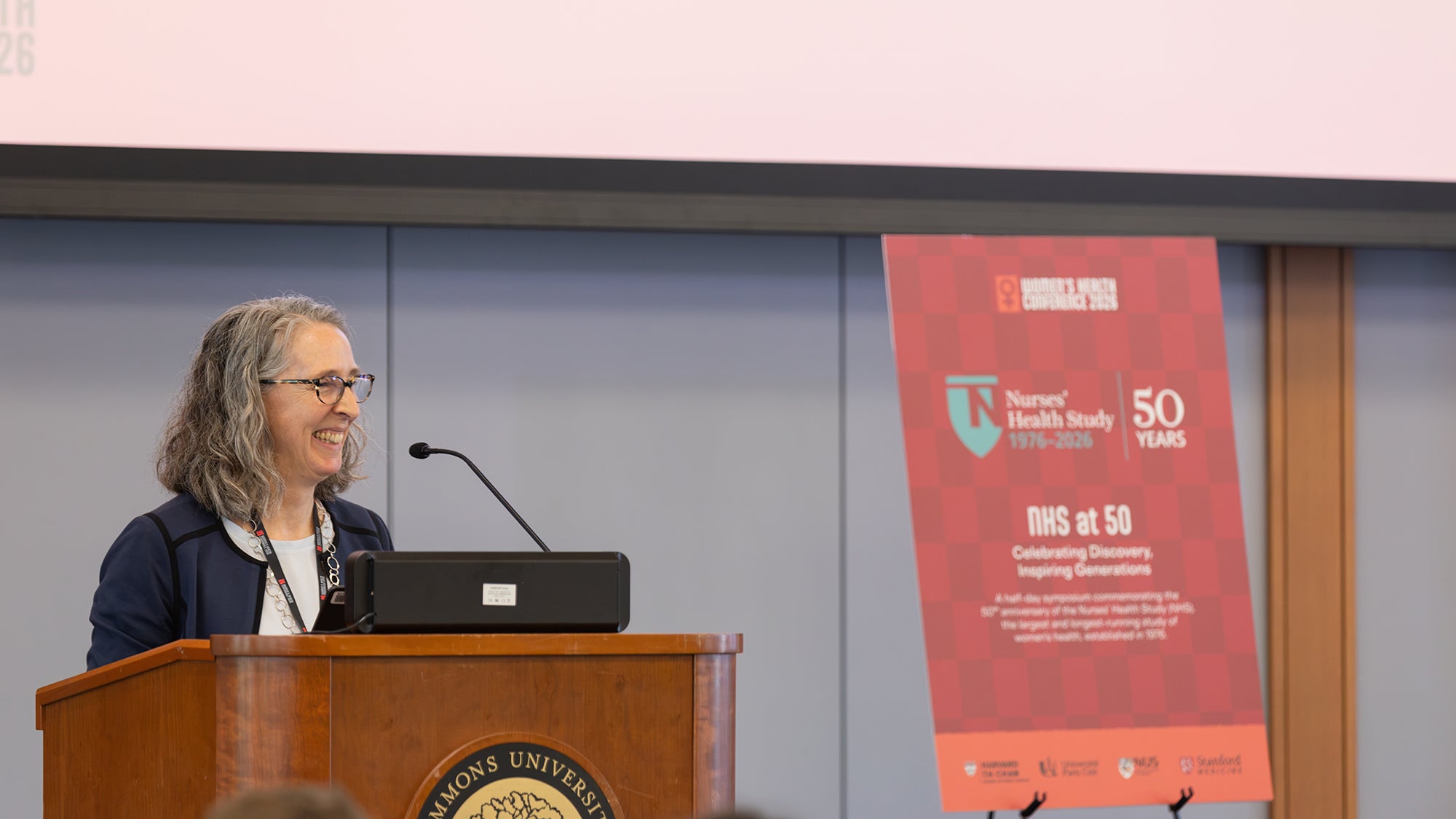
Tobias, assistant professor in the Department of Nutrition, served on the new DGAs scientific advisory committee—a group that reviews the latest nutrition research for the U.S. Departments of Agriculture and Health and Human Services as part of the process of updating the DGAs every five years. Hu, Fredrick J. Stare Professor of Nutrition and Epidemiology, served on the committee for the 2015–2020 DGAs.
For the current cycle, the government did not adopt the committee’s report as the new DGAs’ scientific basis, and most of the committee’s recommendations were not implemented.
One concern about the new DGAs is that some of its language—for example, around avoiding foods with chemical additives—is vague and could have unintended consequences, Tobias said in a NEJM podcast interview accompanying the Perspective article. She noted that the DGAs are used by policymakers to provide scientific evidence for legislation such as regulations on sodium or changes to federal nutrition programs.
“When [the DGAs’] recommendations are very clear, those policies have a much easier path forward of being implemented,” she said. Ambiguity—for example, in the definition of chemical additives, or regarding reducing certain ingredients in the food supply—can provide an opening for industry to push back, Tobias said, making it more difficult to pass legislation.
Tobias also noted that the new DGAs substantially raised the recommendations for protein intake without providing clarity on the quality of different sources of protein. She noted that this recommendation could be leveraged by marketers and lead to people consuming more products like protein powders, supplements, and bars, instead of healthier foods.
Teresa Fung, adjunct professor of nutrition, who also served on the advisory committee for the new DGAs, weighed in on meal planning recommendations from the AI chatbot linked to the DGA website realfood.gov in a May 21 Yahoo! Health article.
Listen to the NEJM podcast: Interview with Deirdre Tobias on the 2025–2030 Dietary Guidelines for Americans, including areas of confusion and contradiction.
Learn more
Understanding the new Dietary Guidelines for Americans (Harvard Chan School news)
Dietary Guidelines for Americans 2025-2030: Progress on added sugar, protein hype, saturated fat contradictions (Harvard T.H. Chan School of Public Health’s The Nutrition Source)