A Conversation with Barry Levy on Social Injustice and Public Health
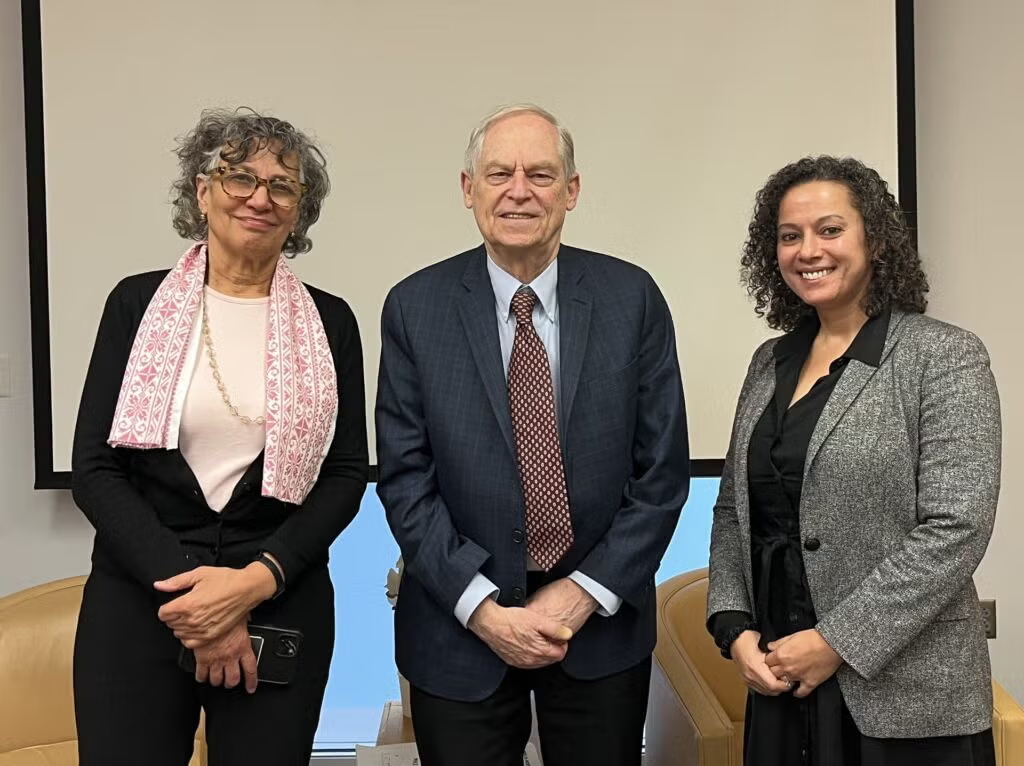
We recently chatted with Barry Levy, MPH ’70, former adjunct faculty member, and editor of the fourth edition of the book, Social Injustice and Public Health, where he reflected on his career, the evolution of the field, and the release of the book’s latest edition.
How did your time at the school shape your interest in the relationship between social justice and public health?
I was a student at the school in the academic year 1969–1970. It was a time of great upheaval in academia and in politics, which drew a lot of attention to social justice issues. It was not only the formal courses at the school that shaped my thinking about social injustice, but several of my classmates and I set up, with faculty guidance, our own course in which we visited community settings to learn about current and emerging developments that impacted public health and social justice. It raised my awareness and molded my perspective on community health and social justice issues.
When you first published Social Injustice and Public Health, what gap in the field were you hoping to address?
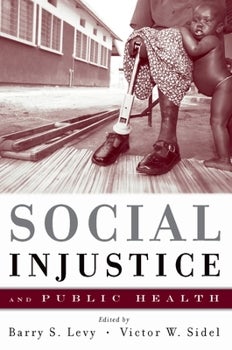
In 2003, my colleague Victor Sidel and I recognized that, although social justice is at the core of public health, there was no comprehensive textbook for public health students and mid-career professionals on social justice. With 46 contributing authors, we developed and edited the book, which was published by Oxford University Press in 2006. Our objectives were to raise awareness of the roots of social injustice and its impacts on public health and to promote education, research, and policy to reduce social injustice and its public health consequences.
What motivated you to develop a new edition of the book now?
Much had changed since 2019, when the third edition of the book was published. All of the previously chapters from the previous edition have been updated and the new 750-page book includes new chapters on public health practice and public health policy, and new sections on war, displaced persons, the COVID-19 pandemic, structural racism, the opioid epidemic, firearm violence, and climate justice.
Looking back, what impact do you think the earlier editions of the book had?
The book has increased awareness of the public health consequences of social injustice, used research findings and case studies to document these consequences, and provided a framework to address social injustice. This framework includes research, education, public policy, public health practice, protection of human rights, domestic and international law, community empowerment, and sustainable human development. Most importantly, the book affirms that the public’s health depends on social justice.
While there has been increasing recognition that social justice is critical for public health, the concepts of social justice and public health are being increasingly challenged in the United States.
How has the conversation around health inequities and social injustice evolved over time?
While there has been increasing recognition that social justice is critical for public health, the concepts of social justice and public health are being increasingly challenged in the United States. In this context, the book provides detailed documentation of how social injustice affects all areas of public health and how it impairs the health of people, especially of vulnerable populations. It also provides an action agenda of what needs to be done to reduce social injustice and its public health consequences.
Did events like the COVID-19 pandemic change how people understand the relationship between social injustice and health?
Yes, absolutely. For example, access to COVID vaccine was much lower and COVID-related morbidity and mortality much higher among racial and ethnic minorities and other vulnerable populations. As tragic as the COVID-19 pandemic was, it opened the eyes of many people to health inequities and how social injustice adversely impacts the public’s health.
What advice would you give to today’s public health students?
There are many ways in which you can document and raise awareness of social injustice and its consequences, and there are many ways in which you can take action. Often the ways in which we can contribute are apparent in our daily lives. Get engaged with academic or community groups that are addressing social injustice. Do not be constrained by your lack of experience — new eyes often see new problems and new solutions. Remember the values that brought you into public health. Follow your heart. And, as Mahatma Gandhi urged people, be the change you wish to see in the world.