Student’s hospital care coordination platform makes Harvard President’s Innovation Challenge finals

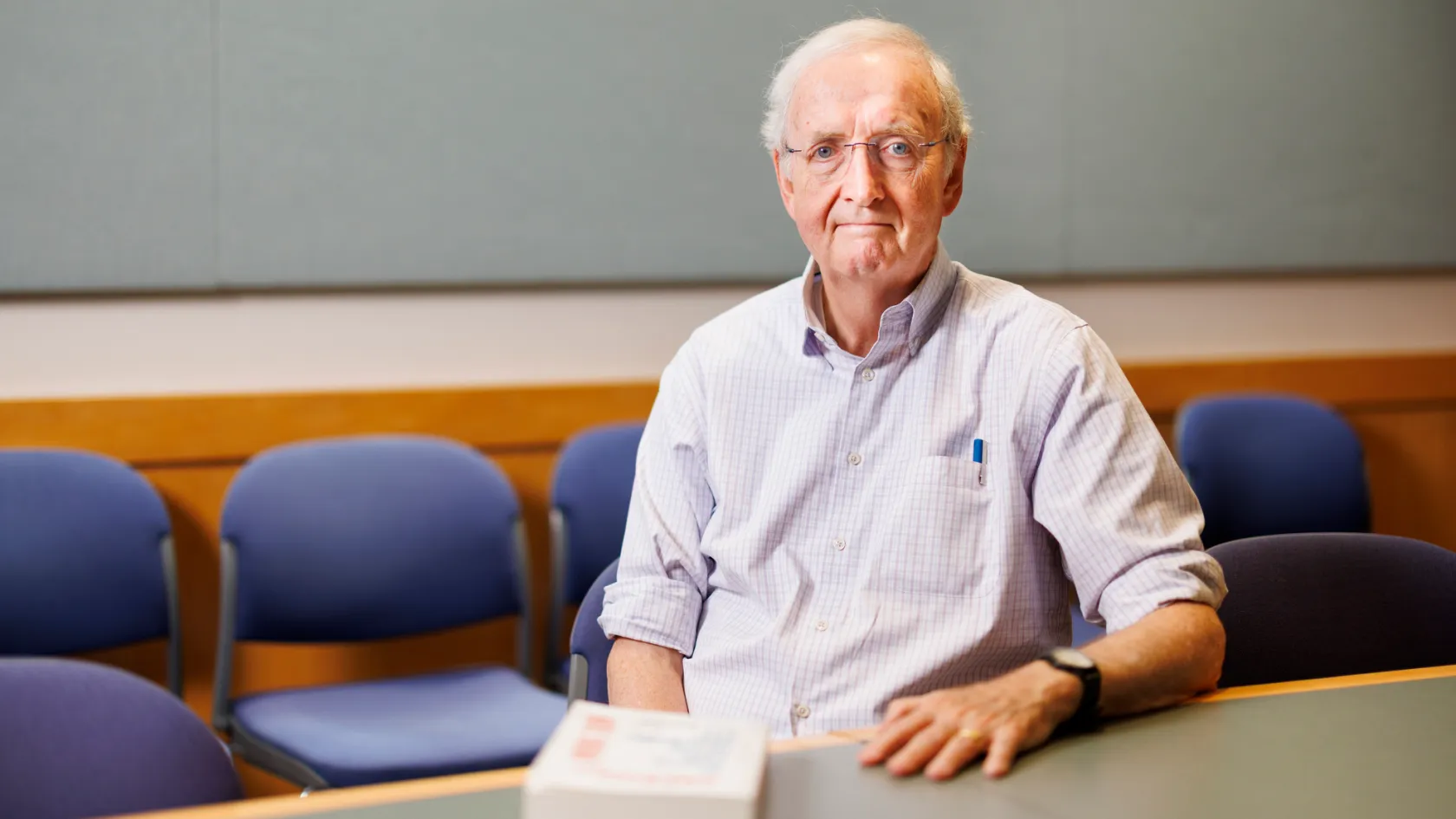
Stenoa, a company founded by Jeremy Levett, MPH ’27, was selected as one of 25 finalists in the 2026 Harvard President’s Innovation Challenge. The hospital operating system for time-critical, lifesaving care will compete for up to $75,000 in prize money at the May 6 awards ceremony. Levett recently spoke about his company and how the Innovation Challenge is helping him move to the next stage.
Q: What motivated you to start Stenoa?
A On the frontlines as a cardiac surgery resident, I’ve always wished for those few extra minutes. In heart attacks, strokes, or surgical emergencies, they can mean the difference between saving a life or losing one. Early in my training, I realized that those minutes often already exist. They’re just buried inside outdated systems that haven’t changed in over 30 years—pagers, text messages, switchboard operators, and broken communication across every hospital.
My mission became to build a system that would give those minutes back to the patients whose lives depend on them.
Q: How does the platform work?
A: Stenoa is the coordination layer for hospitals. We turn fragmented workflows into one closed-loop response. A case can be triggered from anywhere—an ambulance’s electrocardiogram system, an emergency room physician, an electronic medical record event, or a referring hospital. Stenoa captures the case, automatically routes it to the right team, opens the care pathway, sends critical mobile alerts to the right clinicians, and tracks every step in real time.
Inside the app, teams can review the case, start an audio or video call, make the activate-or-reject decision, and notify everyone else who needs to be mobilized.
And because it’s closed-loop, hospitals gain visibility into every step, from first medical contact to definitive treatment, through our real-time analytics platform. That means faster care, fewer mistakes, and better outcomes.
Q: Is it currently in use anywhere?
A: Yes, Stenoa is live across more than 10 hospitals in Canada, has powered the lifesaving care of over 5,000 patients, and is backed by peer-reviewed evidence.
In a 2025 JAMA Cardiology study of over 500 U.S. hospitals, only 11% met the quality metric of achieving time-to-treatment targets for heart attack patients in at least 75% of primary presentations. Not meeting targets was associated with 2.2 times higher odds of in-hospital mortality and 1.35 times higher odds of increased length of stay. We’re excited to expand to the U.S., where the need for a more coordinated, system-level response is clear.
Q: What brought you to the MPH in in Epidemiology program at Harvard Chan School?
A: In residency training as a cardiac surgeon, I have the privilege of caring for patients one at a time. The discipline is intimate. You operate on a single heart, in a single body, and the outcome is yours to carry. The work is incredibly gratifying. But the more I progressed through training, the more I appreciated that some of the most important factors affecting a patient’s outcomes happen long before they reach us on the operating table. The bedside is downstream of an entire system of determinants that often fail before patients arrive.
That’s what brought me to Harvard Chan School. It trains you to see health at the population level—to understand that outcomes aren’t just produced by individual clinicians, but by the systems that surround us. The MPH in Epidemiology is giving me the methods to study these systems rigorously, to think about how they behave at scale, and to shape the future of how we care for patients.
I believe that the future of lifesaving care won’t only come from new drugs or devices, but from building the infrastructure to deliver the care that already exists, consistently and to everyone. That conviction is what brought me here, and what the MPH is strengthening every day.
Q: How has competing in the President’s Innovation Challenge benefitted Stenoa?
A: Making the finals has been a tremendous honor, and a signal that our work matters. The deeper benefit has been less expected. The Challenge has forced me to articulate things that I’d been doing instinctively, and to convey our mission to people who can help advance it. Engaging with leaders who have built and operated health care companies at scale is accelerating our path into the U.S.
Q: What are your goals for Stenoa over the next five years?
A:. My goal is for Stenoa to become the operating system for mission-critical care. We start with heart attacks, and expand to strokes, surgical emergencies, and any moment where minutes determine outcomes.
Five years from now, when a critically ill patient enters a hospital, their outcome shouldn’t depend on a switchboard operator, pager, text message, or whether the right person picks up the phone. The right response should be intelligently automated, accountable, and immediate.
Our goal is to make that the standard of care, and to give those minutes back to every patient who needs them.