Innovators apply AI solutions to health systems problems at global hackathon
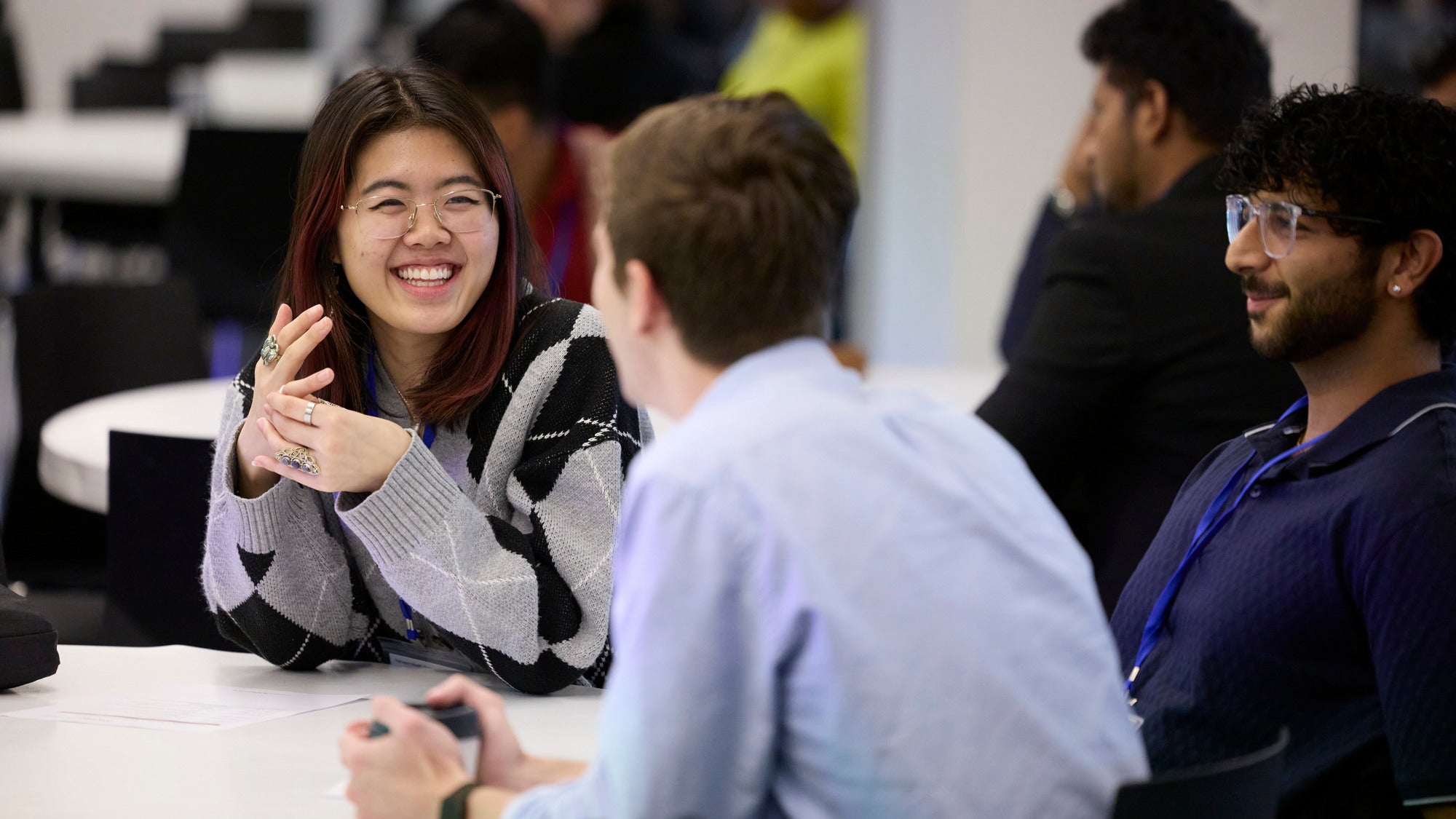
More than 12,000 people across the globe recently answered the call from Harvard T.H. Chan School of Public Health’s Health Systems Innovation Lab (HSIL) to reengineer the future of health systems by leveraging artificial intelligence (AI) solutions. Over the course of an intensive two-day hackathon, they worked in multidisciplinary teams to develop and pitch their ideas for health ventures. At stake were financial prizes and the chance to advance to HSIL’s Venture Building Program.
The 7th annual HSIL Hackathon was held April 10-11 in 58 hubs across 41 countries (in-person in 36 countries and virtual in five). HSIL Director Rifat Atun, vice dean for non-degree education and innovation, kicked off the event over a global live stream with HSIL’s Alem Aminu Osman, who led the team of more than 200 hub coordinators.
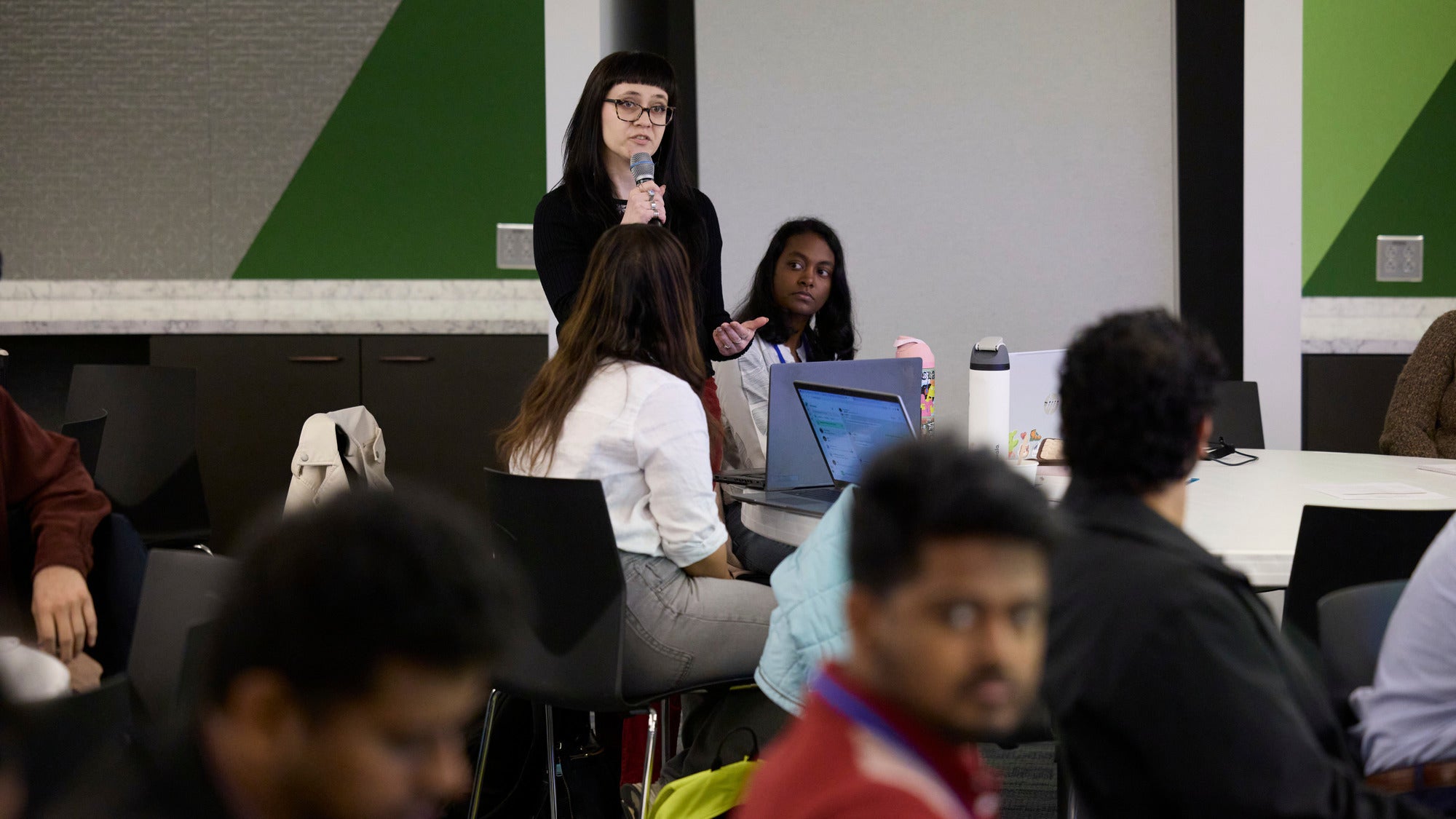
The Boston Hub drew more than 200 participants across its two venues: Microsoft NERD Center in Cambridge and Pillar VC in Boston. Participants at the Boston hub ranged from high school students to professionals, including a software engineer who formerly worked on missile systems and said that he wanted to find a new direction for his skills.
The Hackathon was open to all age groups, irrespective of affiliation, venture maturity stage, or prior experience. Participants could attend with an already formed team or join one onsite.
Throughout the event, teams received mentorship from HSIL representatives and local experts and coaching on health system components such as regulation, diagnostics, and drug development, before they presented their ventures to a panel of judges. Just 100 ventures were chosen from 1,553 worldwide to move on to the Venture Building Program. Prizes were awarded at each hackathon hub, with the Boston Hub alone awarding a total of $200,000 in cash and merchandise such as software, donated by sponsors.
‘A roadmap for impact’
At the Boston Hub, winners were Vandy Hack Health (Microsoft NERD Center) and Kidney Connective (Pillar VC).
Vandy Hack Health team members Teguono Okotete, Maya Poghosyan, Soham Saraf, and Aidan Tseng are undergraduates at Vanderbilt University. They hope to develop an AI-powered case manager connecting 63 million unpaid caregivers in the U.S. to financial and social support programs.
“The mentorship and energy at the Hackathon drove us to finish our first complete prototype and dive into the complex world of federal and state assistance programs,” said Saraf. “We’re excited to develop this into a more serious venture in the next phase, learning about tech/AI standards in the health industry and how healthtech products gain traction.”
Kidney Connective is a platform that aims to help more kidney patients get listed for transplants and reduce the loss of donor kidneys, which only have a short window to be matched with suitable recipients. The team includes Grace Lightfoot, a Harvard biology graduate student; Vanessa Evans, who works with Fresenius Medical Care, a dialysis organization, and Kidney Health Initiative, and is a kidney patient herself; and Marisol Horton, a former nephrology social worker. The team is supported by advisors in nephrology and transplant medicine, and a technology lead specializing in large-scale health care systems delivery.
“The Hackathon was a turning point—it confirmed that what we’re building is both urgently needed and within reach,” Lightfoot said.
Team Tunza, which also competed at the Boston Hub, received special recognition and was selected as one of the ventures in the next cohort of the Harvard HealthLab Accelerators program. Nebyu Lakew Tefera, MPH ’26, and teammate Jonas Sog, a mechanical engineering PhD student at MIT, are focusing on improving care coordination at health care facilities in low- and middle-income countries.
“We arrived at the Hackathon with ambition and left with validation, clarity, and a roadmap for impact,” Tefera said.
On to Demo Day
Over the next few months, the teams chosen as winners at their individual hackathon hubs will participate in a virtual venture building program where they’ll learn the ins and outs of launching a business and continue refining their ventures with guidance from global experts. Teams progress through three increasingly intensive phases—each with higher training rigor and expectations—and are evaluated by judges from HSIL and other experts. The top 20 teams advance to Demo Day on June 16, where they’ll present to potential investors and make important connections in hopes of launching their ventures.