Rethinking aquatic foods management to tackle global malnutrition
Around the world, more than four billion people aren’t getting enough of key vitamins and minerals they need to stay healthy, according to research led by Harvard T.H. Chan School of Public Health’s Chris Golden. One promising solution: better stewardship of sources of nutrient-rich aquatic foods.
Golden, Bruce A. Beal, Robert L. Beal and Alexander S. Beal Associate Professor of Nutrition and Planetary Health, and his team have documented the impact of climate and environmental change on malnutrition in countries such as Madagascar and Kiribati and explored ways to help their populations improve food security. Their latest research, published in two papers in PNAS, outlines two strategies for improving access to seafood in nutritionally vulnerable countries—by making the trade of farmed aquatic foods more equitable and helping wild coral reef fish stocks recover.
Changing aquatic trade policies
Aquaculture (farming aquatic animals) can play a vital role in reducing global malnutrition, the researchers noted in a paper published Feb. 9. To see how well food from this sector is benefitting people in the countries where most of it is produced, they looked at the nutrient composition of more than 2,800 aquatic species such as tilapia and shrimp. They also looked at more than two million trade transactions between 2015 and 2019 to track the sources and destinations of aquatic foods.
The researchers found that the aquaculture foods they analyzed had the potential to provide key nutrients, such as vitamin B12, for up to 2.7 billion people, but trade in these foods disproportionately disadvantaged nutritionally vulnerable countries.
“Undeniably aquaculture plays a key role in nutrition and food security,” said lead author Laura Elsler, research associate in Golden’s lab. “But nutritionally secure countries such as the U.S. and France reap disproportionate benefits while small island nations such as Tuvalu and the Seychelles lose critical nutrients by exporting wild-caught fish as aquaculture feed.”
If exporting countries were to retain these wild-caught fish used for fishmeal exports for domestic human consumption, they could meet the needs of up to 31 million undernourished individuals.
“Often, the economic benefits of international aquaculture trade do not reach nutritionally vulnerable people. Companies may benefit, but it is unlikely that the economic value that trickles down to local producers could equal the nutritional benefit of consuming these critical sources of nutrition,” said senior author Golden.
Helping reef fisheries recover
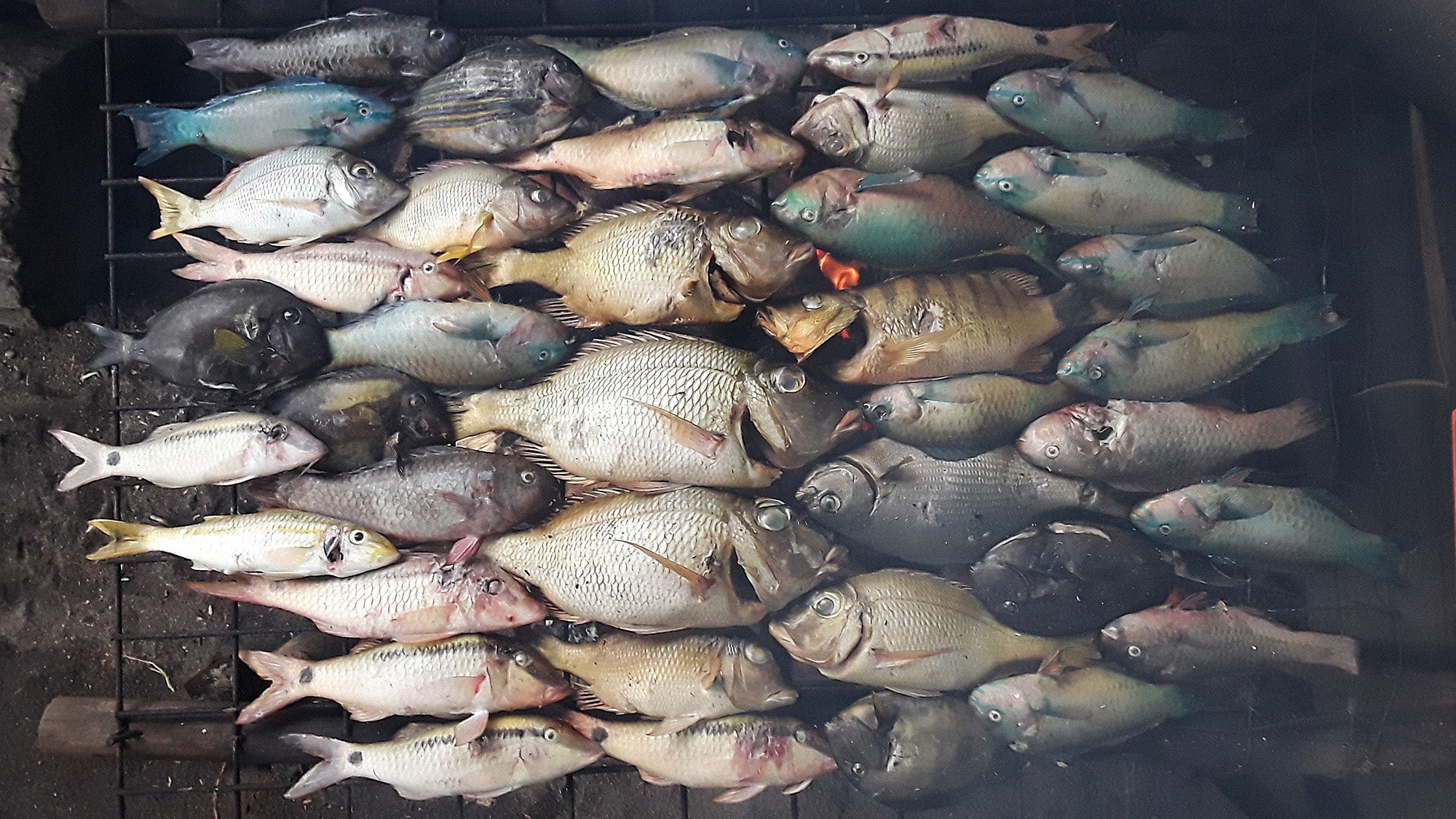
Coral reef fisheries are important sources of food and income for people in tropical countries, but most have been severely impacted by overfishing and climate change. In a paper published Dec. 16, 2025, Golden’s team and colleagues found that helping fish stocks on coral reefs recover could significantly increase the number of people who are able to meet fish intake recommendations, particularly in countries with high malnutrition.
They looked at 1,211 individual reefs around the world that are below maximum sustainable production levels and found that these sites could increase their yields of fish by 50% if allowed to recover. These additional yields could provide millions of people with yearly recommended seafood intakes. On average across sampled reefs, recovery to maximum production levels could take as few as six and as many as 50 years, depending on the state of depletion and how strictly fishing was restricted in the area, according to the study.
The researchers found that the locations with the greatest potential for sustainable gains in yield were among those experiencing the highest rates of food insecurity and malnutrition, including Madagascar, Mozambique, and Tanzania.
They noted that fishery management reforms would need to be paired with investments in local communities, such as helping reef fishers find alternative sources of income and food, while allowing their coral reef fish stocks to recover.
“Our study provides clear, quantitative evidence of how much food tropical coastal communities are losing, and could regain, through better-sustainably managed reef fisheries,” said first author Jessica Mason Zamborain, who partially conducted the research as a postdoctoral research associate in Golden’s lab. “These insights give relevant stakeholders the scientific foundation needed to strengthen food security and human health through effective fisheries management.”
Read more about Chris Golden’s work: Christopher Golden on Nutrition, Food Security, and Climate-Smart Public Health (Harvard Center for International Development)