Fireside chat underscores importance of health communications

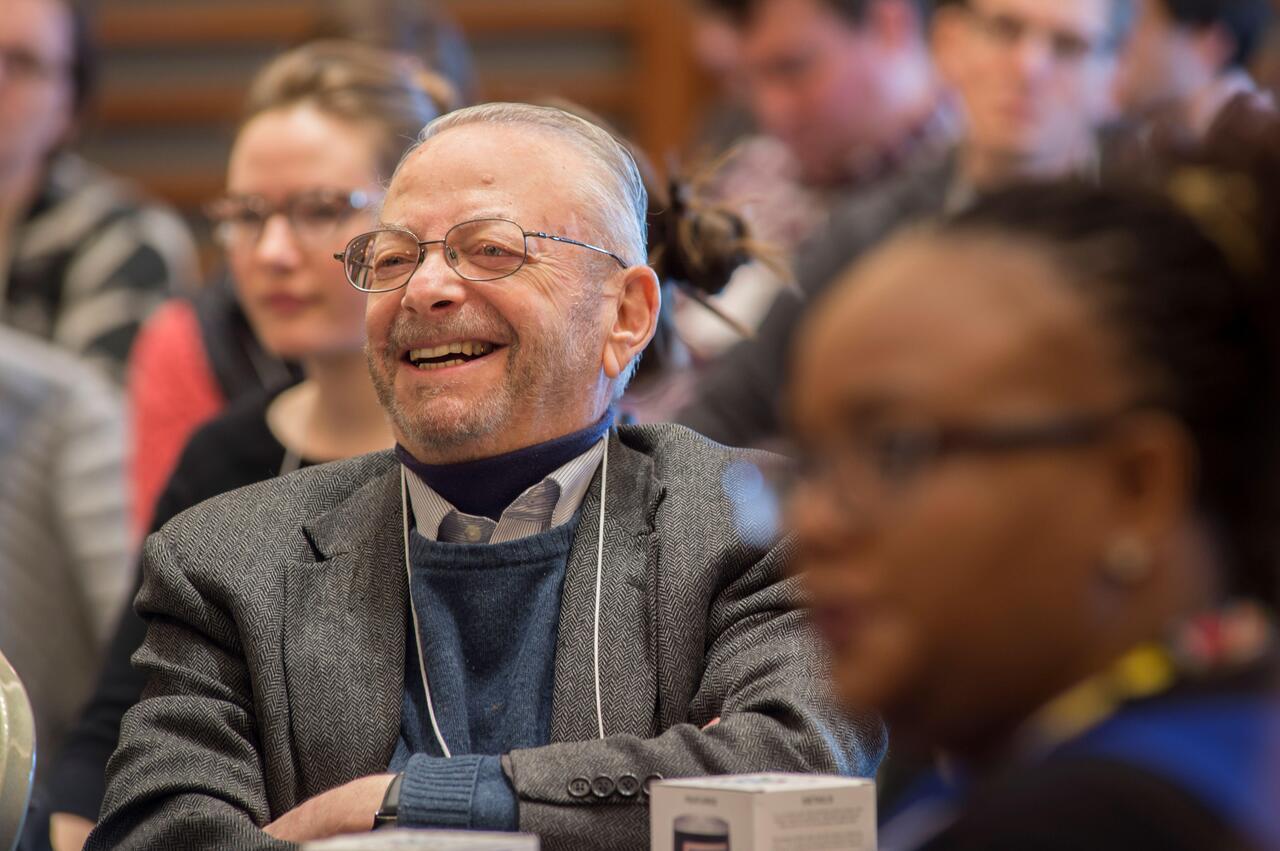
February 9, 2026 – In late January, members of the Harvard community gathered at EAST Miami for an Evening of Connection and Conversation. The event featured a discussion between Andrea Baccarelli, dean of the faculty, and Amanda Yarnell, senior director of the Center for Health Communication.
Baccarelli opened the program emphasizing the importance of communications in order to progress in the field of public health. “Expertise in contemporary health communications is fundamental to a world-class public health school fit for 2026 and the coming decade. This expertise is also integral to ensuring positive public health impact and population well-being across America and globally,” he said.
Yarnell, whose expertise lies at the intersection of people who consume online health information and influencers who create and amplify health information, shared that she feels privileged to continuously reimagine health communication and what the Center [for Health Communication] could mean to the School and to the world.
In a fireside chat-style conversation, Baccarelli and Yarnell underscored the significance of communications in public health education, research, and impact, taking a moment to reflect on what the Center has accomplished since its inception forty years ago. The “Center created the playbook for working with storytellers whose medium then was TV and film,” Yarnell said. Those are the individuals, who are now referred to as creators or influencers, responsible for the designated driver campaign that saved millions of lives from drunk driving.
“Creators have been at this for a very long time,” she emphasized.
Rewriting the playbook
“The Center now has the opportunity to rewrite that playbook at a time when we’re watching a lot more TikTok and much less TV. In many ways, it’s a very natural transition,” Yarnell says on the programs the Center is currently leading. Baccarelli and Yarnell agreed that there are ‘multiple paths’ the School community is taking as mediums, practices, platforms, and public views related to this topic are constantly evolving.
Together, the duo wants to create a “community of practice,” where more students and other public health professionals learn to use listening, empathy, and evidence-based tools such as storytelling and receptivity cues in public health practice.
Yarnell and Baccarelli shared the Center’s approach to work with health influencers and creators, who are now a major source of health information for the public, and to build public trust in them. “Creators are increasingly shaping our health beliefs and behaviors,” Yarnell said, sharing the statistic that 1 in 2 Americans can get their health information in this way.
One avenue that was discussed to better health communication among students is a workshop built into the School’s curriculum in which students roleplay public health positions ‘unlike their own’ and practice engaging those who disagree with them. Yarnell described this program as fundamental to public health training.
The power of prevention
Looking ahead, Baccarelli emphasized that he believes communications is an area in public health that is severely underinvested in and changing this—to prepare the next generations to be skilled and capable communicators—is central to his vision of “more and more people understanding the power of prevention.”