Alumni Perspective: Building an AI tool that empowers caregivers
For Mateusz Firlej, MPH ’25, the story began in a small village in Poland, where he helped care for a close family member living with epilepsy. Watching how much responsibility fell on family made him realize how fragile home-based care truly is. “Caregiving isn’t just emotionally demanding, it requires near-constant vigilance, often without the right tools, access to specialists, or understanding of the health patterns,” he said. “I realized very early that reliable, easy-to-use health monitoring felt like a luxury, even though it was the foundation of good care.”
For Annanya Panagala, Ed.M. ’25, the journey started in India, where she and her family cared for her great grandmother who had dementia. Every day brought a series of feelings and emotions—confusion, overwhelm, emotional exhaustion.
Later in life, Panagala found herself in the Himalayas at the Jamyang Foundation, volunteering as a medical social work trainee with young monks and nuns living in areas with limited access to hospitals and clinics. “I noticed how widely smartphones were used, how telehealth could bring doctors to places where roads could not, and realized that the same devices could also become tools for health education and monitoring, empowering people to understand and take charge of their own wellbeing, right from where they were, with tools they already have in their hands.”
These early childhood lessons became the foundation for the duo’s shared pursuit: As telehealth and home care expands access to healthcare, how could they build solutions that make health monitoring and education possible within it.
The journey of building Valley AI as told by Mateusz Firlej, MPH ’25 and Annanya Panagala, Ed.M. ’25
Meeting at Harvard
“We met as Harvard graduate students, both cross-registered for AI Studio, a course focused on teaching systematic methods for identifying high-impact real-world opportunities for AI applications and providing hands-on experience with prototyping and product development, at MIT. With the skills and resources we acquired through this class, we were able to combine our interests in innovation and social impact, as well as our academic tracks in education and public health to pursue something close to our hearts: finding an approach that addressed caregiving not just as a medical challenge, but as a human one.
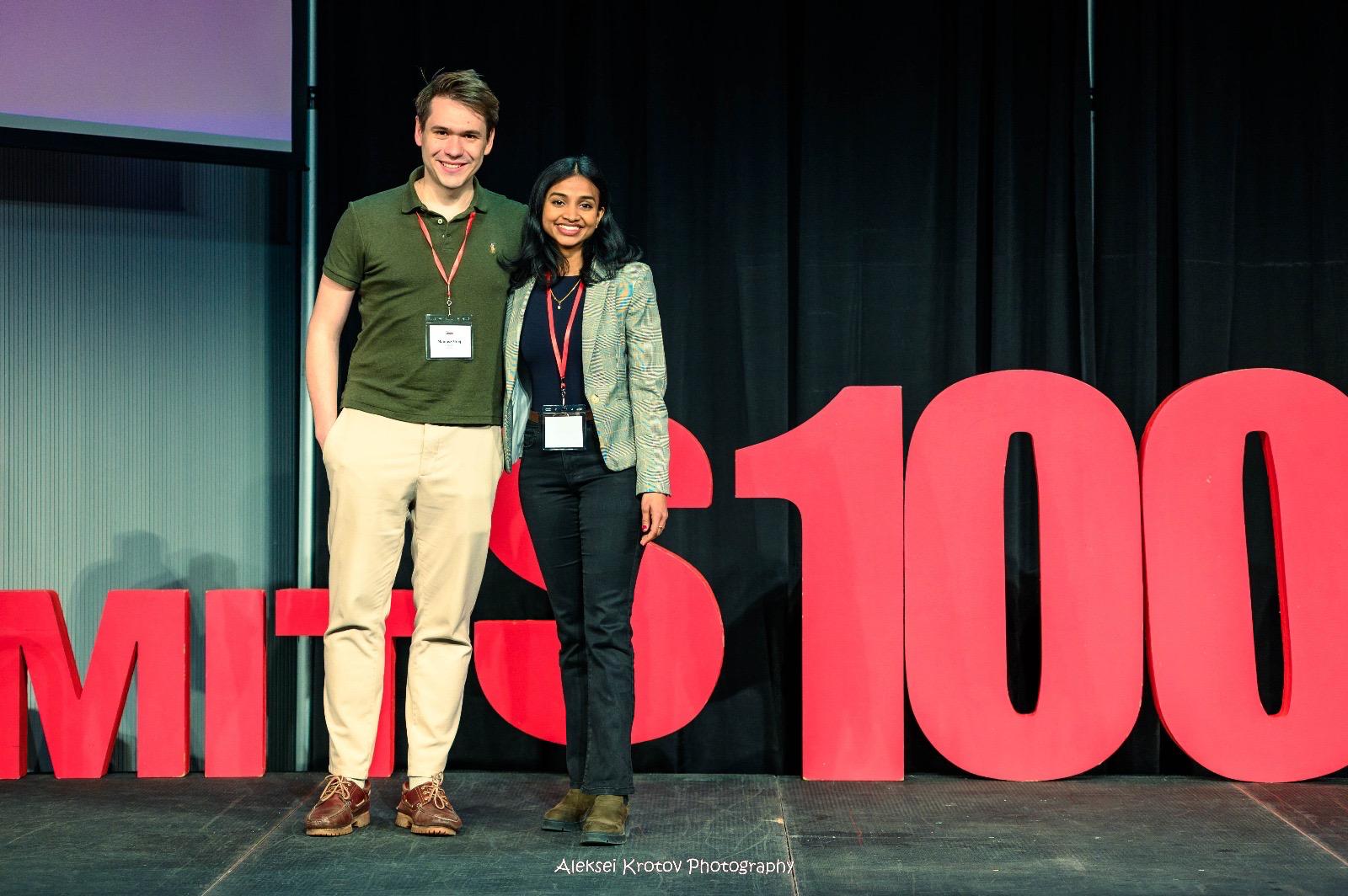
Over the academic year, we raised a pre-seed round from Venture Capital fund and angel investors; won the MIT AI Venture Demo Day and Honors Fund competition, were recognized as part of MIT $100K Accelerators; made it to the final round of the $200K M2D2 Challenge, and became semi-finalists in Harvard’s President’s Challenge.
The nature of our collaboration embodies what Harvard is: an interdisciplinary network that works tirelessly to find meaningful solutions to the world’s biggest challenges.
Building Valley AI
Valley AI grew out of hundreds of conversations with caregivers, seniors, healthcare providers, and policymakers. No matter where we went, the message was clear: caregivers don’t need more training or complex devices; they need quiet, reliable support that integrates into their routines.
With the help of Harvard’s i-Lab and the MIT Media Lab, we built a privacy-first, device-agnostic sensing system that predicts health and well-being risks before they escalate. In simple terms, Valley AI is a behind-the-scenes assistant that continuously monitors patterns in movement, environment, and behavior to flag potential health concerns early. Unlike wearables, it doesn’t add another device to manage. Instead, it blends seamlessly into existing workflows, empowering caregivers without overwhelming them with data.
What sets Valley AI apart is its commitment to care without intrusion. We are using AI not to replace humans, but to restore balance and peace of mind to caregiving. Every design decision reflects that sentiment.
The present and the future
Today, Valley AI is piloting in both the United States and India. In India, we’re adapting our models to serve multilingual and culturally diverse senior care facilities. Our goal is to make health technology relevant in local communities and globally scalable; and inclusive to different languages, practices, and systems across the globe.
In an era when AI often raises fears about ethics and privacy, we see Valley AI to as an example of AI for good—responsible innovation that amplifies human empathy and care, rather than replaces it. Looking ahead, we envision Valley AI as the backbone of proactive senior care worldwide and hope to expand from facilities into homes, helping families access the same resources as professionals. Beyond Valley AI, we hope to continue honoring human connection, empower caregivers, and make healthy aging accessible to everyone.”